Nanjing and Okayama teams show vitrinite and liptinite graphitize differently under high pressure
In high-pressure, high-temperature experiments, vitrinite ordered progressively while liptinite transformed more slowly at intermediate pressures. The authors built a precursor-specific kinetic model.
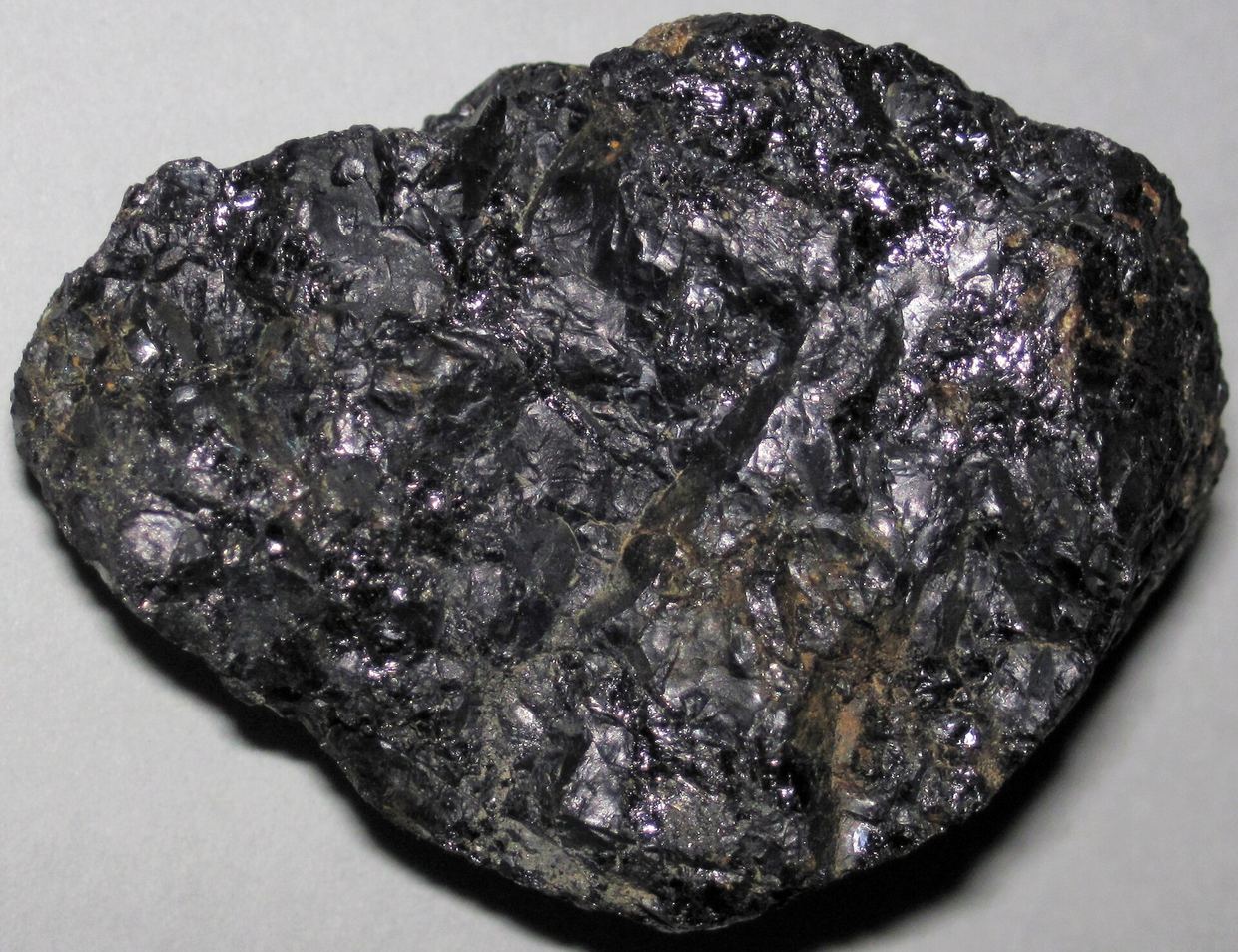
Researchers from Nanjing University, Okayama University and the Shale Gas Research Institute of PetroChina Southwest Oil & Gasfield Company reported in Nature Communications on 4 November 2026 that two organic precursors, vitrinite and liptinite, follow distinct graphitization pathways under high-pressure and high-temperature conditions doi.org
Nature Communicationsdoi.orgOpen source ↗. The study concerns the fate of organic carbon at convergent margins, which depends in part on its transformation into relatively inert graphite
doi.org
Nature Communicationsdoi.orgOpen source ↗. According to the authors, the influence of precursor composition on this process had been poorly constrained.
Two precursors, two graphitization pathways
Vitrinite undergoes progressive structural ordering, the authors report doi.org
Nature Communicationsdoi.orgOpen source ↗. Liptinite transforms more slowly at intermediate pressures, which they attribute to inherited defects and inhibited structural coalescence
doi.org
Nature Communicationsdoi.orgOpen source ↗. Both precursors respond strongly to pressure, but their chemistry governs the transitions between the processes that ultimately limit transformation rates
doi.org
Nature Communicationsdoi.orgOpen source ↗.
The experimental work was supported by a Kawai-type multi-anvil high-pressure apparatus at the Institute for Planetary Materials, Okayama University, and by Raman spectroscopy, as stated in the paper's acknowledgements. The first author is Yuhui Wang; Takashi Yoshino of Okayama University is among the co-authors, and the correspondence author is Suping Yao.
Kinetic framework applied to Alpine units
The team developed a precursor-specific kinetic framework that integrates graphitization along geological pressure-temperature histories doi.org
Nature Communicationsdoi.orgOpen source ↗. They applied it to representative Alpine tectonic units. The calculations indicate that graphitization can continue during post-peak decompression or reheating
doi.org
Nature Communicationsdoi.orgOpen source ↗.
Precursor-dependent path integration also influences the modeled partitioning between graphite-like carbon and low-order reactive carbon fluxes doi.org
Nature Communicationsdoi.orgOpen source ↗. The authors conclude that precursor chemistry and geological history jointly control carbon ordering, retention potential and flux partitioning at convergent margins
doi.org
Nature Communicationsdoi.orgOpen source ↗.
The results come from laboratory experiments and kinetic modeling; the Alpine application is a calculation on representative tectonic units, not a direct measurement of carbon fluxes. The article is published open access under a CC BY-NC-ND 4.0 licence.