Satellite study of 12 Tokyo-area data centres: daytime surface 1.8–2.2 °C cooler, night change near zero
Ex-post analysis of the Inzai and Tama clusters found no kilometre-scale surface warming from waste heat; the energy balance rules out +2 °C.
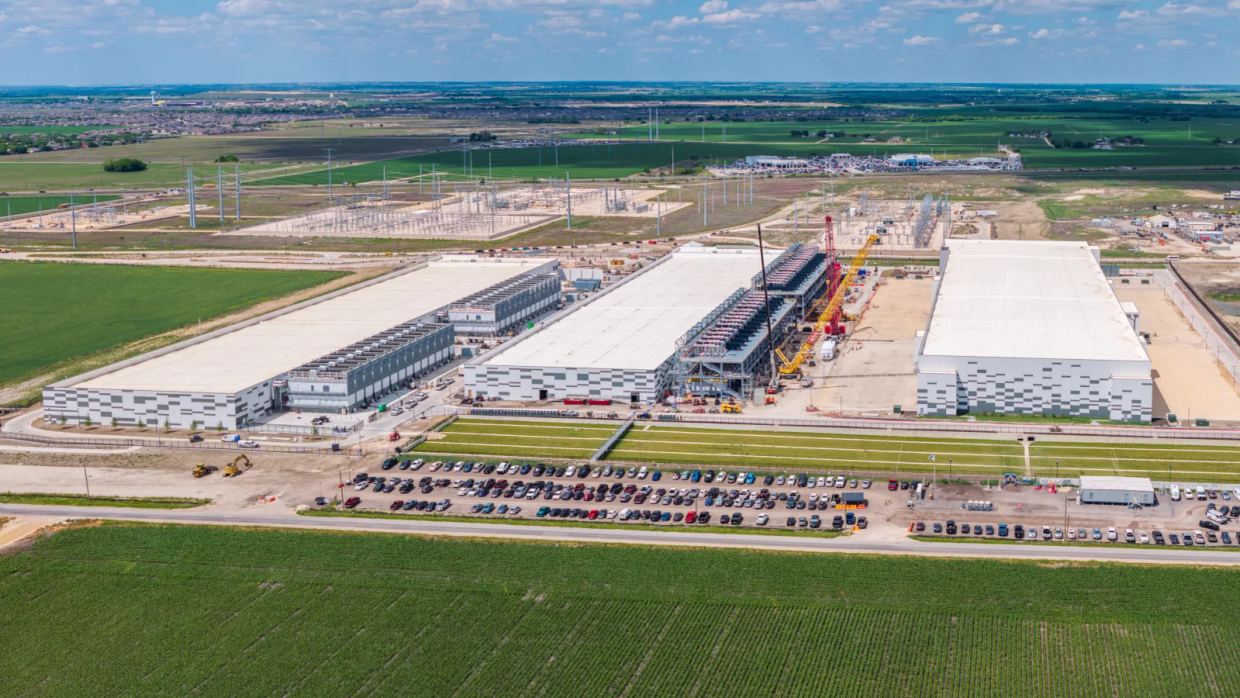
Jiawei Jing of Makuhari Development Corporation tested whether hyperscale data centres warm their surroundings, in a study published in Environmental Research Letters. The object was Japan's largest data centre concentration, the Inzai and Tama clusters near Tokyo, where twelve facilities were commissioned in stages from 2011 to 2025 doi.org
Environmental Research Lettersdoi.orgOpen source ↗. The staggered build-out allowed a three-phase event study with replication.
The analysis combined daytime Landsat images (2013–2026), ECOSTRESS data at 70 m resolution (day and night) and MODIS at 1 km. Matched pre-2013 controls, facility-level energy disclosures and a minimum-detectable-effect analysis were added doi.org
Environmental Research Lettersdoi.orgOpen source ↗.
Land surface temperature after commissioning
After commissioning, daytime land surface temperature fell by 1.8–2.2 °C. The result was significant under all three types of reference area doi.org
Environmental Research Lettersdoi.orgOpen source ↗. The author describes it as a signal of changed radiative properties of the surface, opposite in sign to the widely circulated claim of warming. It refers to the measured facility surfaces and does not show that neighbouring residential areas became cooler.
Deep-night changes at facility scale are indistinguishable from zero and are bounded below roughly 0.6–1.2 °C. At cluster scale the night bound is 0.24–0.29 °C, corrected for autocorrelation and confirmed on two platforms doi.org
Environmental Research Lettersdoi.orgOpen source ↗. Consistency checks in Phoenix and DeKalb gave the same decomposition: night surface warming was largely in place during construction, before any server load, and matched neighbouring non-data-centre development
doi.org
Environmental Research Lettersdoi.orgOpen source ↗.
Energy balance and local air warming
An energy-balance ceiling for night air temperature at cluster scale is about 0.35 °C. The observed night bound lies beneath it. A warming of +2 °C, even in air, would require 6–43 times the available waste heat, according to the study doi.org
Environmental Research Lettersdoi.orgOpen source ↗. The estimate does not exclude short-lived effects in near-calm wind.
The result addresses a satellite preprint (Marinoni et al 2026) that attributed about 2 °C of land surface warming to facilities worldwide. It does not contradict peer-reviewed transects near Phoenix, which measured +0.7–0.9 °C of near-ground air warming a few hundred metres downwind doi.org
Environmental Research Lettersdoi.orgOpen source ↗. The author concludes that near-source air warming is real where heat rejection density is high and the climate dry, while kilometre-scale surface warming from waste heat is unattainable
doi.org
Environmental Research Lettersdoi.orgOpen source ↗.
The estimates rest on operating facilities in Japan. Planned gigawatt-scale data centres, other climate zones and short weather extremes need separate study. The author proposes the before-and-after protocol as an ex-post verification tool for siting decisions, since no major data centre market assesses local temperature impact before construction doi.org
Environmental Research Lettersdoi.orgOpen source ↗.