Xi'an Jiaotong University builds XJTU-1.0, a 60,000-year cave-record chronology with 40–500-year errors
A composite of Asian monsoon stalagmite records, ASM-2026, covers 60,000 years and lets researchers align ice-core, marine and cave records on a common timeline.
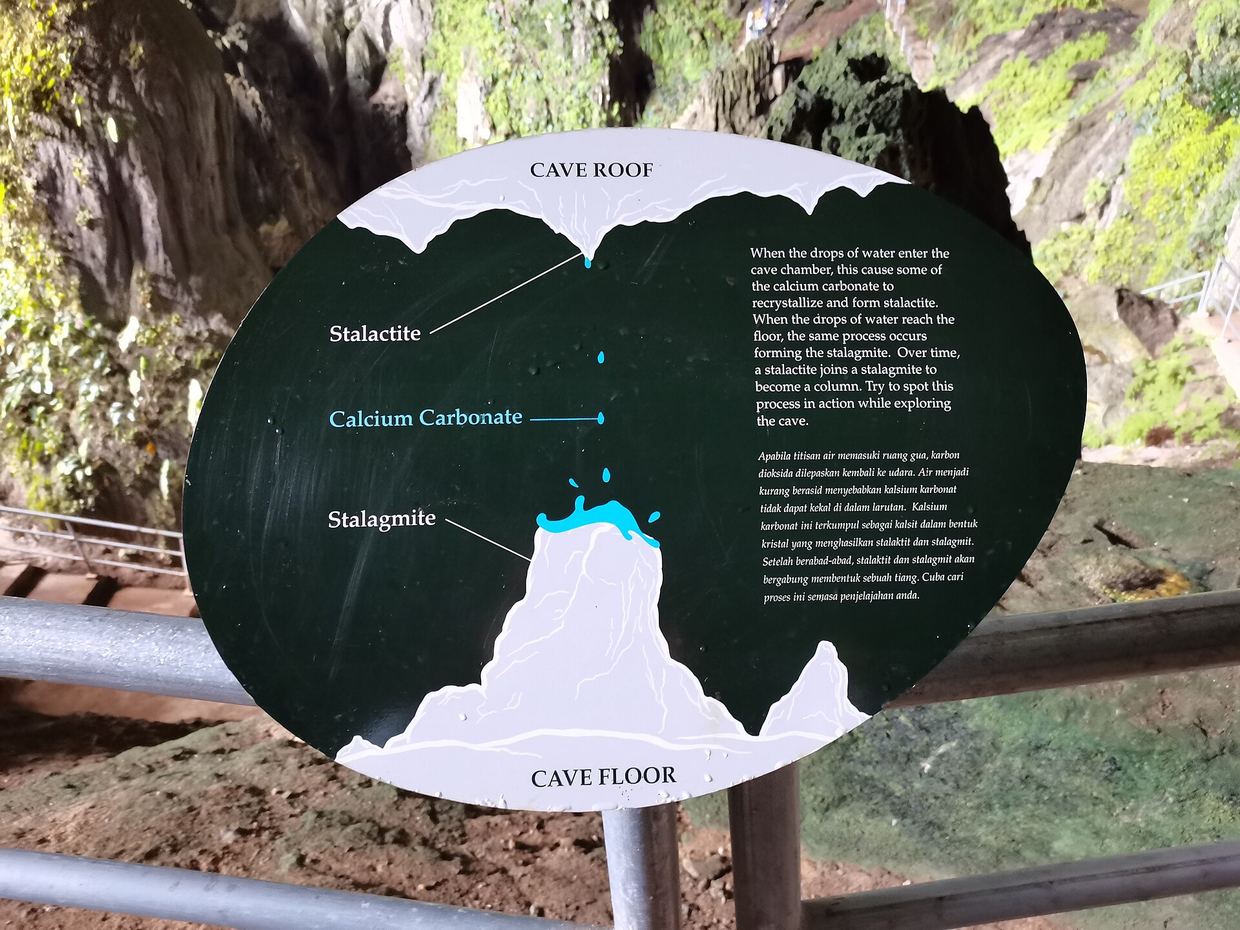
A team led by Hai Cheng of Xi'an Jiaotong University has published ASM-2026, a composite of high-resolution oxygen isotope (δ18O) records from stalagmites in the Asian summer monsoon domain, covering the last 60,000 years. The work appeared in The Innovation Geoscience (volume 4, issue 3). The record is anchored by a U-Th chronology, XJTU-1.0, and resolves monsoon variability from multidecadal to millennial scales doi.org
The Innovation Geosciencedoi.orgOpen source ↗.
Dating accuracy
Paleoclimate archives can be compared only if their timelines agree. According to the release accompanying the paper, Greenland ice cores, the backbone of comparisons for the last ice age, carry dating errors of up to 2,500 years. Antarctic cores and marine sediments have similar uncertainties. Stalagmites can be dated by measuring uranium and thorium isotopes, and the authors anchored the composite with dated abrupt climate events. They report that XJTU-1.0 keeps errors between 40 and 500 years doi.org
The Innovation Geosciencedoi.orgOpen source ↗. The record is intended as a set of geochronological benchmarks for correlating climate variability between regions.
Monsoon, ocean circulation and cycles
The analysis shows that variability of the Asian summer monsoon is only weakly linked to high-latitude ice-sheet forcing in either hemisphere, but closely tracks changes in the Atlantic Meridional Overturning Circulation (AMOC) doi.org
The Innovation Geosciencedoi.orgOpen source ↗. As an example, the authors cite Heinrich Stadial 4, about 40,000 years ago: global ice volume was shrinking, yet the monsoon remained weak.
Terminations of Heinrich Stadials were consistently preceded by a centennial-scale weakening of the South American monsoon. The authors link this, as a likely explanation, to a shift of the Antarctic Oscillation from positive to negative phase, which points to a low-latitude and/or Southern Hemisphere trigger of abrupt climate reorganization doi.org
The Innovation Geosciencedoi.orgOpen source ↗.
The record also contains a pronounced cycle of about 4.5 thousand years, close to one-quarter of the precession period. The authors consider this consistent with modulation by equatorial insolation. On multidecadal to centennial timescales, the amplitude and periodicity of variability in the monsoon and Greenland records decrease from glacial to interglacial conditions, while Antarctic variability responds in the opposite way doi.org
The Innovation Geosciencedoi.orgOpen source ↗.
The authors note that the mechanisms linking South American monsoon weakening to the recovery of ocean circulation remain to be tested, and the cause of the opposing polar behavior is unresolved.
Sources · 2
Found a mistake?Read also