UCLA team: MDM2 inhibitor Navtemadlin improved melanoma-cell killing by engineered T cells in vitro
Transient p53 activation during manufacturing shifted human CD8+ T cells toward memory phenotypes and raised tumor-cell killing in the lab. No patient data yet.
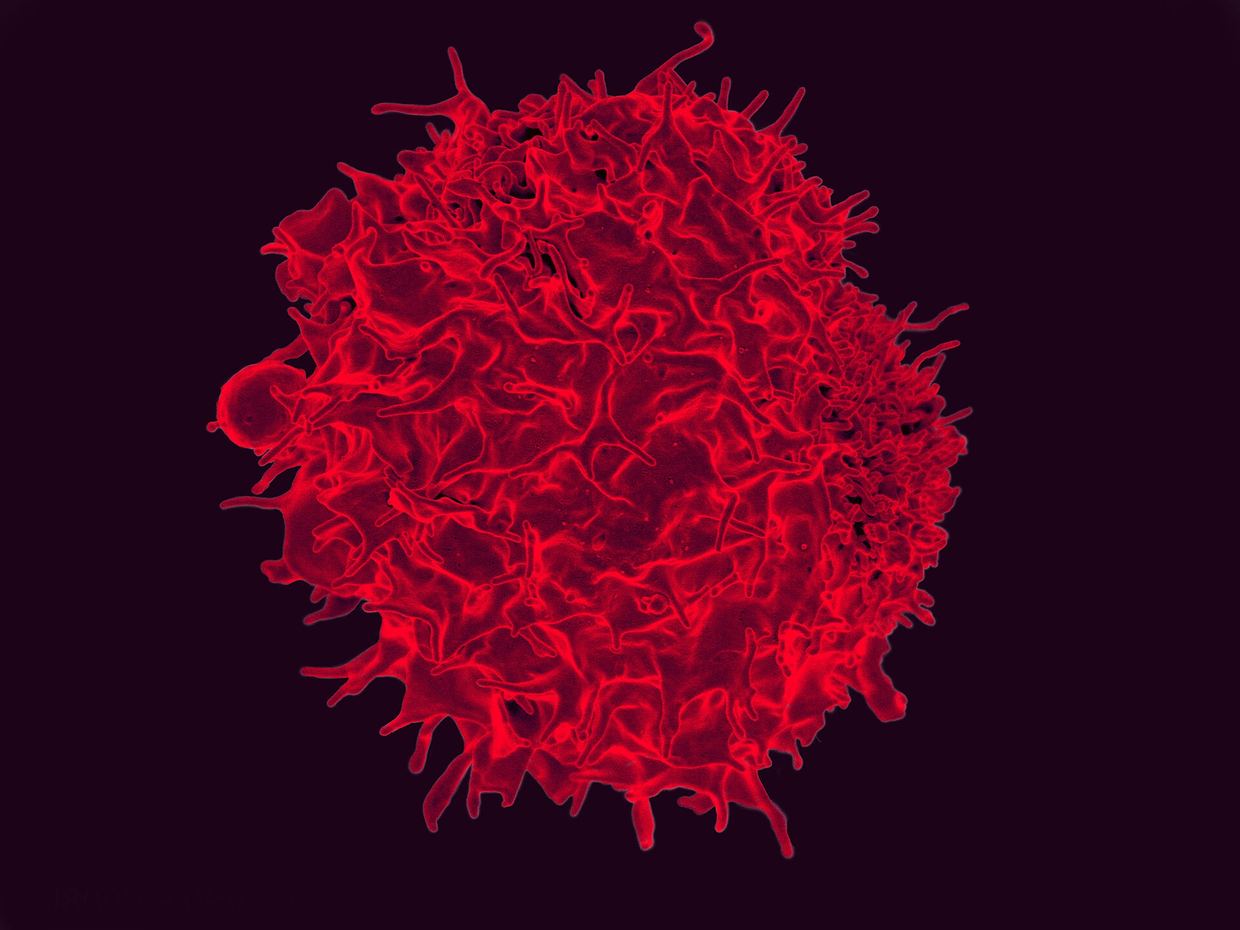
Researchers at the UCLA Health Jonsson Comprehensive Cancer Center reported in Frontiers in Immunology that temporary activation of the p53 pathway during preparation of human CD8+ T cells shifted them toward memory states and improved their killing of melanoma cells in vitro doi.org
Frontiers in Immunologydoi.orgOpen source ↗. The work used Navtemadlin, an investigational inhibitor of the p53 regulator MDM2
doi.org
Frontiers in Immunologydoi.orgOpen source ↗.
CAR-T and TCR-based therapies are limited by poor persistence and progressive T-cell exhaustion, according to the authors doi.org
Frontiers in Immunologydoi.orgOpen source ↗. The laboratory preparation of the cells can also make them mature too quickly, which reduces their survival and effectiveness over time.
p53 activation and memory differentiation
In quiescent naïve CD8+ T cells p53 expression was minimal, but it was rapidly induced after T-cell receptor activation doi.org
Frontiers in Immunologydoi.orgOpen source ↗. MDM2 normally keeps p53 levels under control. Its inhibition raised p53 protein levels and promoted expansion of central memory and stem-like memory T-cell subsets during clonal proliferation
doi.org
Frontiers in Immunologydoi.orgOpen source ↗.
Treated cells showed better mitochondrial fitness, greater polyfunctional cytokine production, and transcriptional programs consistent with memory differentiation and reduced exhaustion doi.org
Frontiers in Immunologydoi.orgOpen source ↗. They were more likely to produce interferon-gamma and granzyme B, and they had greater energy reserves.
Tumor-cell killing and limits
To test function, the team engineered T cells to recognize a protein found on certain melanoma cells and monitored them with imaging equipment for nearly seven days. Cells generated with Navtemadlin killed tumor cells better than conventionally manufactured cells doi.org
Frontiers in Immunologydoi.orgOpen source ↗. The difference appeared after about 40 hours and persisted through the experiment. The treated cells also showed improved activity without additional interleukin-2.
The effect depended on dose. At lower concentrations Navtemadlin encouraged memory T cells without substantially reducing the number of viable cells, while higher concentrations caused more cell death. This points to the need for careful control of p53 activation.
The authors suggest that adding such a drug at the manufacturing stage could fit into existing processes without extra genetic modification doi.org
Frontiers in Immunologydoi.orgOpen source ↗. The experiments were done on human cells in the laboratory and did not test treatment outcomes in patients. Senior author Joseph Crompton said the study is one of the first to link p53 to T-cell exhaustion in humans.