Slug-inspired PNIPAM/Ga3+ hydrogel seals gastrointestinal fistulas in rats and minipigs
An injectable hydrogel passes through a standard endoscope and gels at body temperature. It was tested in rats and minipigs, where stents and clips have limits.
A team led by Prof. Bai Shuo of the Institute of Process Engineering, Chinese Academy of Sciences, together with Dr. Li Jingtao's group at the China–Japan Friendship Hospital, has developed a thermoresponsive hydrogel sealant for gastrointestinal fistulas. According to nature.com, where the work appeared in Nature Biomedical Engineering on October 30, the material was tested in living Sprague–Dawley rats and Bama miniature pigs nature.com
nature.comnature.comOpen source ↗. The sealant is injected through a standard endoscope and solidifies inside the body
nature.com
nature.comnature.comOpen source ↗.
Fistulas and the slug-derived material
Gastrointestinal fistulas are abnormal passages between the digestive tract and another organ or tissue. They arise as a complication of surgery, trauma, inflammatory diseases and tumors, and are among the main causes of morbidity and mortality nature.com
nature.comnature.comOpen source ↗. Endoscopic treatment has limits: stents migrate, fistulas closed with titanium clips recur, and endoscopic suturing is technically difficult. Postoperative tissue adhesion complicates treatment further.
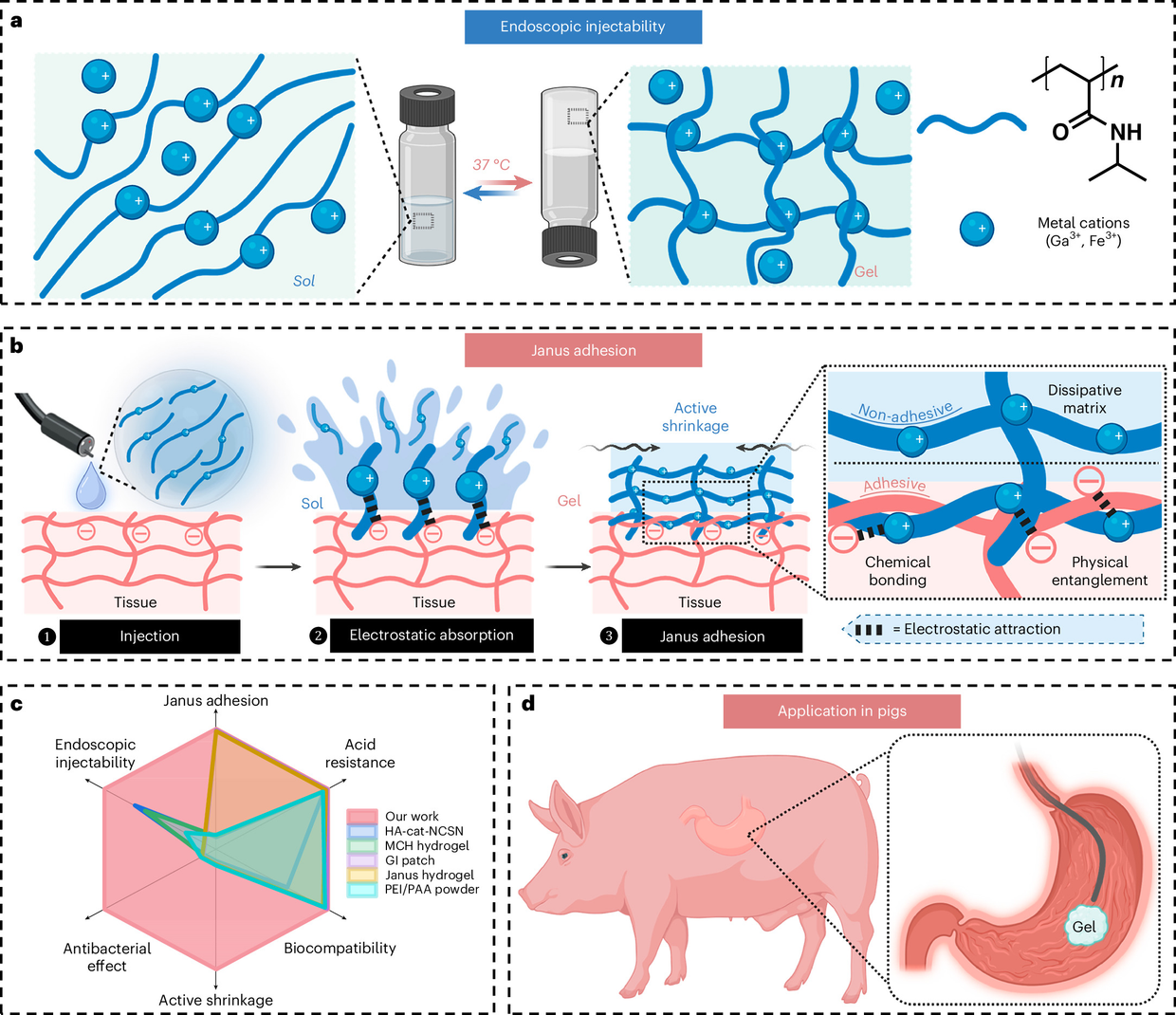
The sealant, named PGaIII, combines linear poly(N-isopropylacrylamide) (PNIPAM) with Ga3+ ions nature.com
nature.comnature.comOpen source ↗. The design follows the mucus of slugs, which holds tree frogs to branches. This mucus is rich in positively charged proteins that stick to wet tissue through electrostatic interactions and physical entanglement.
Properties and test results
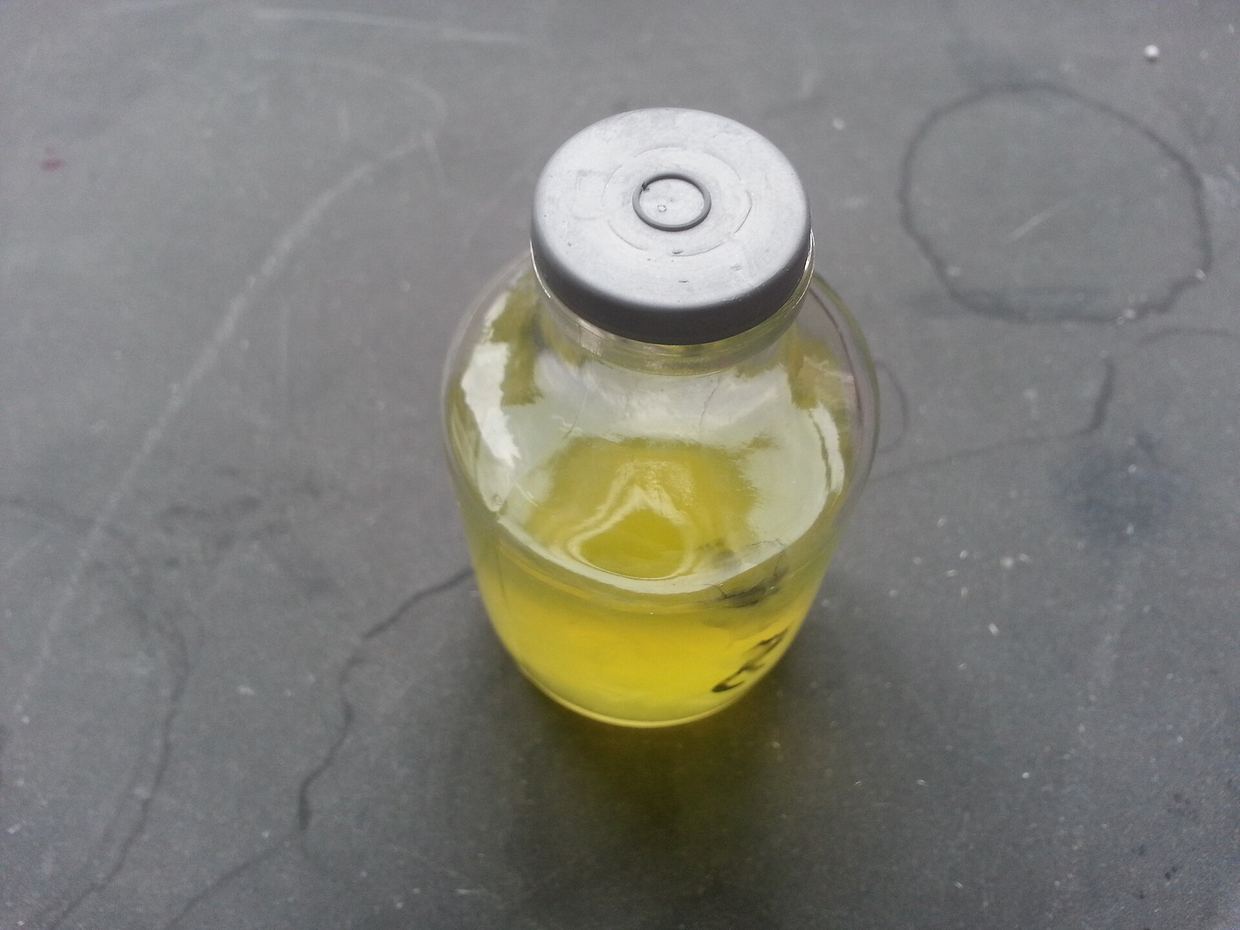
At 25 °C PGaIII is a transparent, flowing liquid that passes through a 27-gauge needle and a standard endoscopic channel. At about 37 °C in the body it turns into a gel in roughly 30 seconds. The tissue-facing side adheres to negatively charged tissue through electrostatic interactions and topological entanglement, while the lumen-facing side stays non-adhesive. Injection, adhesion and contraction take place in a single step, and the authors call the mechanism slug-inspired electrostatically assisted topological (SET) Janus adhesion nature.com
nature.comnature.comOpen source ↗.
In vitro, the adhesive side showed a shear strength of about 10.46 kPa against 0.11 kPa for the non-adhesive side, a difference of nearly 100-fold. In an ex vivo porcine stomach, the hydrogel sealed a 10-mm perforation without leakage. The authors also report biocompatibility, water and acid resistance, active shrinkage and antibacterial properties, as well as prevention of postoperative adhesions nature.com
nature.comnature.comOpen source ↗.
In living rats and minipigs, the authors report that the sealant repaired fistulas and was convenient to use in non-invasive endoscopic surgery nature.com
nature.comnature.comOpen source ↗. They suggest it may be applicable to fistulas in other organs. For now, the evidence comes from animal and ex vivo models.