280 Palaeolithic engravings, 55 of them animals, described in Cova de la Font Major, Catalonia
IPHES-CERCA researchers recorded 280 engraved motifs in a cave at Espluga de Francolí; before, Catalonia had only two Upper Palaeolithic wall images, both disputed or lost.
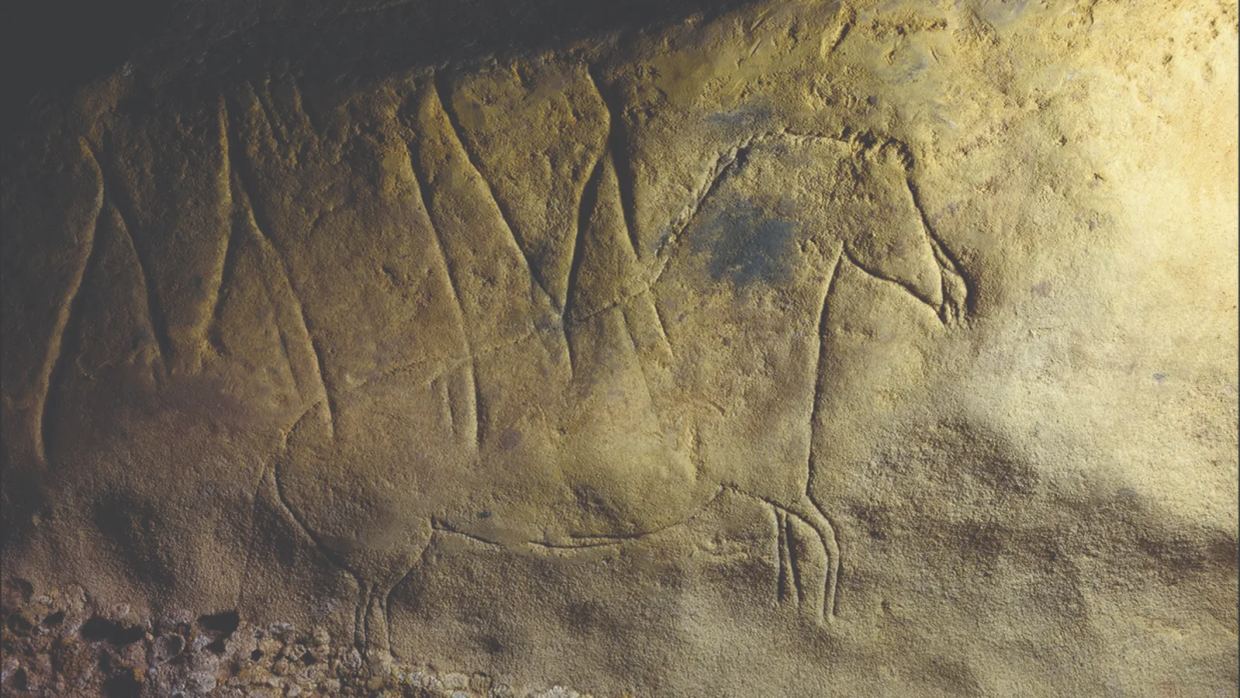
A team from the Institut Català de Paleoecologia Humana i Evolució Social (IPHES-CERCA), led by Josep Maria Vergès Bosch, has described a Palaeolithic rock art assemblage in the Cova de la Font Major in Espluga de Francolí, Catalonia. According to the article published via doi.org, the study records 280 graphic motifs in five sectors of the Gatoneres de Cal Palletes, a side area of the cave. Of these, 55 are depictions of animals doi.org
doi.orgdoi.orgOpen source ↗.
Catalonia's sparse record of cave art
More than half of the Palaeolithic wall art assemblages in Europe lie in the Iberian Peninsula, but their distribution is uneven. Cantabria, the Basque Country and Andalusia hold many decorated caves, while Catalonia has yielded only sporadic and fragmentary evidence doi.org
doi.orgdoi.orgOpen source ↗.
Until recently, only two wall images attributed to the Upper Palaeolithic were known in Catalonia. A black-painted bovid from the Cova del Tendo was stolen soon after its discovery and survives only in photographs and a tracing. A possible deer from the Cova de la Taverna has an anthropic origin that remains uncertain doi.org
doi.orgdoi.orgOpen source ↗.
The engravings of Gatoneres de Cal Palletes
The cave, at 410 m above sea level, belongs to the Coves de l'Espluga karst system, where 3590 m of galleries have been explored and mapped. Its entrance collapsed, probably in the Roman period, and exploration resumed in 1853 doi.org
doi.orgdoi.orgOpen source ↗. Reports of the discovery say the cave was reopened to the public in 1957 and became a tourist attraction in 1993. The engravings were noticed on 30 October 2019 among later name inscriptions and graffiti.
The Gatoneres de Cal Palletes lie about 250 m from the present entrance. Soft marl layers run through the coarser limestone conglomerate there and give surfaces for fine incision. High-resolution three-dimensional models show that most grooves are 3 to 7 mm wide; they were mostly incised and less often scraped.
The animals include horses, deer, caprids and aurochs, and there is one unusual bear. Many are only outlines: about 30 percent cannot be assigned to an animal group with confidence, and another 15 percent remain undecided between two groups. Most motifs are not figurative. They include sets of two to four parallel lines, groups of up to 40 strokes, and circles, semicircles and quadrangular signs. In some animal images, natural edges and cracks of the wall may have been deliberately used.