Survey of 1500 km of the Rub' al Khali finds palaeolakes but no stone tools or knappable rock
Palaeolake deposits were recorded at 55 of 125 localities, yet no lithic artefacts were found. The authors conclude that access to stone, not only water, shaped early human settlement.
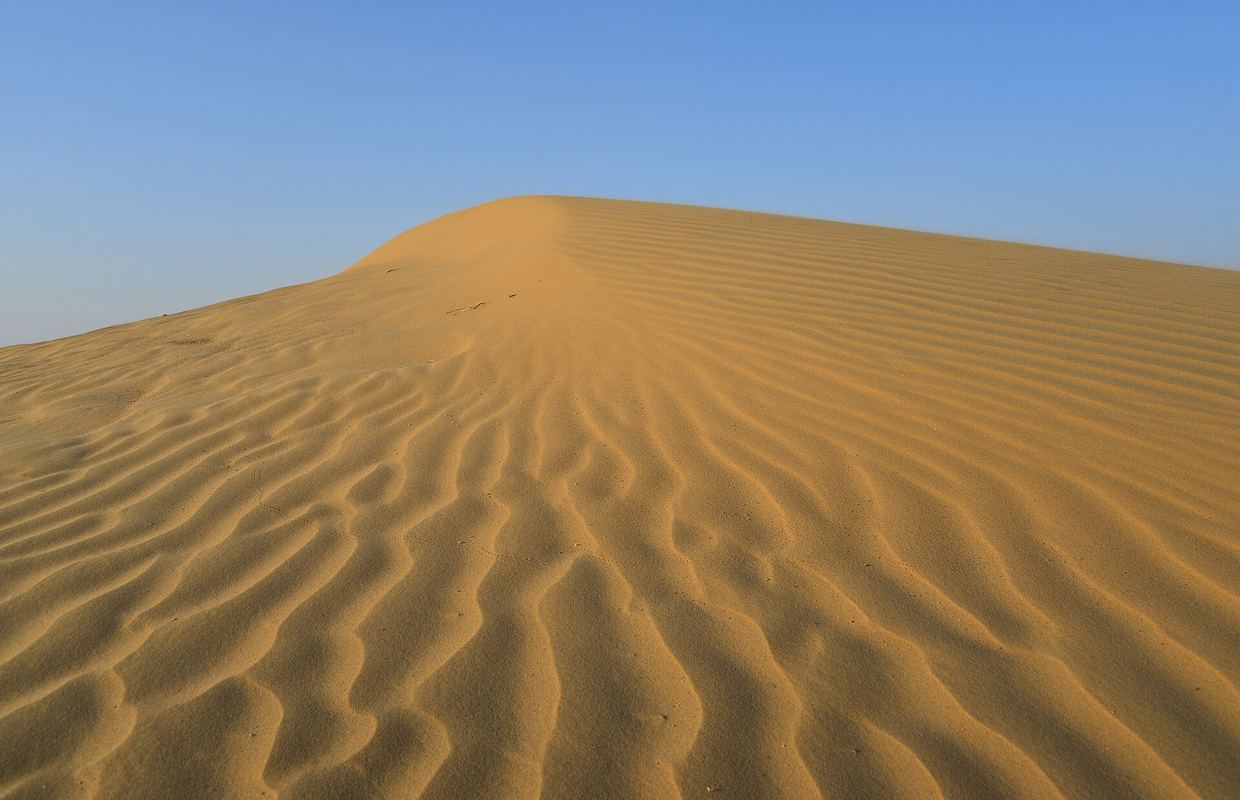
A team of geoarchaeologists surveyed about 1500 km through the Rub' al Khali in Arabia, the largest sand sea in the world. They reported in Nature that the availability of stone for tool manufacture acted as an independent factor in early human settlement doi.org
Naturedoi.orgOpen source ↗. The team investigated 125 localities and recorded palaeolake deposits at 55 of them
doi.org
Naturedoi.orgOpen source ↗.
No stone along the transect
Models of early human dispersal rely on climate to predict where populations could settle, with freshwater assumed to govern timing and geography. Humid windows periodically opened corridors into the desert interior. Yet Pleistocene dispersals into "Green Arabia" were brief and geographically constrained, a pattern that water availability alone does not explain doi.org
Naturedoi.orgOpen source ↗.
Along the transect the authors found no lithic artefacts and no knappable raw materials, although ground-surface visibility exceeded 95% doi.org
Naturedoi.orgOpen source ↗. Freshwater was abundant, and people were living at the desert margins at the same time
doi.org
Naturedoi.orgOpen source ↗.
Water and stone in the model
Spatial modelling of the Arabian Peninsula supports the inference that settlement tracked the co-occurrence of water and lithic raw materials rather than water alone doi.org
Naturedoi.orgOpen source ↗. Across the Peninsula, 57% of water-accessible terrain lies on formations that lack knappable stone
doi.org
Naturedoi.orgOpen source ↗.
Adding raw-material availability to the model raises discrimination of known site locations from an area under the curve of 0.695 to 0.768 doi.org
Naturedoi.orgOpen source ↗. According to the authors, convergent patterns from Africa, North America and Asia indicate that the constraint is not peculiar to Arabia
doi.org
Naturedoi.orgOpen source ↗.
The authors conclude that dispersal models omitting raw-material geology may systematically overestimate the habitable range of stone-tool-dependent populations doi.org
Naturedoi.orgOpen source ↗. They also note that later work may find sporadic occupation in the interior. The absence of finds in this survey does not show that no one ever crossed it.
Sources · 2
Found a mistake?Read also