Neutronics model of Germany's B8 reactor: keff 0.94, twice the uranium needed for criticality
A PNAS Nexus study used archival forensics and a neutronics model validated by 1945 data. It puts the B8 shortfall far above what Heisenberg stated.
A team of authors including University of Maryland physicist Timothy Koeth has published a reconstruction of the B8 pile in PNAS Nexus (2026). B8 was the last reactor experiment of Germany's wartime nuclear program, built in April 1945 from natural uranium and heavy water. According to the authors' calculations, the reactor as built had an effective multiplication factor keff of 0.94, so it was not self-sustaining doi.org
PNAS Nexusdoi.orgOpen source ↗.
Neutronics of the B8 pile
In a 1947 Nature article, the designer of B8, Werner Heisenberg, claimed that the pile was "just insufficient" and lacked only a "relatively small amount of uranium" doi.org
PNAS Nexusdoi.orgOpen source ↗. To test this, the authors carried out forensic and document-based analysis of the uranium, heavy water and graphite used in the experiment. They then built a neutronics model and validated it against in situ measurements made in 1945
doi.org
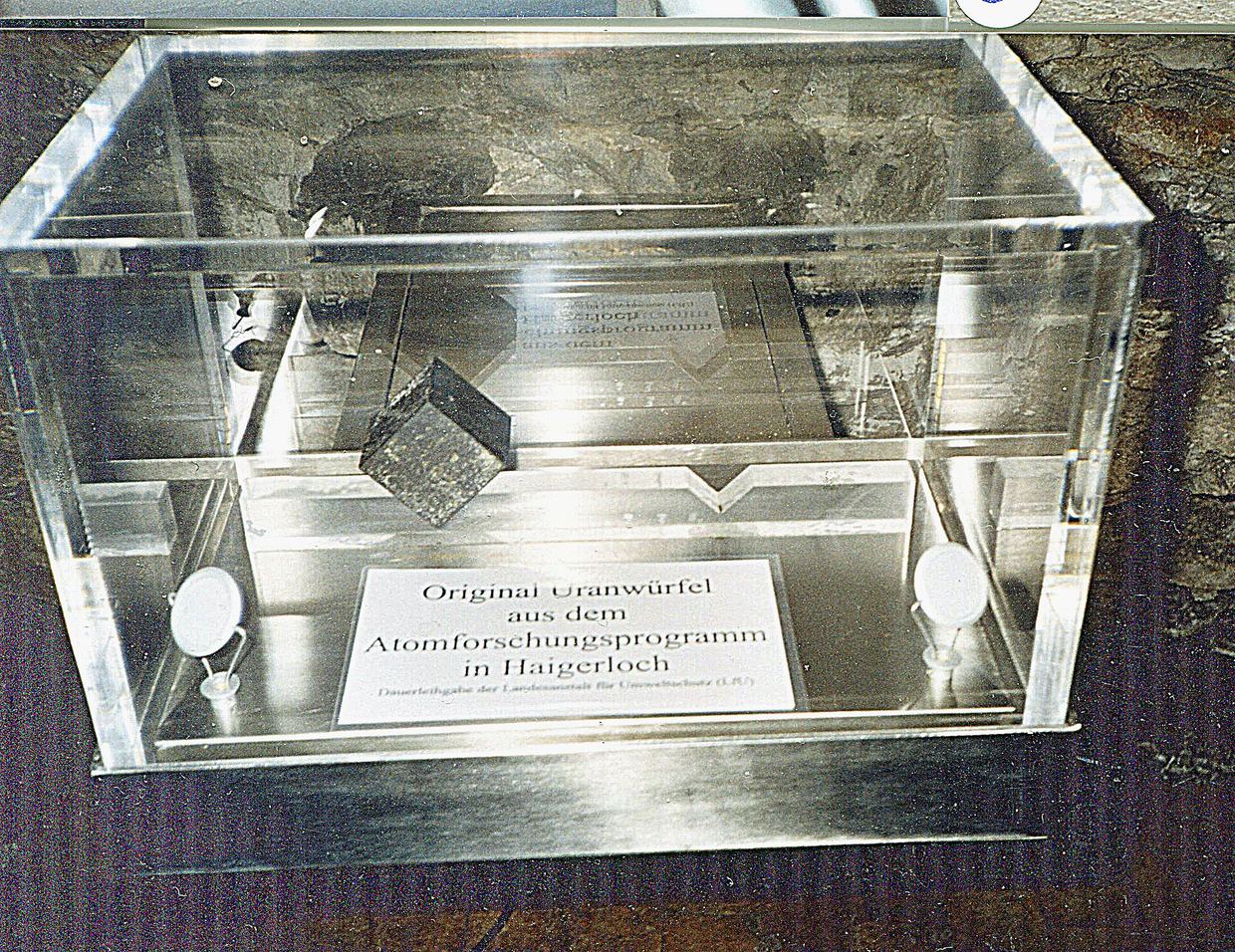
PNAS Nexusdoi.orgOpen source ↗. Per the Ars Technica account, the work included analysis of two surviving uranium cubes and archival reports and correspondence. B8 was assembled at Haigerloch from 664 uranium cubes, suspended in a tank of heavy water and surrounded by graphite.
To reach keff = 1.0, the Germans would have needed about 2.0 times the uranium and about 2.2 times the heavy water they used, the authors report doi.org
PNAS Nexusdoi.orgOpen source ↗. This is far above Heisenberg's estimate. The required inventories were about 1.2 and 1.8 times, respectively, Germany's estimated available wartime stocks
doi.org
PNAS Nexusdoi.orgOpen source ↗. Ars Technica, citing the paper, gives a range of 1,292 to 1,775 uranium cubes. It also says the heavy water needed was twice what the Norsk Hydro plant in Vemork, Norway, produced over the whole war.
Graphite instead of heavy water
In the following decades, historians suggested that the Germans should have pursued graphite reactors, as the Americans did doi.org
PNAS Nexusdoi.orgOpen source ↗. The authors tested this option too. The graphite of B8 contained 3.4 wppm of boron impurities and had been re-used from the earlier B7 experiment. According to the calculations, it would not allow criticality in a hypothetical pile of graphite and natural uranium
doi.org
PNAS Nexusdoi.orgOpen source ↗.
The difference lies in the raw material. German graphite was made from metallurgical coke, which naturally carries more boron than graphite from petroleum coke. The latter was available in America and, in the authors' words, uniquely enabled the criticality of Chicago Pile 1 doi.org
PNAS Nexusdoi.orgOpen source ↗. The authors conclude that Germany could not have built either a heavy water or a graphite reactor during World War II
doi.org
PNAS Nexusdoi.orgOpen source ↗.