USGS tests drone tracking of radio-tagged Burmese pythons in the Everglades, 4.88 m snake released
In September 2026 USGS biologists flew a small drone to pick up radio signals from a tagged 67 kg python. The method is still under evaluation.
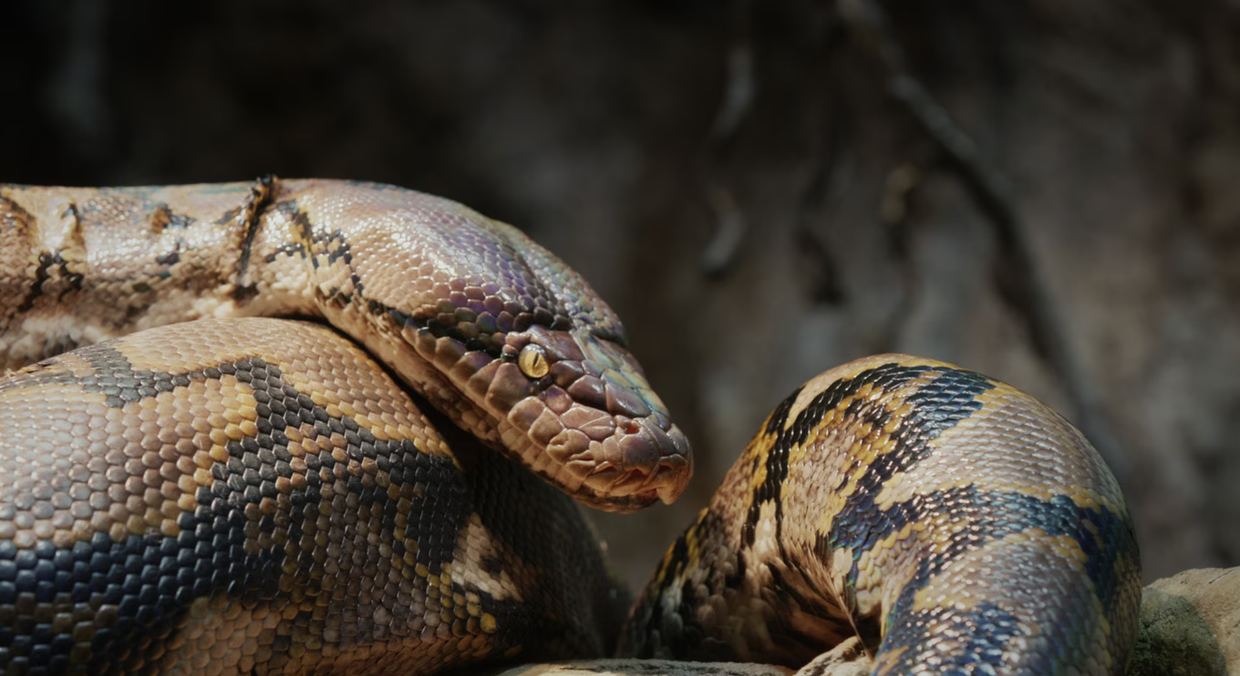
In September 2026, biologists of the United States Geological Survey (USGS) tested a small drone to locate a Burmese python released in the Florida Everglades, according to Futura Sciences. The snake, a female 4.88 m long and weighing 67 kg, had just been fitted with a radio tag. University of Florida interns released her while USGS staff flew the drone. futura-sciences.com
Futura Sciencesfutura-sciences.comOpen source ↗ The agency also published preliminary findings from experiments combining radiotelemetry and light drones in the Greater Everglades Ecosystem.
futura-sciences.com
Futura Sciencesfutura-sciences.comOpen source ↗
Scout snakes and the breeding season
The test belongs to the USGS "scout snake" programme. Selected males and females receive a surgically implanted radio transmitter and are tracked throughout the year, with particular attention to the breeding season. futura-sciences.com
Futura Sciencesfutura-sciences.comOpen source ↗ Males gather around a receptive female, so a single signal can lead researchers to several animals.
futura-sciences.com
Futura Sciencesfutura-sciences.comOpen source ↗ In the 2019-2020 season the method removed 86 adult pythons, about 2,270 kg in total, including 53 breeding females carrying more than 2,500 developing eggs.
futura-sciences.com
Futura Sciencesfutura-sciences.comOpen source ↗
The USGS has confirmed that Burmese pythons eat protected native species, among them the Key Largo woodrat (federally listed as threatened), the wood stork, the limpkin and the round-tailed muskrat. futura-sciences.com
Futura Sciencesfutura-sciences.comOpen source ↗
What the drone is meant to do
Finding the snakes remains laborious: researchers walk through wet prairies and dense vegetation to pick up radio signals. futura-sciences.com
Futura Sciencesfutura-sciences.comOpen source ↗ The test was meant to check whether an uncrewed aircraft (sUAS) can receive the signals from the air more efficiently than a ground team.
futura-sciences.com
Futura Sciencesfutura-sciences.comOpen source ↗ The drone can carry either a radio receiver to locate tags or a camera for visual surveillance.
futura-sciences.com
Futura Sciencesfutura-sciences.comOpen source ↗
If the approach proves effective, it could lower operating costs, allow pythons to be located more often and reduce risk to field staff in hard-to-reach areas, according to the source. futura-sciences.com
Futura Sciencesfutura-sciences.comOpen source ↗ For comparison, trained detection dogs are estimated to be 2.5 times more effective than humans alone, but their use depends on terrain and on qualified handlers.
futura-sciences.com
Futura Sciencesfutura-sciences.comOpen source ↗
The USGS has not yet validated the approach. Evaluation continues in the complex habitats of Everglades National Park and Big Cypress National Preserve. Both areas are covered by a geospatial dataset published in September 2026, which compiles the locations of pythons tracked between 2005 and 2026. futura-sciences.com
Futura Sciencesfutura-sciences.comOpen source ↗