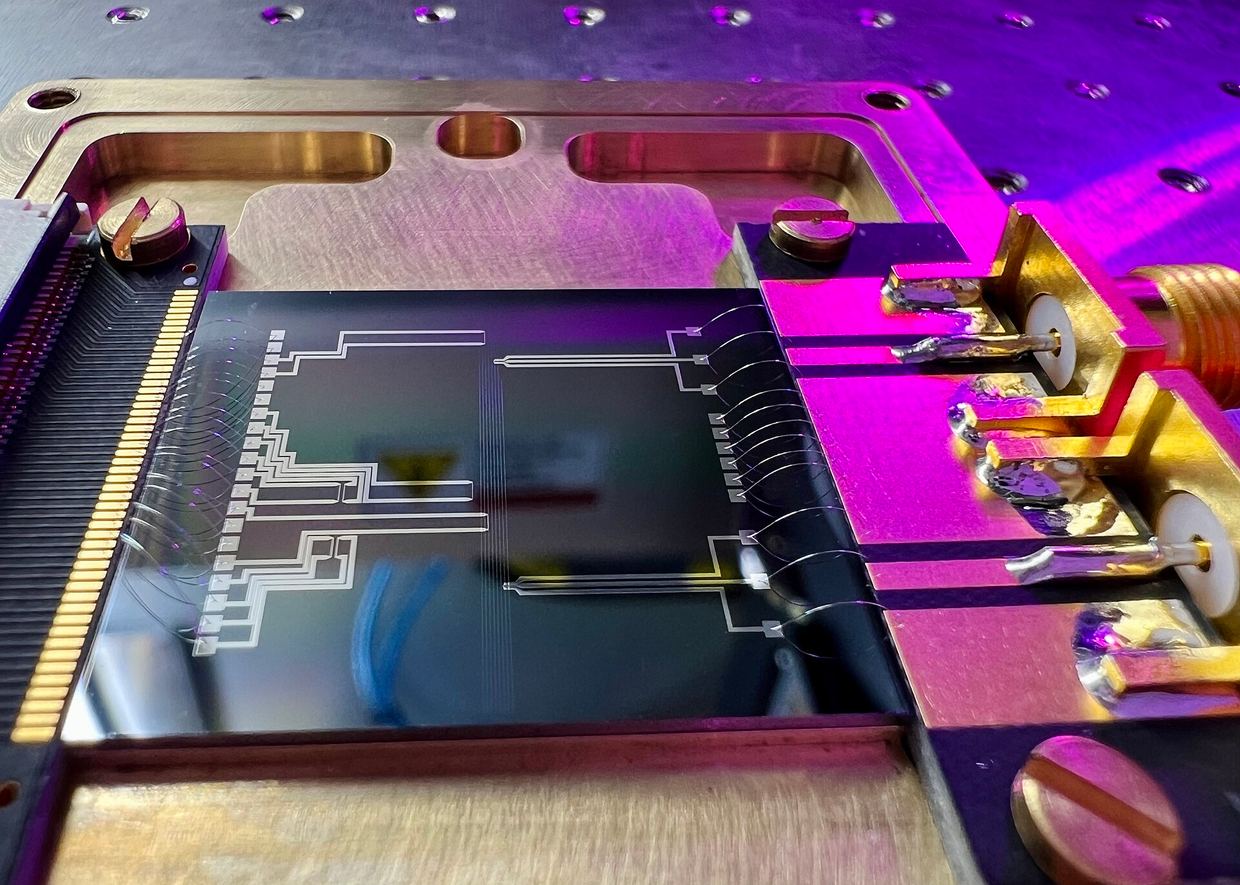
Cornell builds transistor from aluminum gallium oxide with bandgap above 7 eV
Cornell engineers grew a silicon-doped aluminum gallium oxide film on sapphire and built a diode and a transistor from it. The previous record bandgap was about 6 eV.
Engineers at Cornell University reported a semiconductor with a bandgap exceeding 7 electron volts and built working devices from it, according to news.cornell.edu. The study was published on Oct. 7 in Nature. The material is silicon-doped aluminum gallium oxide, and the previous record was about 6 electron volts cornell.edu
news.cornell.edunews.cornell.eduOpen source ↗.
A wider bandgap lets a semiconductor withstand stronger electric fields before breakdown, which matters for electric vehicles and power-grid equipment. The difficulty is that materials with wider bandgaps tend to behave more like insulators than semiconductors cornell.edu
news.cornell.edunews.cornell.eduOpen source ↗. Senior author Darrell Schlom said the first reaction of his colleagues was "that's impossible"
cornell.edu
news.cornell.edunews.cornell.eduOpen source ↗.
Growth and conductivity
Doctoral student Jacob Steele grew the thin films by suboxide molecular-beam epitaxy, a technique that builds crystalline material one layer at a time under carefully controlled conditions. Silicon atoms were incorporated at a sufficiently low temperature, which introduced mobile electrons that carry current cornell.edu
news.cornell.edunews.cornell.eduOpen source ↗.
In the range above 6 electron volts, the doped films showed room-temperature conductivity more than 100 million times higher than previously reported for materials in this category, according to the study cornell.edu
news.cornell.edunews.cornell.eduOpen source ↗. The films were grown on sapphire, a substrate that is widely available and produced at large scale
cornell.edu
news.cornell.edunews.cornell.eduOpen source ↗.
Diode and AlphaFET transistor
Groups led by Huili Grace Xing and Debdeep Jena developed a diode and a field-effect transistor, named AlphaFET. Doctoral student Debaditya Bhattacharya designed, fabricated and measured the device cornell.edu
news.cornell.edunews.cornell.eduOpen source ↗. Xing said the preliminary transistors show a change in current of more than four orders of magnitude, controlled by the capacitively coupled metal gate and the channel with the colossal bandgap
cornell.edu
news.cornell.edunews.cornell.eduOpen source ↗. Schlom said he became convinced the result was real only after the working devices appeared
cornell.edu
news.cornell.edunews.cornell.eduOpen source ↗.
David Muller and Naomi Pieczulewski examined the material with an electron microscope and found a large number of defects. Schlom said this resembles other semiconductors at the start of their development and leaves room to improve the properties of the material and devices cornell.edu
news.cornell.edunews.cornell.eduOpen source ↗.
Jena said further work is needed to make the devices practical. He named electrical propulsion systems for vehicles, power electronics for data centers, quantum cascade lasers and vacuum UV photonic devices among possible applications cornell.edu
news.cornell.edunews.cornell.eduOpen source ↗.