Bergen team finds ocean near Pacific garbage patch brightening in satellite data, 2002–2022
Satellite records for 2002–2022 show blue-green brightening near the Great Pacific Garbage Patch. The authors suspect microplastics; water samples have not yet confirmed it.
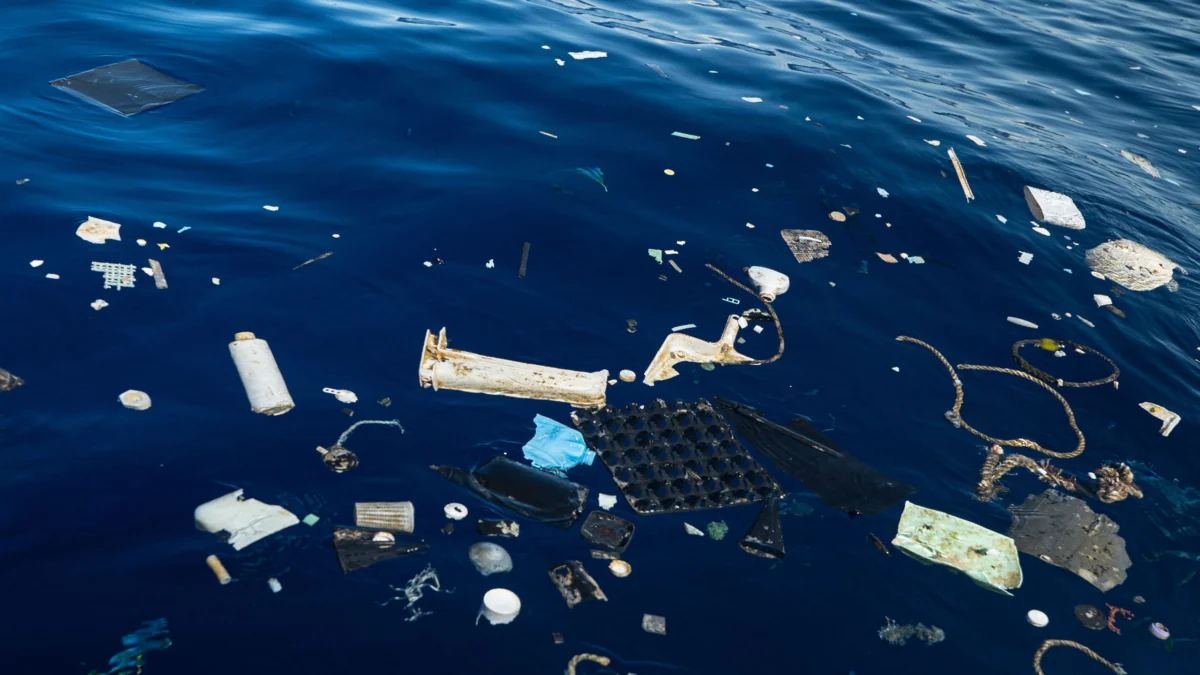
Ocean optics specialists Shea Cheatham, Daniel Koestner and Børge Hamre of the University of Bergen in Norway report that the concentration of microplastics in the Great Pacific Garbage Patch may be high enough to change the colour of the water, ScienceAlert writes. In satellite observations spanning 2002 to 2022, the researchers found a subtle but statistically significant brightening of the ocean in blue and green wavelengths near the patch, seen as a gradually growing cyan tint sciencealert.com
ScienceAlertsciencealert.comOpen source ↗. The study was published in Communications Earth & Environment.
The patch and its microplastics
The Great Pacific Garbage Patch lies within a circular current system in the North Pacific, a gyre, and covers an area roughly twice the size of Texas. The debris is so diffusely spread that the patch cannot be detected in satellite images. A 2018 survey estimated that it contained some 1.8 trillion pieces of plastic weighing around 79,000 metric tons sciencealert.com
ScienceAlertsciencealert.comOpen source ↗.
By number, microplastic fragments dominate: an estimated 94 percent of the pieces, though only 8 percent of the total mass. Larger debris is largely discarded fishing equipment sciencealert.com
ScienceAlertsciencealert.comOpen source ↗.
Optical signature
The work grew out of laboratory research on how microplastics absorb and scatter light, compared with natural seawater components such as phytoplankton and minerals. According to Cheatham, microplastics absorb little light across the visible spectrum and scatter strongly, so they brighten the water at blue and green wavelengths at the same time sciencealert.com
ScienceAlertsciencealert.comOpen source ↗. Simulations suggested that this effect could appear at microplastic concentrations that may already exist in the patch.
Phytoplankton absorb blue and red light and make the ocean greener, while dissolved organic matter absorbs more blue and darkens the water. Mineral dust can also brighten the ocean, but it is more abundant in coastal waters, and measurements from a nearby research station showed stable dust deposition over the study period sciencealert.com
ScienceAlertsciencealert.comOpen source ↗.
The result does not conclusively establish microplastics as the cause. The authors found that certain combinations of natural environmental changes could produce a similar signature, although such scenarios were relatively rare in their simulations sciencealert.com
ScienceAlertsciencealert.comOpen source ↗. To settle the question, the team plans optical measurements of water samples from the patch and quantification of the microplastics present; Cheatham said the researchers hope to do this in the future.
Cheatham also noted that removing the smallest microplastics from the water column is essentially impossible, and that the only way to reduce such pollution is to prevent it from entering the water sciencealert.com
ScienceAlertsciencealert.comOpen source ↗.
Sources · 1
Found a mistake?Read also