Euclid telescope finds 31 early-Universe quasars, two with record redshifts of 7.77 and 7.69
ESA's Euclid found 31 ancient quasars, two of them the earliest known, seen when the Universe was about 670 million years old. The sample was gathered in about a year.
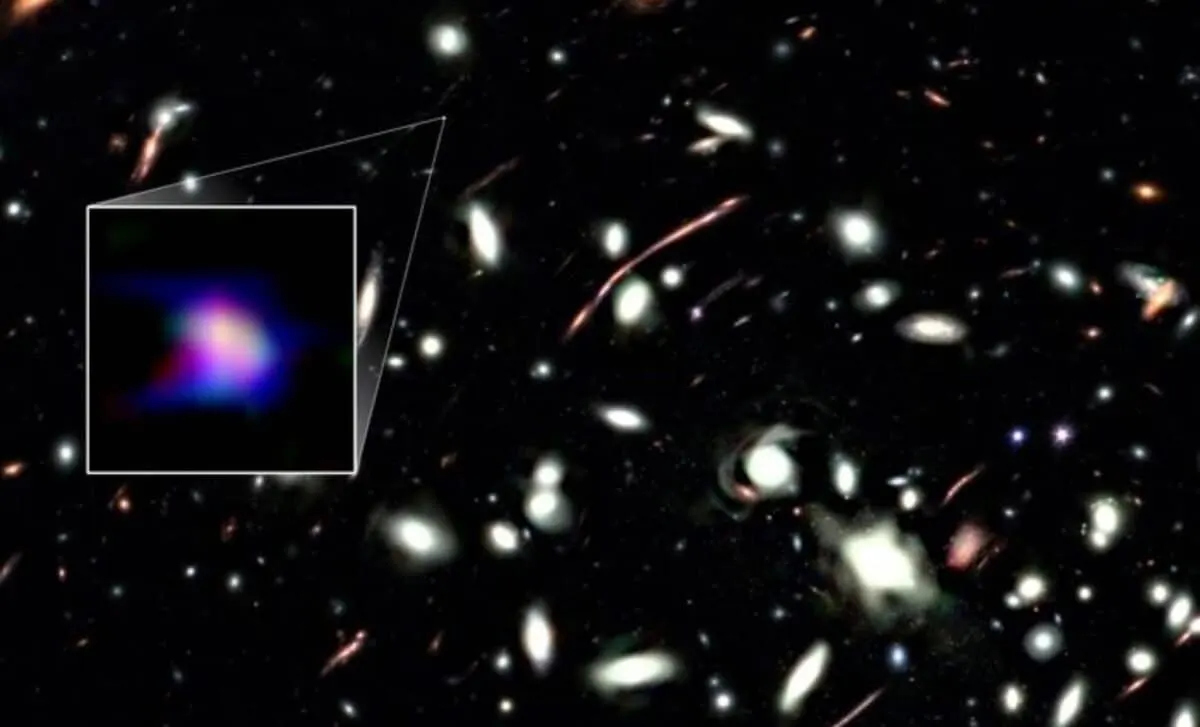
The European Space Agency's Euclid space telescope has identified 31 quasars from the early Universe, according to ScienceDaily. Two of them are the earliest quasars observed so far: they were already shining when the Universe was about 670 million years old, roughly 5% of its present age. sciencedaily.com
ScienceDailysciencedaily.comOpen source ↗ These galactic centers, powered by supermassive black holes, radiated as much light as a trillion Suns.
A quasar appears during a relatively short period in a galaxy's history, when large amounts of gas and other material fall toward the central black hole and release energy. The core then shines hundreds or even thousands of times brighter than the rest of the galaxy. Early quasars are hard to find: few galaxies had grown large enough to host them, their light is very faint, and the sources are difficult to tell apart from nearby stars.
Redshift records
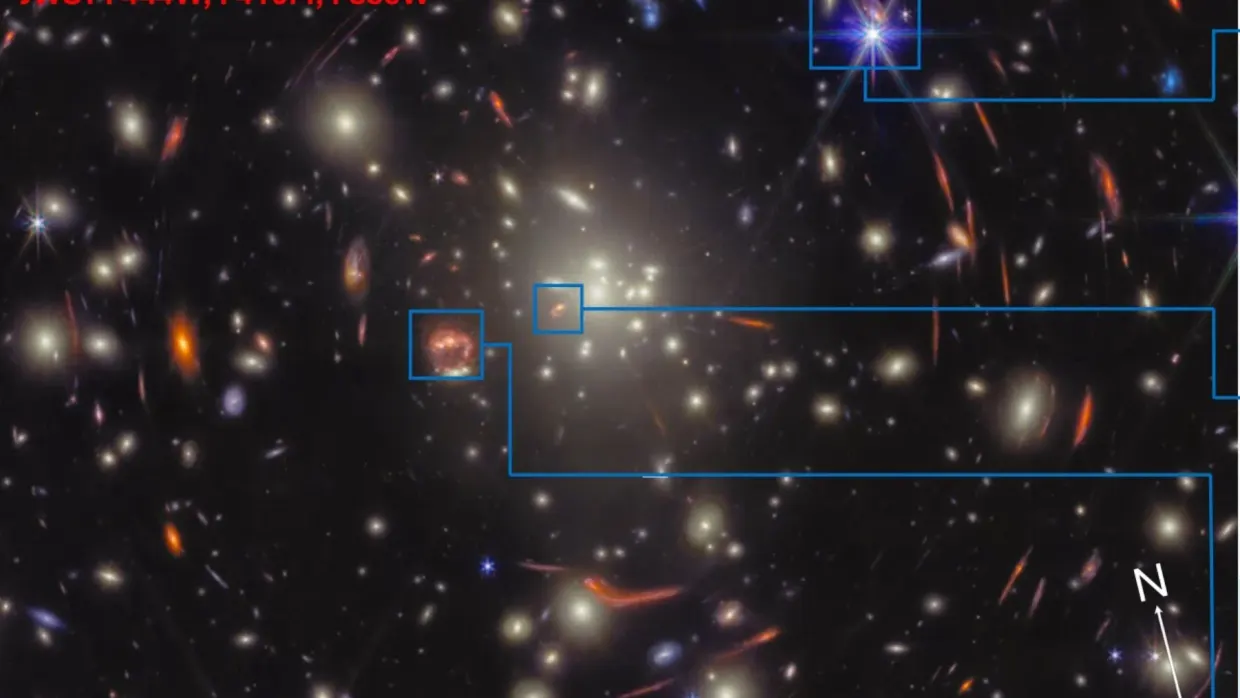
Of the 31 quasars, 12 have a redshift of 7 or greater, which places them within the Universe's first 770 million years. The most distant, EUCL J172902.75+641018.1, has a redshift of 7.77; EUCL J125308.55+705432.3 has 7.69. Both lie just over 13 billion light-years away. The previous record, set by an object found in 2021, was a redshift of 7.64.
According to Antonio La Marca of the Euclid team, the result more than doubles the number of known quasars this ancient. Astronomers needed more than a decade to find roughly the first 10 quasars with a redshift of 7 or higher; Euclid has passed that number in one year. sciencedaily.com
ScienceDailysciencedaily.comOpen source ↗ Lead author Daming Yang of Leiden University said earlier searches could find only a handful of the brightest such objects, while Euclid can capture much fainter ones.
Survey and follow-up
All 31 quasars come from the Euclid Wide Survey, which will eventually cover more than one-third of the sky. The telescope, launched in 2023, combines a large field of view, depth, sharp imaging and infrared vision from space. Candidates are selected from the data by the Euclid Consortium and then studied with ground-based telescopes.
Silvia Belladitta and colleagues examined the second most ancient of these quasars in more detail. They found it inside a galaxy rich in gas and dust, where new stars are forming at a high rate. The quasars belong to the epoch of reionization, when radiation heated and ionized the gas of a Universe emerging from the "dark ages".