At RHIC, strange-quark pairs from the vacuum show parallel spins, as predicted 30 years ago
A Brookhaven team reported in Nature that Lambda hyperon pairs from proton collisions at RHIC have parallel spins, tracing virtual particles as they become real ones.
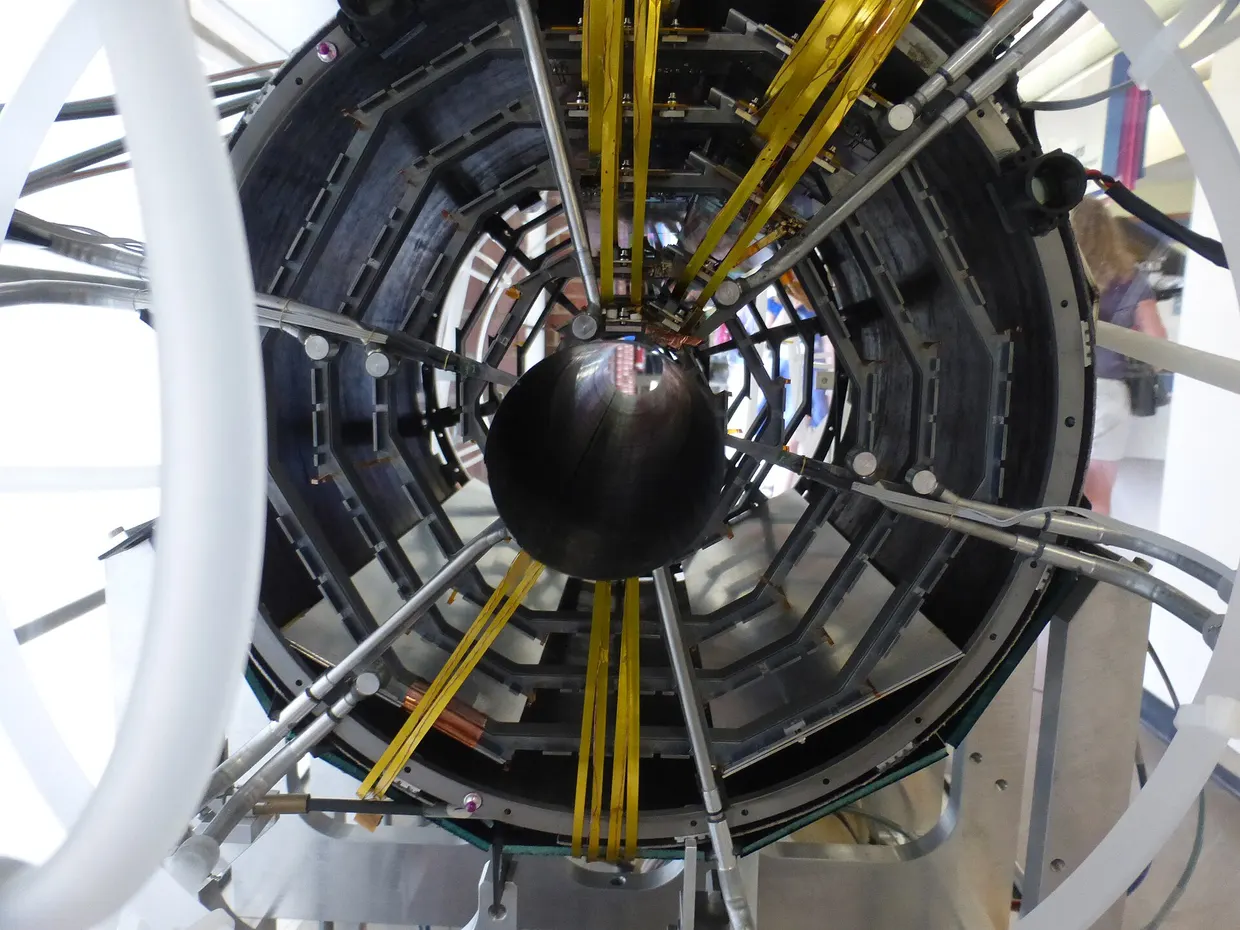
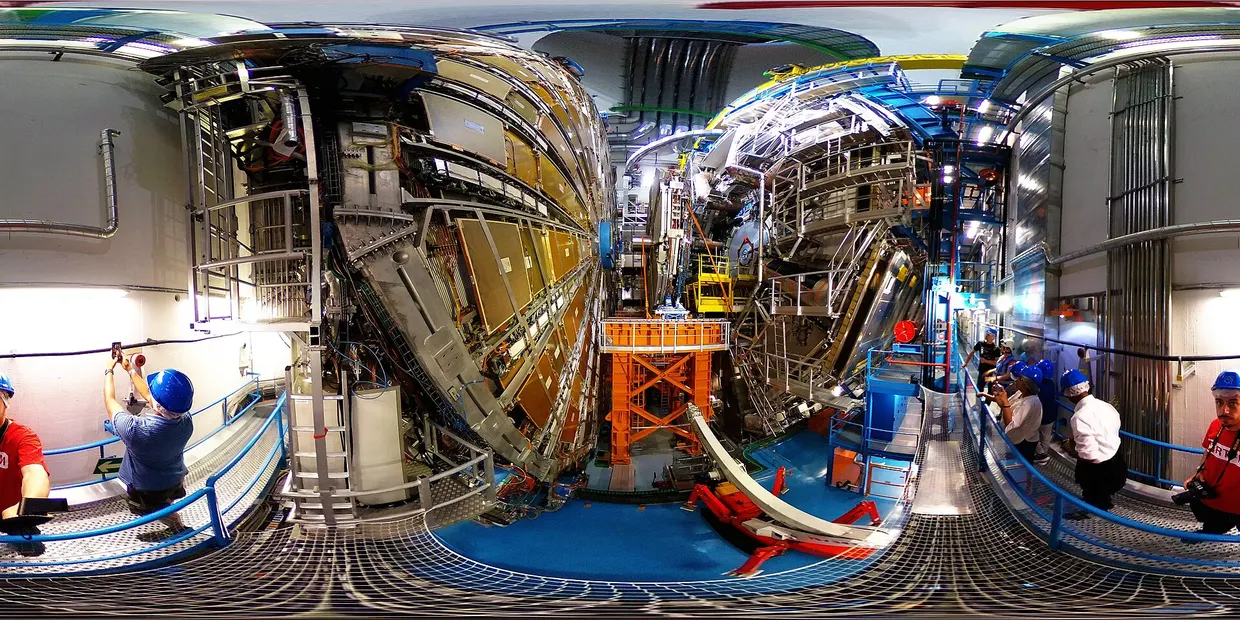
A team from Brookhaven National Laboratory reported in Nature that it directly followed how particles arising from the vacuum evolve over time, spektrum.de writes. At the Relativistic Heavy Ion Collider (RHIC), the researchers measured an unusually large number of particle pairs with the same spin orientation spektrum.de
spektrum.despektrum.deOpen source ↗. According to the authors, these pairs are direct descendants of virtual particles that appeared spontaneously from the vacuum.
Virtual particles and collisions
Virtual particles follow from Heisenberg's uncertainty relation: the energy and lifetime of a quantum state cannot both be fixed exactly. If a state is very short-lived, its energy can fluctuate strongly. A particle and its antiparticle can then briefly appear by "borrowing" energy, and normally they annihilate almost at once.
At RHIC, protons collide with high kinetic energy. If a virtual pair happens to arise in the vacuum during a collision, it can use the collision energy to become a real pair. "The vacuum in quantum theory is not empty space," said Dmitri Kharzeev of Stony Brook University. "It is a field filled with virtual particles."
How the spins were measured
The experiment tracked strange quarks. They arise in pairs, are entangled, and keep the same spin orientation after flying apart spektrum.de
spektrum.despektrum.deOpen source ↗. Single quarks are unstable and quickly combine with others into Lambda hyperons, which contain one up, one down and one strange quark instead of two up and one down.
Lambda hyperons exist for only about 10⁻¹⁰ seconds. In that time they travel a few centimeters in the accelerator and then decay into ordinary particles that the detector registers. The flight direction of these particles reveals the spin of the Lambda hyperon, and thus of the original strange quark, because the spins of the up and down quarks cancel.
The researchers were surprised by how strongly the spins were aligned. "Their spins appear parallel," said Jan Vanek of the University of New Hampshire, a co-author. The result confirms a 30-year-old prediction by Kharzeev and colleagues that virtual strange-quark pairs have parallel spins.
The authors also link the result to the origin of proton mass. The three quarks in a proton contribute only a small part of it; more than 90 percent presumably arises from interactions between the three real quarks and the many virtual particles in the vacuum. Zhoudunming Tu of Brookhaven said that following a quark pair from virtual to real could give insight into how this happens.
RHIC is scheduled to be decommissioned in February 2026 after 25 years. Parts of the machine will be reused in Brookhaven's new Electron-Ion Collider, planned to start operation in the mid-2030s.