Teghaza 001, a Sahara meteorite from Mars, formed about 4 billion years ago and bears traces of water
A pink stone of about 800 g found in the Sahara in 2022 is a Martian meteorite, according to a study in Science. Its textures and minerals had not been seen before.
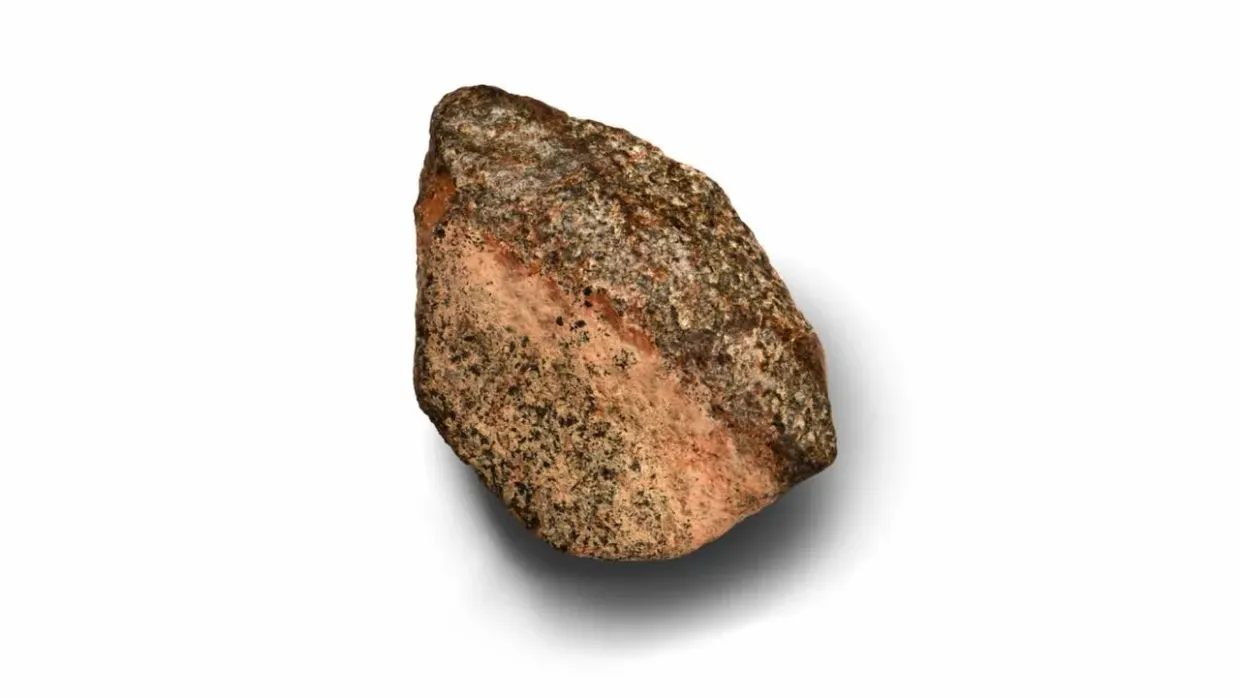
Teghaza 001, a pink stone weighing about 800 grams, was found in the Sahara in September 2022. According to larazon.es, citing the SINC agency and a study in Science, it has now been identified as a meteorite from Mars larazon.es
larazon.eslarazon.esOpen source ↗. It is named after the salt plain in Mali where it was found. It is one of 435 catalogued meteorites from the "red planet" and formed about 4 billion years ago.
The stone is described as one of the oldest Martian meteorites known to science. Its age makes it a source of information about the Martian crust at that time.
Composition and origin
The study reports that Teghaza 001 contains igneous minerals. They record how the Martian crust formed from volcanic activity and cooling magma. The composition matches what NASA's Mars Reconnaissance Orbiter recorded in its observations. The place on the Martian surface where the meteorite came from is not known precisely.
Many of the more than 400 catalogued Martian meteorites differ considerably from one another. They were most likely ejected from the planet by an impact. Their chemical and mineral composition is compared with data from earlier missions to confirm that they come from Mars larazon.es
larazon.eslarazon.esOpen source ↗.
Traces of water
A comparison of the meteorite's oxygen isotopes shows that the rock was altered by Martian water. It looked like a shergottite, the most common class of Martian meteorite. In this case, however, it shows textures and minerals not seen before.
Lee Saper, a secondary author of the paper, says the meteorite could come from an unknown region of Mars. There, water and crust were interacting, perhaps when the planet was already losing all its water. According to larazon.es, this appears to confirm that Mars had a dynamic water cycle. The research is still under way, and much remains to be learned.