TROP2 ADCs in first-line triple-negative breast cancer: phase III ASCENT-03 and TROPION-Breast02 compared
A comparative analysis of two phase III trials found that sacituzumab govitecan and datopotamab deruxtecan prolonged progression-free survival versus chemotherapy in patients not eligible for immunotherapy.
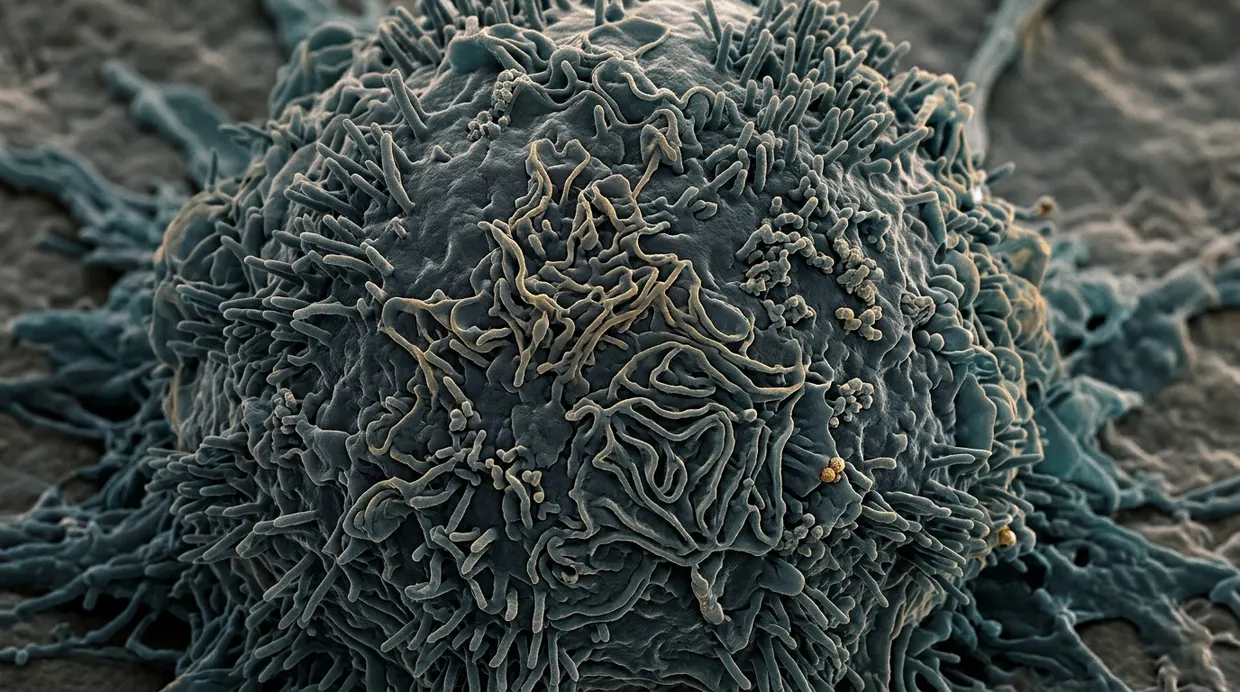
A descriptive comparative analysis of two phase III trials, ASCENT-03 and TROPION-Breast02, examined first-line antibody–drug conjugates (ADCs) targeting TROP2 in metastatic triple-negative breast cancer (mTNBC). The data were taken from the primary publications and supplementary appendices of both trials, as reported in the paper at doi.org biomedcentral.com
doi.orgbiomedcentral.comOpen source ↗. According to the paper, the FDA approved both agents, sacituzumab govitecan (SG) and datopotamab deruxtecan (Dato-DXd), in 2026.
Both trials enrolled untreated, locally advanced unresectable or metastatic TNBC in patients who were not candidates for PD-1/PD-L1 inhibition. Until now, first-line therapy in this group has relied on single-agent or doublet chemotherapy, with poor survival and moderate attrition before second line, the authors write.
Design and patient populations
ASCENT-03 enrolled an almost uniformly PD-L1-negative population: about 99% had a CPS below 10. TROPION-Breast02 allowed up to about 10% of tumors with PD-L1-high status (CPS ≥10) and stratified patients by PD-L1 status and disease-free interval.
In TROPION-Breast02 the control arm received predominantly taxane monotherapy (83%). The protocol did not mandate crossover, and about 30% of controls later received an ADC biomedcentral.com
doi.orgbiomedcentral.comOpen source ↗. In ASCENT-03, crossover was extensive.
Efficacy results
In ASCENT-03, SG improved progression-free survival (PFS) versus chemotherapy: median 9.7 vs 6.9 months, HR 0.62. At the interim descriptive analysis, overall survival (OS) was similar: 21.5 vs 20.2 months. The objective response rate (ORR) was 48% vs 46%.
In TROPION-Breast02, Dato-DXd gave a PFS gain of similar magnitude: 10.8 vs 5.6 months, HR 0.57. OS was 23.7 vs 18.7 months, HR 0.79. ORR was 62.5% vs 29.3%.
The authors note that cross-trial differences in OS and ORR must be interpreted in light of population and treatment context. Both trials largely preceded current early-stage chemo-immunotherapy standards, with low prior exposure to platinum and PD-1/PD-L1 inhibitors. In TROPION-Breast02, efficacy appeared more favorable in Asian than in non-Asian patients, and the trial enrolled a higher share of Asian patients than ASCENT-03 biomedcentral.com
doi.orgbiomedcentral.comOpen source ↗.
Limits of the comparison
Neither trial was designed to test treatment sequencing, so conclusions on early versus delayed ADC exposure remain speculative, the authors report. Because crossover in ASCENT-03 was not built into a formal endpoint, that trial cannot answer this question. TROPION-Breast02 was powered for both PFS and OS, and, according to the authors, provides evidence that first-line Dato-DXd may extend survival in a broader immunotherapy-ineligible population. The optimal sequencing of TROP2-directed ADCs remains unresolved.