LIGO signal S251112cm may be a primordial black hole with mass below the Sun's
Astrophysicists at the University of Miami link a LIGO signal to a primordial black hole; the result needs confirmation by further detections.
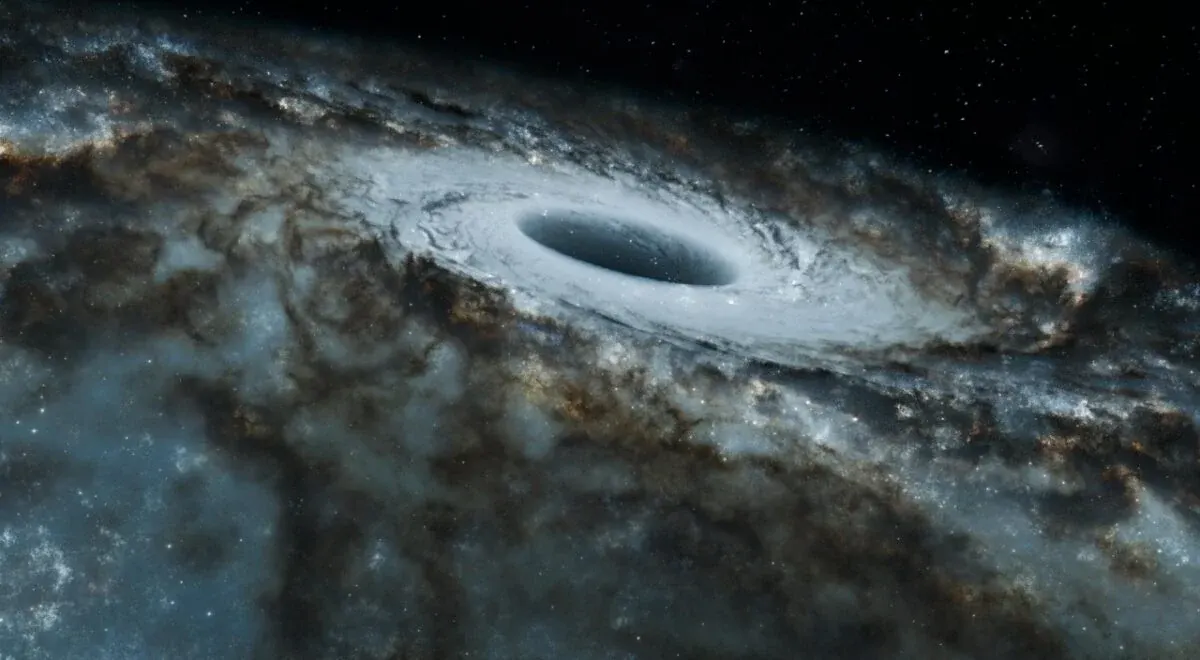
Two astrophysicists at the University of Miami, Alberto Magaraggia and Nico Cappelluti, analysed a signal recorded by LIGO, the US gravitational-wave detector, and propose that it came from a primordial black hole, according to science-et-vie.com science-et-vie.com
science-et-vie.comscience-et-vie.comOpen source ↗. The signal, designated S251112cm, corresponds to an object with a mass below that of the Sun, which an ordinary black hole cannot have. If confirmed, it would be the first observation of such an object.
Why the mass matters
Ordinary black holes form when a massive star collapses at the end of its life in a supernova, so their minimum mass always exceeds that of the Sun. Primordial black holes, by contrast, would have formed within the first second after the Big Bang from extremely dense pockets of subatomic matter, with no star involved. According to ScienceAlert, cited by the outlet, their mass can fall well below one solar mass, sometimes down to the size of an asteroid.
The researchers compared the expected detection rate of such objects with LIGO data accumulated since 2015. The two match: the rarity of this type of signal is consistent with theoretical predictions for primordial black holes.
Dark matter and next steps
Dark matter is said to make up about 85% of the Universe's total mass. It cannot be detected directly, and its existence is inferred from its influence on ordinary matter science-et-vie.com
science-et-vie.comscience-et-vie.comOpen source ↗. According to an analysis published by the University of Miami, some astrophysicists think primordial black holes could account for a significant share of it.
Cappelluti said that LIGO captured what looks like solid evidence that such black holes exist, but that other similar signals must be detected for a definitive confirmation. The researchers stress that a single detection is not enough to validate a discovery of this scale.
LIGO undergoes regular upgrades that improve its sensitivity. The European Space Agency is also preparing LISA (Laser Interferometer Space Antenna), a space-based gravitational-wave detector planned for 2035. According to the source, the detection shows that current instruments can search for objects formed nearly 14 billion years ago.