LHCb at CERN finds first evidence of Bd to mu mu decay at 3.2 sigma, matching Standard Model
The rare decay, predicted in about one of 10 billion beauty particles, matches Standard Model predictions; the result is below the five-sigma discovery threshold.
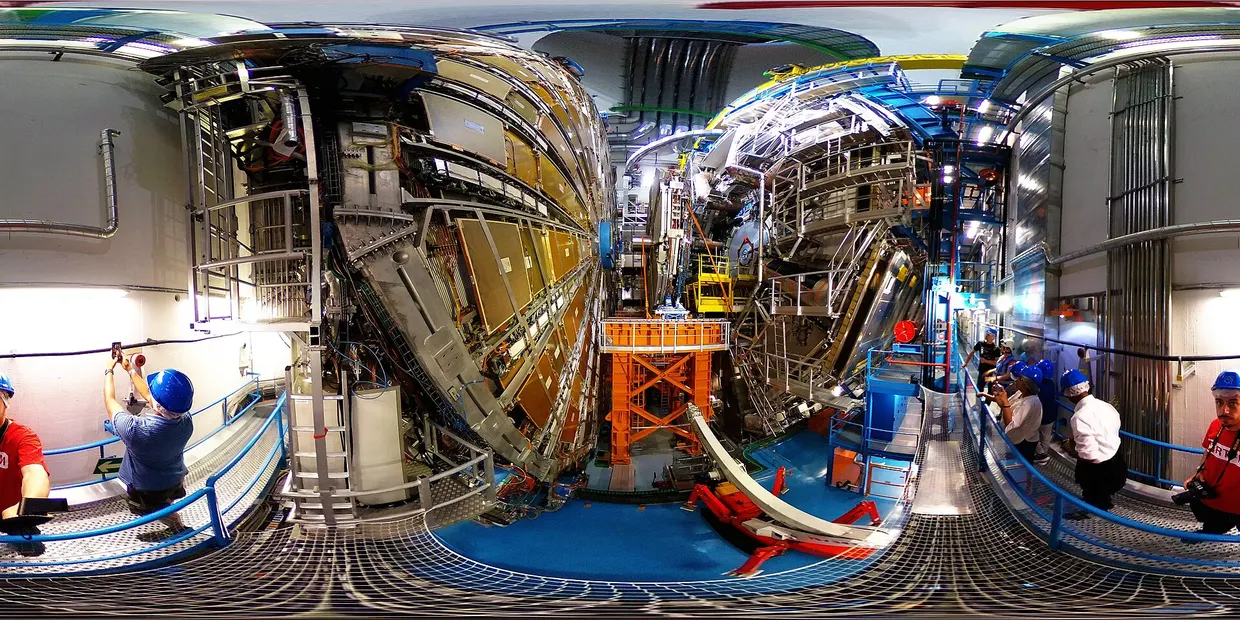
Physicists working with the upgraded LHCb experiment at CERN's Large Hadron Collider (LHC) have found the first evidence of a particle decay predicted to occur in only about one of every 10 billion beauty particles, according to SciTechDaily. scitechdaily.com
SciTechDailyscitechdaily.comOpen source ↗ The search for this decay lasted more than 40 years. The decay is known as Bd to mu mu: one beauty particle transforms into two muons, particles similar to electrons but heavier.
What was measured
Beauty quarks are heavier relatives of the up and down quarks found inside protons and neutrons. They are produced in large numbers in LHC collisions and exist for about one and a half trillionths of a second before decaying. The signal has a statistical significance of 3.2 sigma, which qualifies as evidence. A claim of discovery in particle physics requires five sigma, so more data are needed.
The measured rate matches the predictions of the Standard Model, the current best theory of fundamental particles and their interactions. An undiscovered particle could change the probability of such a decay, and the rarer the decay, the more sensitive it is to such effects. Greater precision could therefore reveal discrepancies with the theory. Professor Conor Fitzpatrick of the University of Manchester, deputy physics coordinator of LHCb, called this decay a "golden channel" for observing new physics.
Detector and data
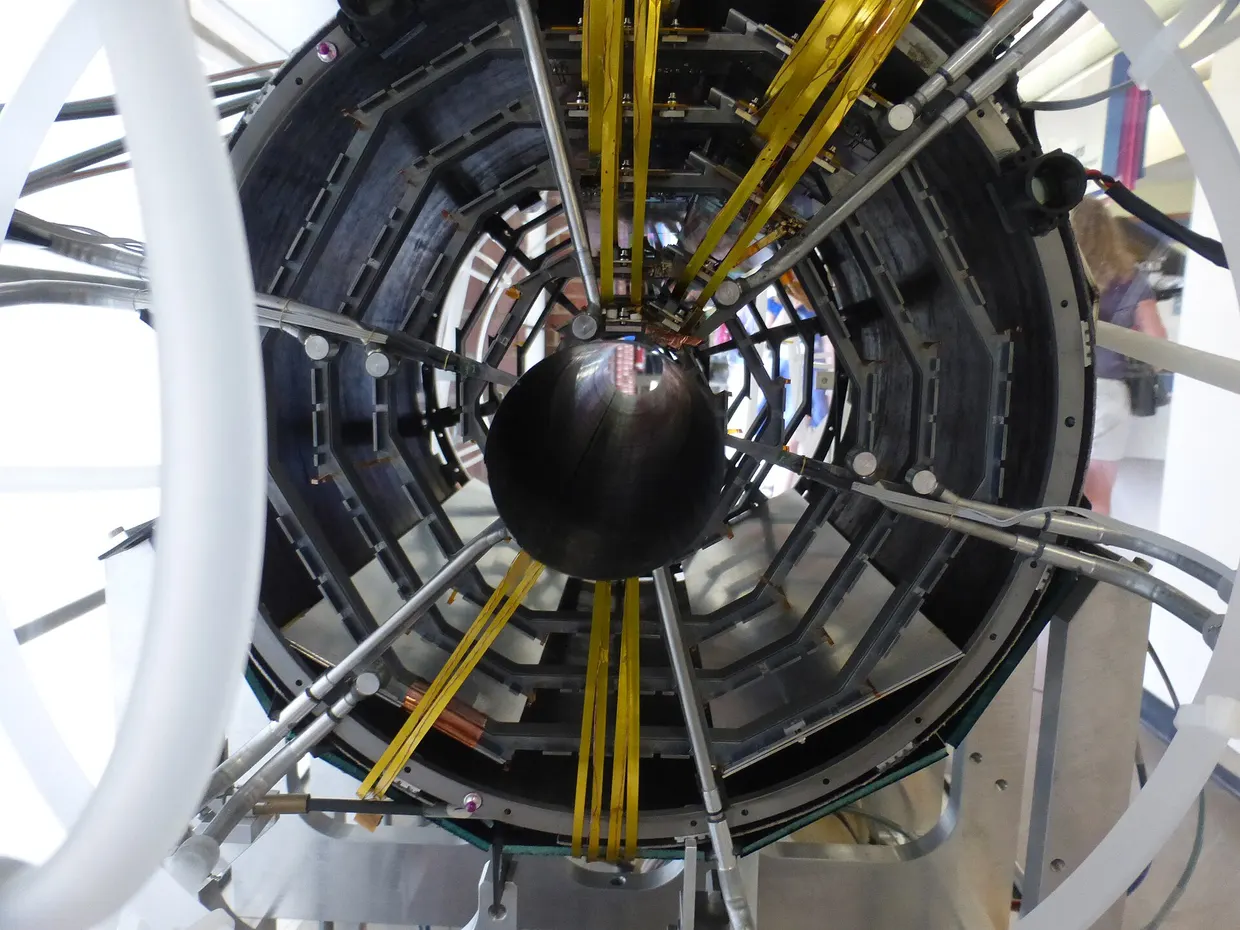
The Vertex Locator, a silicon pixel detector, sits five millimeters (about 0.2 inches) from the LHC beams and tracks the paths of particles emerging from collisions. scitechdaily.com
SciTechDailyscitechdaily.comOpen source ↗ This UK-built component is part of the upgraded LHCb. Dr. Stefano De Capua, who led detector construction at the University of Manchester, said nearly 90 UK companies took part in building it.
Professor Chris Parkes said the upgrade was a fifteen-year design and construction project involving a collaboration of 1900 members. The upgraded experiment collects data at up to five times its previous rate and is expected to build a much larger dataset into the early 2030s. A further planned upgrade could raise the rate by another factor of ten. The experiment is funded by the Science and Technology Facilities Council, part of UK Research and Innovation.