Heidelberg astrophysicist explains onset of luminosity bump in red giants via specific entropy
The study ties the bump onset to a critical drop of specific entropy at the mean molecular weight discontinuity. In models, the bump appears at higher luminosity than observed.
Astrophysicist Saskia Hekker of the Heidelberg Institute for Theoretical Studies has described the physical origin of the onset of the luminosity bump in red-giant stars. The result is published in The Astrophysical Journal Letters iop.org
The Astrophysical Journal Lettersiop.orgOpen source ↗. The bump is a temporary decrease in a star's luminosity during its ascent of the red-giant branch.
What the luminosity bump is
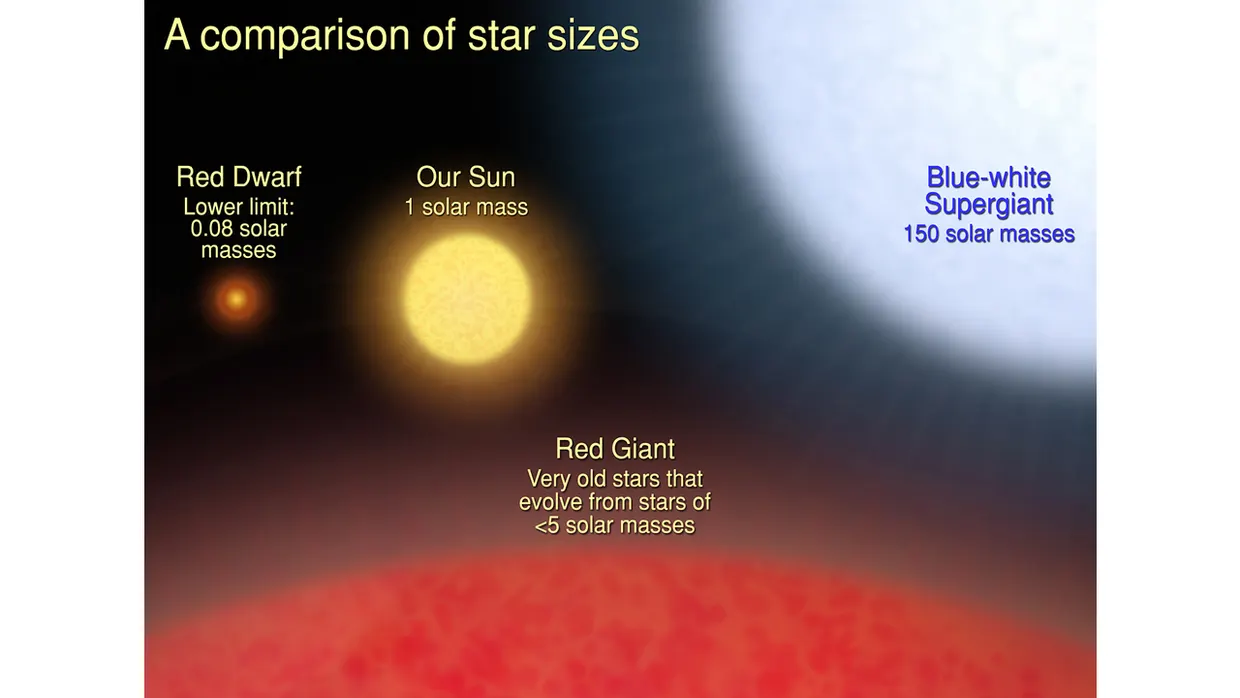
Low-mass stars that have exhausted hydrogen in their core follow the red-giant branch, moving mostly toward higher luminosity and lower surface temperature. The luminosity bump is a temporary decrease in luminosity against this otherwise increasing trend. Red giants include Arcturus, Aldebaran and Pollux.
The bump is present both in observations and in stellar evolution models. However, with canonical physics included, the bump in computed evolutionary tracks appears at higher luminosities than the observed one. According to the authors, understanding this offset requires understanding the physics of the bump. Its end point was already well understood, while its onset remained an open question.
Specific entropy at the discontinuity
The paper shows that the difference in specific entropy at the mean molecular weight discontinuity decreases as the discontinuity moves inward iop.org
The Astrophysical Journal Lettersiop.orgOpen source ↗. This decrease is attributed to a falling ratio of temperature to pressure at smaller radii. Specific entropy is a thermodynamic quantity that reflects the degree of disorder of a gas.
When the difference reaches a critical value, it is reduced enough to lower the specific entropy in the convective envelope. The authors identify this lowering as a key signature of the bump. On this basis, they conclude that the evolution of specific entropy at the mean molecular weight discontinuity provides a viable description of the bump's onset.
The abstract states the question that motivated the work: why the bump appears later in models than in observations. The reported result describes the mechanism of the onset itself. The material does not give a comparison of the new description with the observed luminosities.