Two studies propose how pure sulfur formed in Gediz Vallis on Mars, found by NASA's Curiosity
Curiosity found pure elemental sulfur on Mars in 2024. A Science paper and a laboratory experiment offer two formation routes that need no high temperatures.
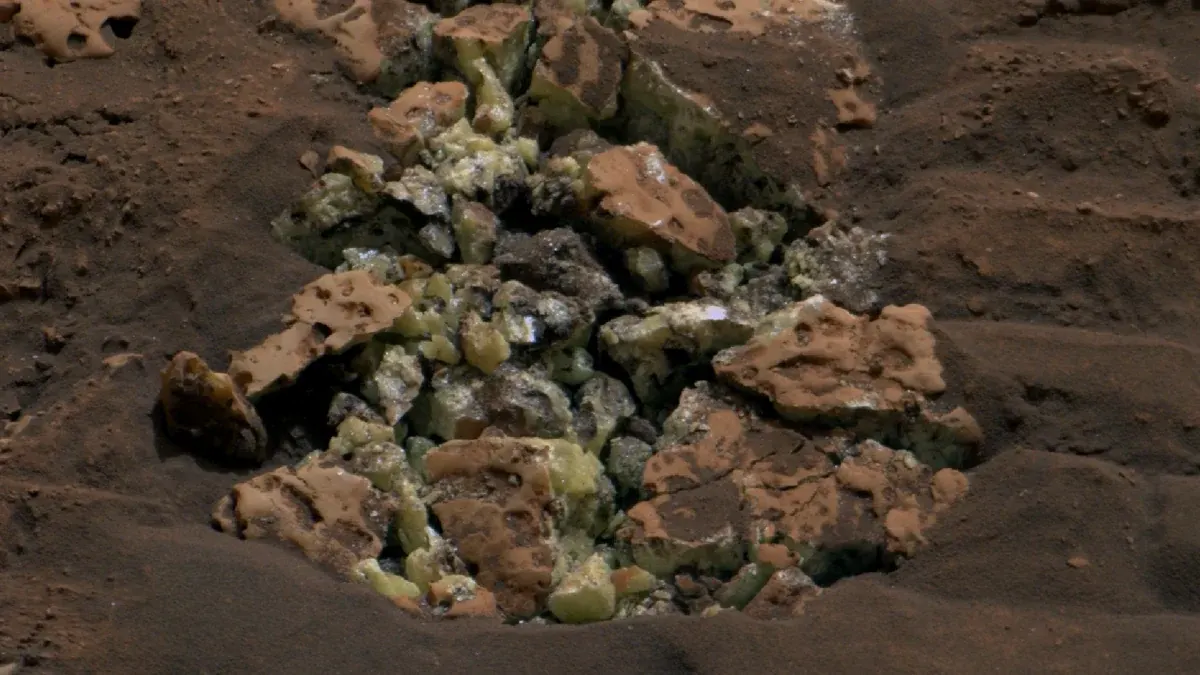
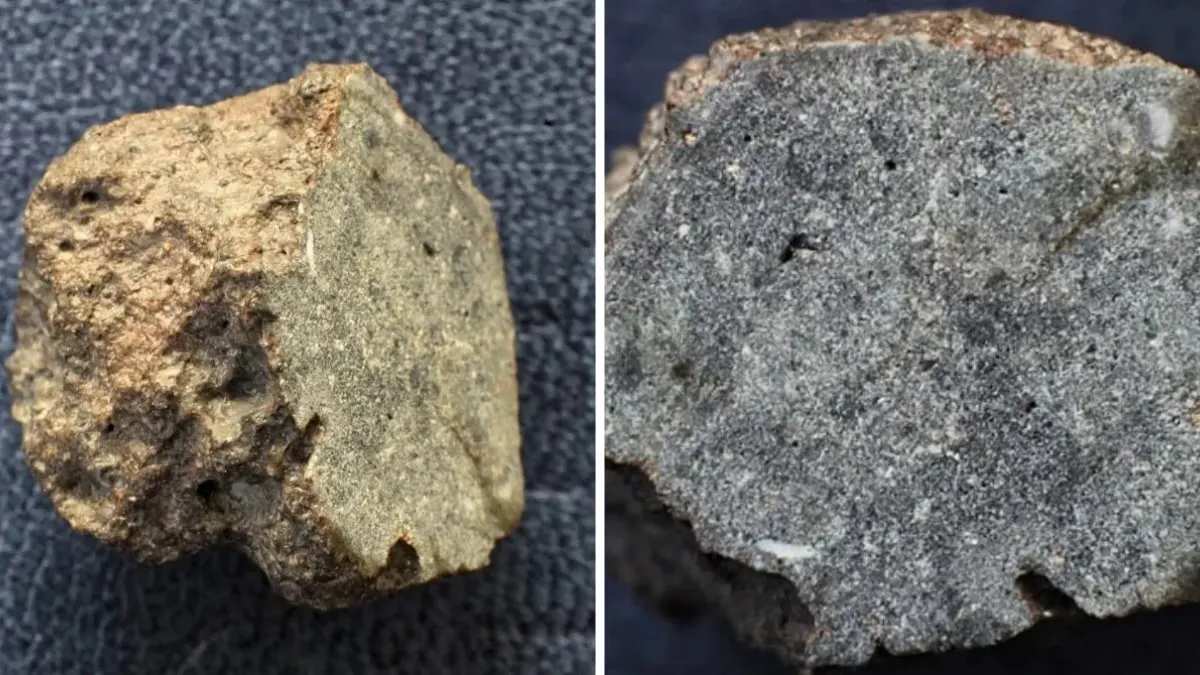
Two studies, published in June and July 2026, propose how nearly pure elemental sulfur formed in the Gediz Vallis Channel in Gale Crater on Mars, according to sciencealert.com. In 2024 NASA's Curiosity rover, which weighs 899 kilograms (1,982 pounds), drove over an unremarkable rock that split open and revealed pale yellow crystals sciencealert.com
sciencealert.comsciencealert.comOpen source ↗. It was the first time sulfur had been found on Mars in its pure elemental form, although sulfates are fairly common there.
Sulfur-bearing rocks in Gediz Vallis
A team led by planetary scientist Scott VanBommel of Washington University in St. Louis re-examined the rover's images and chemical analyses. The sulfur-bearing rocks lie scattered across an area of about 2,100 square meters and are remarkably pure, unlike the sulfate minerals usually found on Mars. On Mars, Curiosity weighs as much as a 341-kilogram object does on Earth. The rock broke open under only part of that weight, which indicates that it is fragile.
The authors consider it most plausible that so many fragile rocks were not transported but formed in place. On Earth, large sulfur deposits are often associated with volcanic or hydrothermal activity, but Gediz Vallis shows no evidence of the high-temperature conditions that could have produced such a deposit directly.
Two proposed formation mechanisms
In the paper published in Science in June 2026, VanBommel's team suggests that the sulfur came from gases released by ancient volcanic activity. As the gases cooled, they may have become trapped beneath the surface, possibly in cage-like ice structures called clathrates sciencealert.com
sciencealert.comsciencealert.comOpen source ↗. Erosion that carved Gediz Vallis then released the pressure and let the gases escape. Chemical reactions between the sulfur-bearing gases could have produced pure sulfur without high temperatures at the site. The researchers estimate that the deposit formed between 3.1 and 2.8 billion years ago.
A separate study in Geophysical Research Letters, published in July 2026, was led by atmospheric scientist Jiawei Wang of Cornell University. The team mixed dissolved sulfide with chlorate, a compound of chlorine and oxygen that may have been present on ancient Mars, in acidic water at room temperature. The reaction produced tiny yellow crystals of elemental sulfur. Lower chlorate concentrations favored sulfur, while higher concentrations produced more sulfate.
The crystals were microscopic, but the authors suggest that similar reactions over much longer periods could produce larger deposits. They also note that the hydrogen sulfide needed could come from the same underground gas reservoirs proposed by VanBommel's team. According to Wang's experiments, living organisms are not required to explain how elemental sulfur formed on Mars.