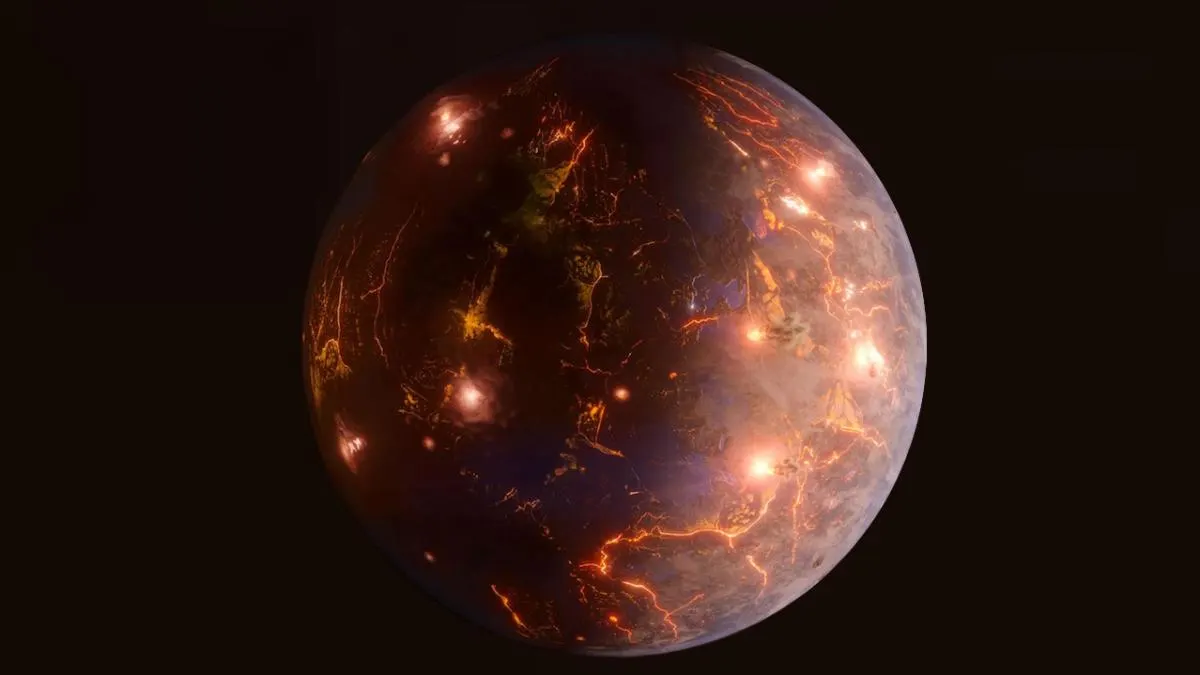
TESS data show hot Jupiter TOI-2535b dropping out of transit as a second planet tilts its orbit
Over 7 years of TESS photometry, the transits of TOI-2535b moved off the stellar disk. Modeling points to a second giant planet in resonance with it.
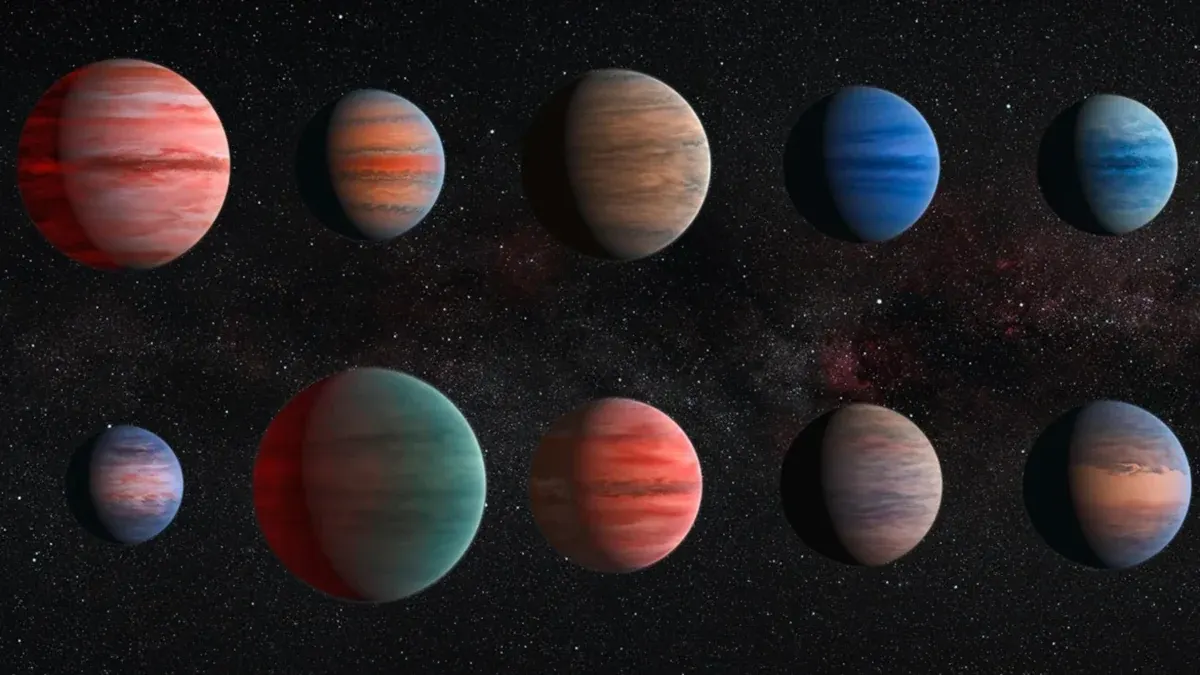
A team of astronomers reported in The Astrophysical Journal Letters the hot Jupiter TOI-2535b, the first confirmed planet orbiting a single star whose transits have been directly observed to disappear iop.org
The Astrophysical Journal Lettersiop.orgOpen source ↗. The planet was first detected with NASA's Transiting Exoplanet Survey Satellite (TESS) in 2019. Over 7 years of TESS photometry, its transit chord crossed the stellar disk and eventually moved off it entirely.
How the transits disappeared
A transit is only seen when the planet's orbit happens to line up with our line of sight. For TOI-2535b the impact parameter, which describes where the planet crosses the stellar disk, changed at a rate of 0.16 per year. The host is a K dwarf slightly smaller than the Sun, about 1,100 light-years away, and the planet completes an orbit in just over eight days. By March 2026 the transits had gone out of view, according to the researchers.
The transit midtimes also deviate by ±6 hours from a linear ephemeris. Such transit timing and duration variations are what the authors used to look for the cause of the change.
A second giant planet
The authors jointly modeled the timing and duration variations together with radial-velocity data from the NEID spectrograph. The result indicates a nearby planetary perturber whose orbit is mutually inclined to that of TOI-2535b by at least 5 degrees iop.org
The Astrophysical Journal Lettersiop.orgOpen source ↗. The duration variations are mainly due to precession of the planets' orbital planes. For comparison, planets in the Solar System lie in nearly one plane, with mutual inclinations of about one degree, with the exception of Mercury.
The dynamical modeling suggests the perturber is likely of Saturn mass or greater and in a mean-motion resonance with TOI-2535b. This makes the system unusual: it contains two short-period giant planets. The authors call the measured variations one of the most extreme examples of planet–planet interactions driving orbital evolution on human timescales.
The researchers also modeled 1 million years of the system, about 50 million orbits of TOI-2535b. They found that the resonance may keep the planets stable. The authors consider it likely that the planets migrated inward through the protoplanetary disk, while how their inclinations were excited remains an open question. The transits of TOI-2535b are expected to keep appearing and disappearing over the coming decades.