Red giants in globular clusters set a tighter limit on axion-like particle coupling to electrons
According to INR RAS, Russian scientists obtained the most stringent limit on the coupling of light axion-like particles to electrons: the constant is below 6.4×10⁻¹⁴.
Scientists from the Institute for Nuclear Research of the Russian Academy of Sciences and the Main (Pulkovo) Astronomical Observatory of the Russian Academy of Sciences, together with students of Moscow State University and Saint Petersburg State University, obtained the most stringent limit on the interaction of light axion-like particles with electrons, as reported to science.mail.ru by INR RAS. The constant describing the strength of this interaction must be below 6.4×10⁻¹⁴ at the 95% confidence level science.mail.ru
science.mail.ruscience.mail.ruOpen source ↗. The result is based on observations of red giants in globular clusters of the Milky Way.
How stars test axion-like particles
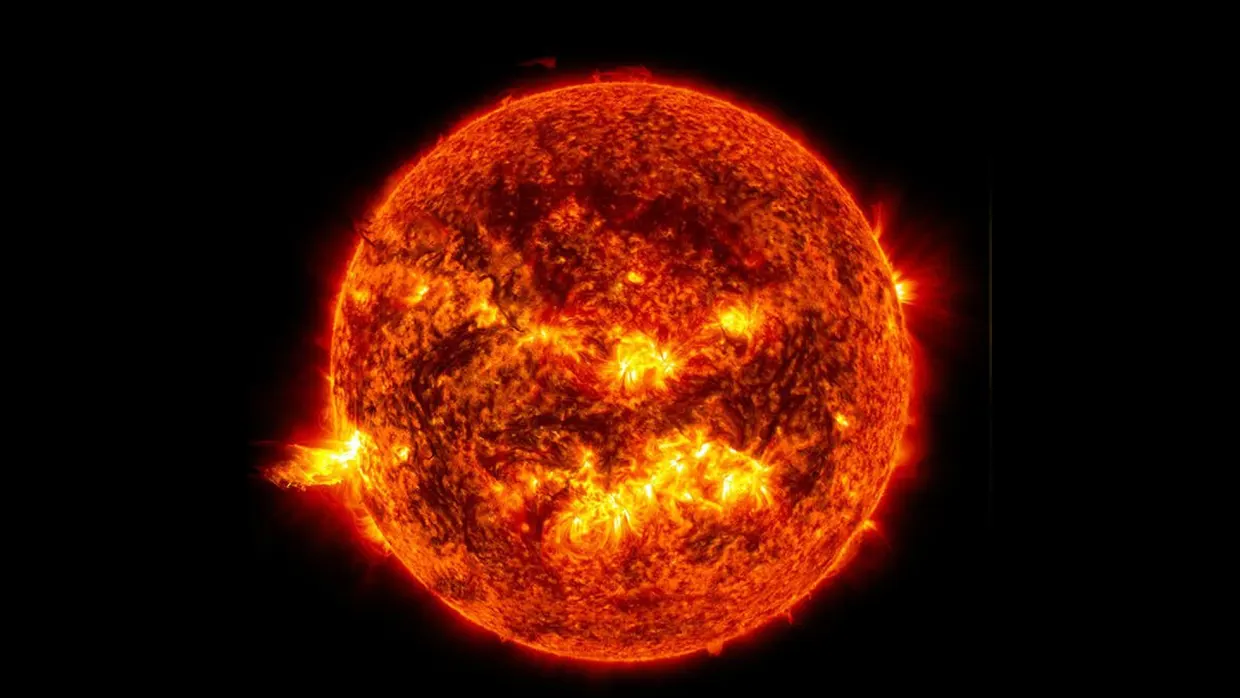
Many theories extending the Standard Model of particle physics predict axions and similar particles. If such particles exist, they could be produced in hot stellar interiors and leave the star, carrying energy away. In a red giant this would delay the onset of helium thermonuclear reactions in the core, so before ignition the star would become brighter. The maximum luminosity of red giants therefore makes it possible to check how strong the additional energy losses can be.
The observations were explained without extra energy losses to new particles. "We do not observe new particles directly. Instead, we check whether they could have quietly carried energy out of stars," said Sergey Troitsky, chief researcher at INR RAS and corresponding member of the Russian Academy of Sciences.
Cluster sample and calculations
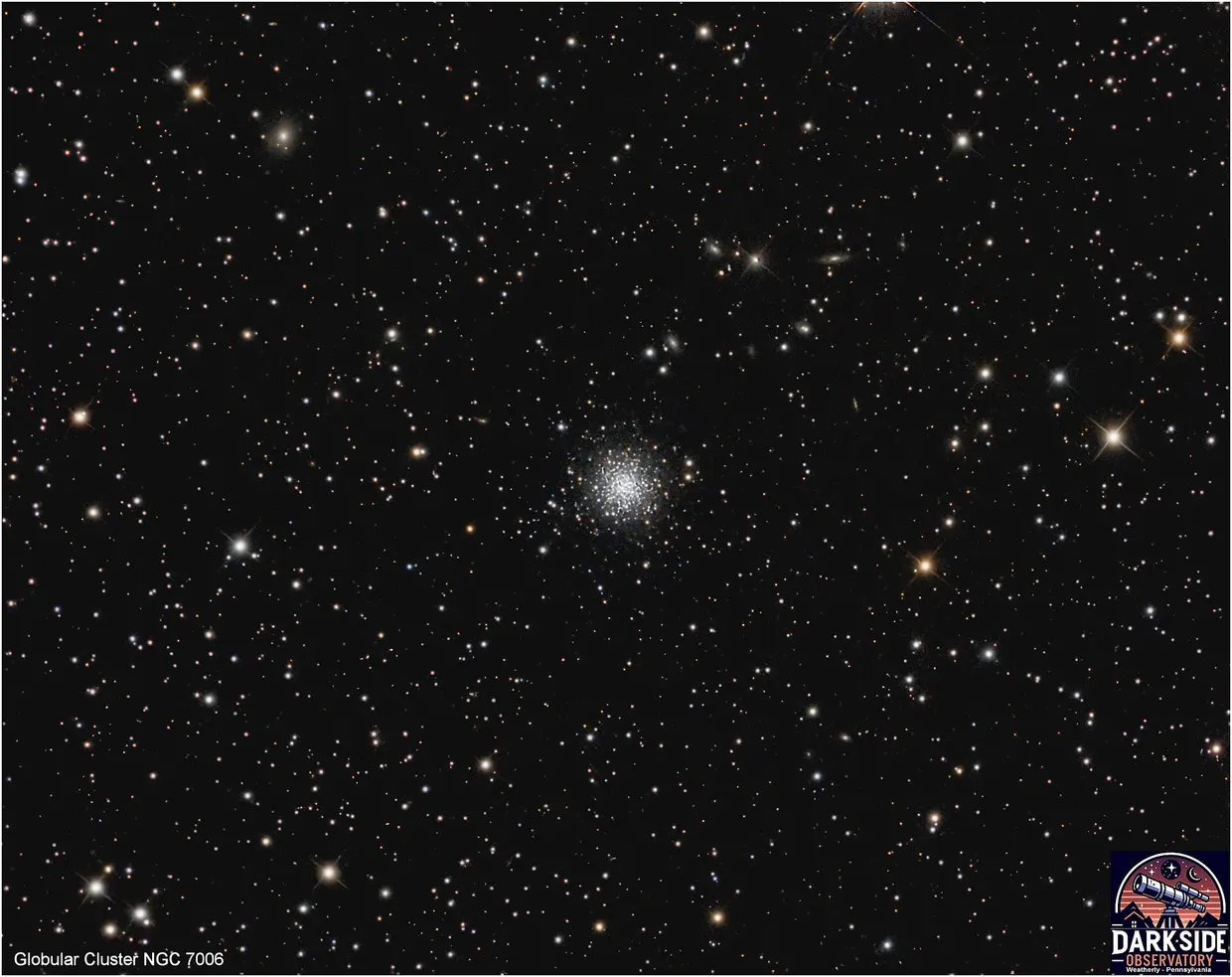
For the analysis, the team combined observations by the Hubble Space Telescope, the Gaia satellite and many years of ground-based brightness measurements. This produced a uniform sample of 27 clusters, with cluster stars separated from other objects in the same part of the sky science.mail.ru
science.mail.ruscience.mail.ruOpen source ↗.
According to Georgy Goncharov, a leading researcher at the Pulkovo Observatory, clusters may contain hundreds of thousands or even millions of stars born together more than 10 billion years ago. A joint analysis lets researchers determine their age and chemical composition, on which the luminosity of the brightest red giants depends strongly.
For each cluster, the researchers calculated giant evolution with and without additional energy losses. The final limit was derived from 24 clusters; in the other three, helium burning begins by a special scenario that requires separate analysis. The team accounted for stellar variability and for the chance that the brightest observed star is fainter than the limit for this evolutionary stage. They also rechecked thermonuclear reaction probabilities and other model parameters against new measurements, estimated their uncertainties and corrected the commonly used calculation codes.
The earlier limit, calculated from seven clusters and corrected for correlated systematic uncertainties, is about twice as weak. According to Troitsky, the main task was to assess the reliability of the limit given observational and model uncertainties, and the approach may be useful for testing other hypotheses about particles that carry energy out of stars.
Sources · 1
Found a mistake?Read also