Georgia Tech simulations: asteroid 1998 KY26 is too warm to keep water ice, Hayabusa2 arrives in 2031
Researchers at Georgia Institute of Technology modelled the temperature of 1998 KY26 and found it too warm for buried ice, which weakens the "dark comet" explanation of its odd acceleration.
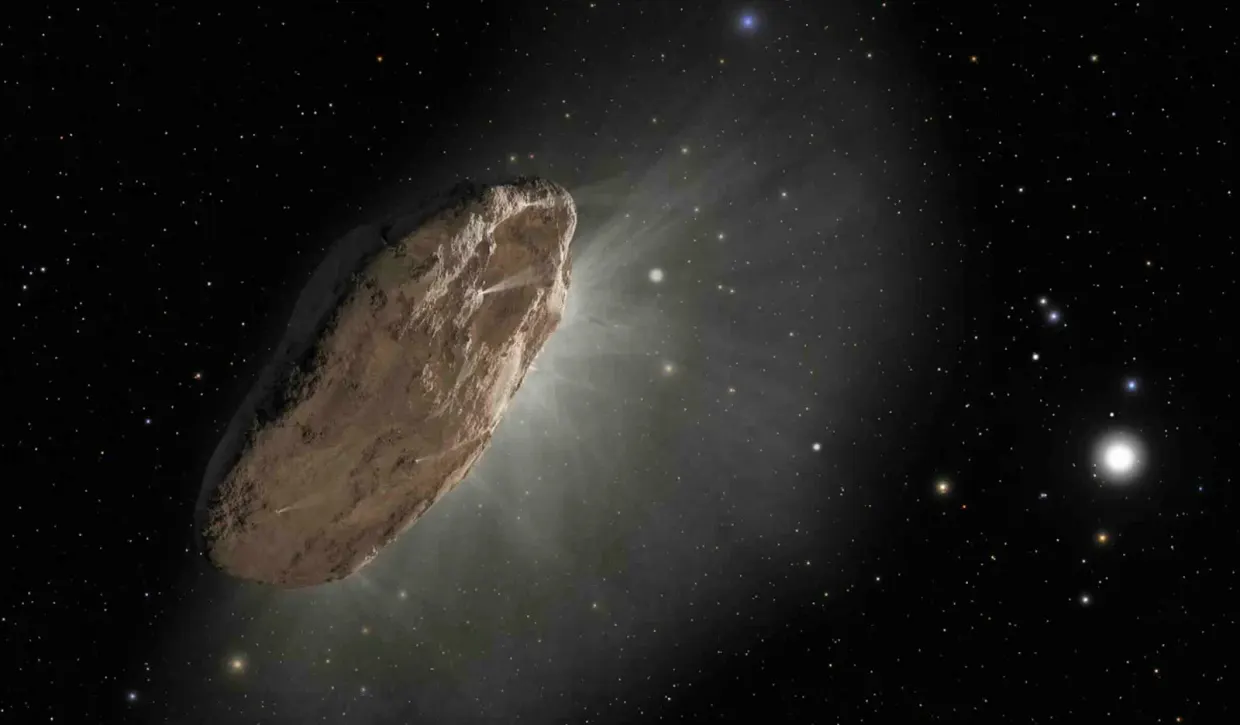
Researchers Korbin Hansen and Masatoshi Hirabayashi of the Georgia Institute of Technology report that the near-Earth object 1998 KY26 is likely too warm to retain water ice over extended periods, according to The Debrief thedebrief.org
The Debriefthedebrief.orgOpen source ↗. The object measures about 36 feet across and rotates every five and a half minutes. It is currently classified as an asteroid, yet it shows a subtle non-gravitational acceleration while orbiting the Sun.
Why the acceleration raises questions
One possible explanation is water vapor escaping from the object as the Sun heats its surface. Such outgassing could produce propulsion similar to that of a comet, but without the visible coma or tail astronomers expect to see. That would place 1998 KY26 in the elusive class of objects called "dark comets".
The new study tests this interpretation. The authors used three-dimensional computer simulations to determine whether an asteroid could hold enough ice to cause the acceleration that 1998 KY26 currently displays.
What the temperature model shows
Based on the team's findings, temperatures throughout the object are likely too high for water ice to survive for long. "Our temperature model results indicate that the water outgassing rate on 1998 KY26 would be too high to maintain buried ice, refining the understanding of the asteroid's composition," the researchers write thedebrief.org
The Debriefthedebrief.orgOpen source ↗.
Even if as little as one percent of the object's mass were water, the calculations show it would lose its ice within around 2,000 years.
As an alternative, Hansen and Hirabayashi put forward pressure from sunlight and thermal radiation as a better potential explanation for the observed acceleration.
The 2031 encounter
The question may be settled in the coming years. Japan's Hayabusa2 spacecraft is due to reach 1998 KY26 in 2031, which could give astronomers a much clearer look at the object and possibly resolve the mystery of its acceleration thedebrief.org
The Debriefthedebrief.orgOpen source ↗.
The paper, "Thermally unfavorable conditions of volatile existence in near-Earth asteroid 1998 KY26, the Hayabusa extended mission's target," was published in the journal Icarus.