Study in Nature Physics: the Sun's size has barely changed in recent centuries
A review led by José Manuel Vaquero of the University of Extremadura combines historical and modern observations and sets tight limits on changes in the solar radius.
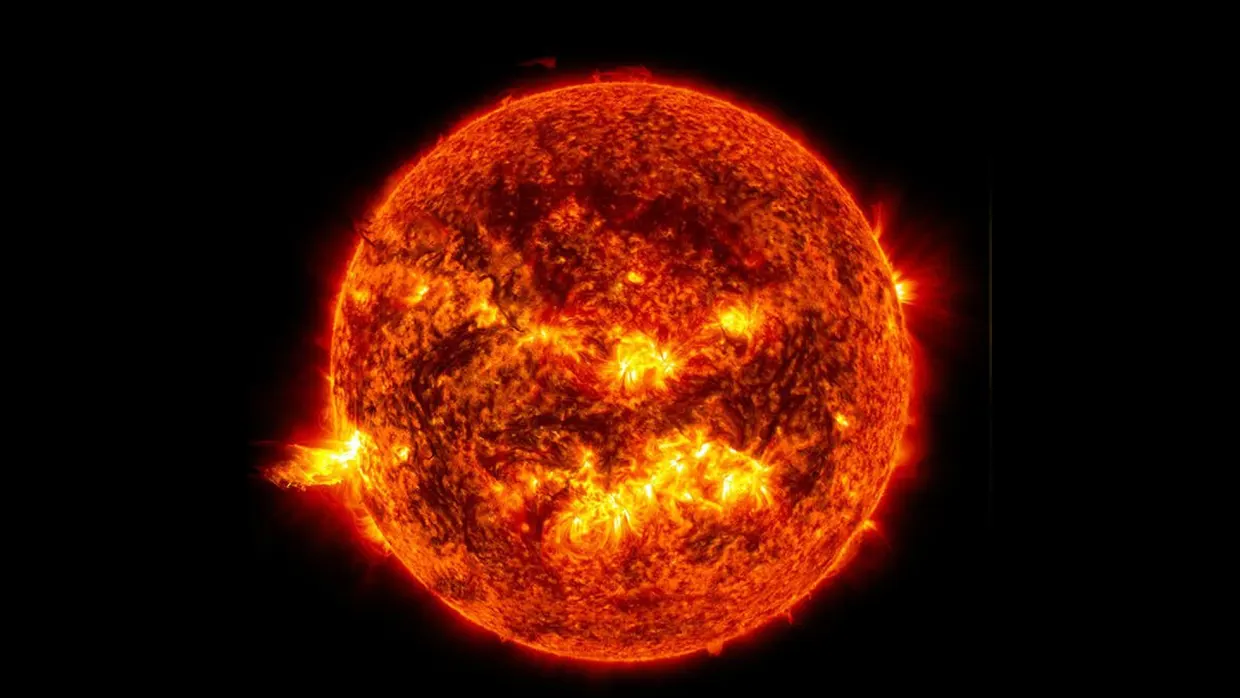
A study led by José Manuel Vaquero, professor of Earth Physics at the University of Extremadura (UEx), concludes that the Sun has kept its size practically constant over the past centuries, reports cope.es. The work, titled "The edge of the Sun", was published in Nature Physics on 16 November 2026. It reviews progress in determining the solar radius by combining historical and modern observations, and sets very strict limits on its possible variations. cope.es
cope.escope.esOpen source ↗
Vaquero has studied the physics of the Sun-Earth system and its historical records for more than 25 years.
How the edge of the Sun is measured
The Sun has no solid surface, so locating its edge is a hard problem. What is observed as the edge is the photosphere, the layer of the solar atmosphere that emits most of the visible light. The apparent limit depends on the wavelength used, the astronomical instruments and the observing conditions.
The radius of the Sun is approximately 695,700 km and its diameter is almost 1.4 million km, about 109 times that of Earth. About 1.3 million Earths would fit inside the Sun. cope.es
cope.escope.esOpen source ↗
The study draws on old astronomical observations. Historical records of solar eclipses are among the sources, because the exact moments of occultation give information on the apparent diameter of the star. Meridian lines, installed in churches and large European buildings, were also important: they projected the image of the Sun onto the floor so that its position and diameter could be measured precisely.
Comparing these historical data with measurements from modern telescopes led Vaquero to conclude that there were no significant changes in the solar radius over this period.
An active star of stable size
Despite the stable size, the Sun is not inactive. It goes through magnetic activity cycles of about eleven years, during which the number of sunspots varies, flares occur and plasma is ejected into space. These phenomena can cause solar storms that affect communications and power grids on Earth, and produce auroras. cope.es
cope.escope.esOpen source ↗
The Sun is classified as a G2V yellow dwarf. It formed about 4,600 million years ago from a cloud of gas and dust. It is now on the main sequence, the longest stage of its evolution, in which its core turns hydrogen into helium by nuclear fusion.
Its composition is mostly hydrogen (70-73%) and helium (25-28%), with 2% of other elements such as oxygen, carbon and iron. Core temperatures reach 15 million degrees Celsius, and 4.3 million tonnes of matter are converted into energy every second.
According to NASA estimates cited by the source, the Sun has another 5,000 million years in its current phase. After the hydrogen in the core is exhausted, it will become a red giant that engulfs Mercury and Venus, then shed its outer layers and become a white dwarf. cope.es
cope.escope.esOpen source ↗