Kyushu University: Super-HGF, a modified growth factor, binds c-met over twice as well; effect seen in mice
Researchers at Kyushu University protected the growth factor HGF from nitration with lipoic acid trisulfide, and a protective effect was confirmed in mice with muscle atrophy.
Researchers at Kyushu University in Japan, led by Professor Ryuichi Tatsumi, found a compound that protects hepatocyte growth factor (HGF) from chemical modification and increases its binding to a cell receptor, NUR.KZ reported on 5 November 2026, citing ScienceDaily. nur.kz
NUR.KZnur.kzOpen source ↗ The results were published in Scientific Reports.
nur.kz
NUR.KZnur.kzOpen source ↗
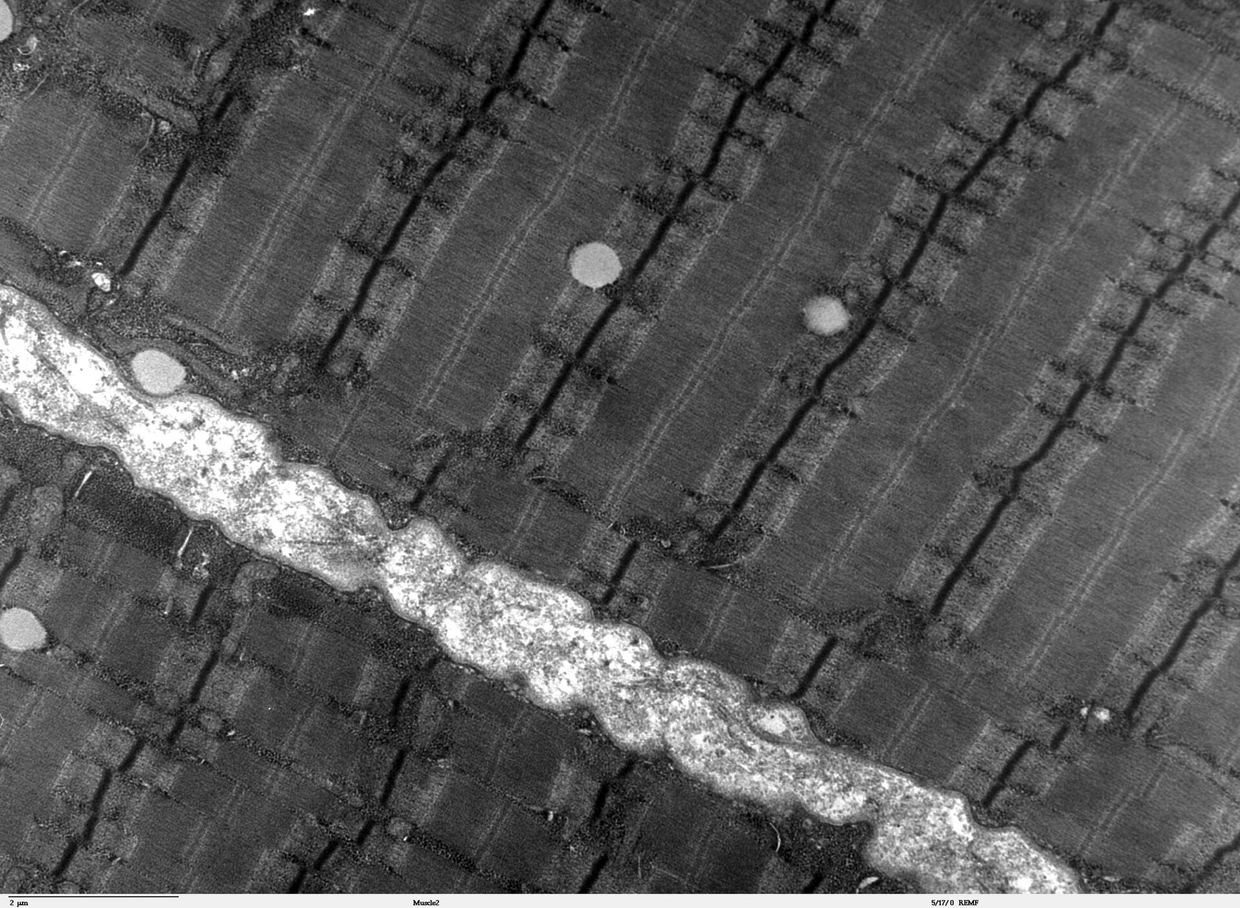
HGF is a signaling protein that triggers the division of quiescent muscle satellite cells. It is released under mechanical load or tissue damage and binds the c-met receptor, which starts the regeneration of muscle fibers. nur.kz
NUR.KZnur.kzOpen source ↗
Nitration of HGF with age
With age, the protein undergoes chemical modification: nitration at the critical positions Y198 and Y250. nur.kz
NUR.KZnur.kzOpen source ↗ This disrupts its structure; the authors compare it to a deformed key that no longer fits the receptor lock.
nur.kz
NUR.KZnur.kzOpen source ↗
To prevent the damage, the group tested sulfur trisulfide compounds with strong antioxidant properties: glutathione trisulfide (GSSSG) and lipoic acid trisulfide (LASSS). nur.kz
NUR.KZnur.kzOpen source ↗
Super-HGF and tests in mice
In the experiments, LASSS at a molar ratio of 1:8000 neutralized nitration and also caused a subtle rearrangement of the three-dimensional structure of the molecule. nur.kz
NUR.KZnur.kzOpen source ↗ The resulting modified form, named “Super-HGF” by the authors, bound to the c-met receptor more than twice as efficiently as the natural protein.
nur.kz
NUR.KZnur.kzOpen source ↗
The protective effect was also confirmed in experiments on mice with muscle atrophy. nur.kz
NUR.KZnur.kzOpen source ↗ The researchers hope that the finding will help develop a therapy for sarcopenia in older people and in patients with low mobility. The material does not report tests in humans.