KAIST: zinc finger protein fragment cut amyloid-beta deposits by 53% in Alzheimer's model mice
A zinc finger protein fragment bound amyloid-beta, suppressed toxic fibrils and broke down preformed ones in vitro. A brain-penetrant variant was then tested in mice.
A research team led by Professor Mi Hee Lim of the Department of Chemistry at KAIST reported that a fragment of a zinc finger protein suppresses the harmful aggregation of amyloid-beta, a peptide associated with Alzheimer's disease. The study was published online on September 30, 2026, in Advanced Science, and KAIST announced it on November 5 doi.org
Advanced Sciencedoi.orgOpen source ↗. The work was done with Jeonbuk National University, KRIBB, KBSI and IBS.
Binding and disassembly of amyloid-beta
Zinc finger proteins are best known for gene regulation: zinc ions stabilize their fold, which lets them recognize DNA or RNA. The authors noted that the protein surface can also bind other biomolecules, including proteins, and tested whether it could bind a disease-related protein directly. Computer simulations and experiments showed that ZF2–4, a segment of the zinc finger protein, binds directly to regions of amyloid-beta involved in its aggregation doi.org
Advanced Sciencedoi.orgOpen source ↗.
This binding changed the aggregation pathway. Formation of long, entangled toxic fibrils was suppressed, and aggregates that were less toxic to cells formed instead. When preformed fibrils were treated with ZF2–4, they broke down into short, thin fragments, and their toxicity to cells decreased doi.org
Advanced Sciencedoi.orgOpen source ↗. According to the paper, tandemly arrayed zinc finger modules mediate high-affinity protein-protein interactions, and the proteins also modulate liquid-liquid phase separation of amyloid. A sequence-structure-function analysis identified the key determinants of this control.
Tests in transgenic mice
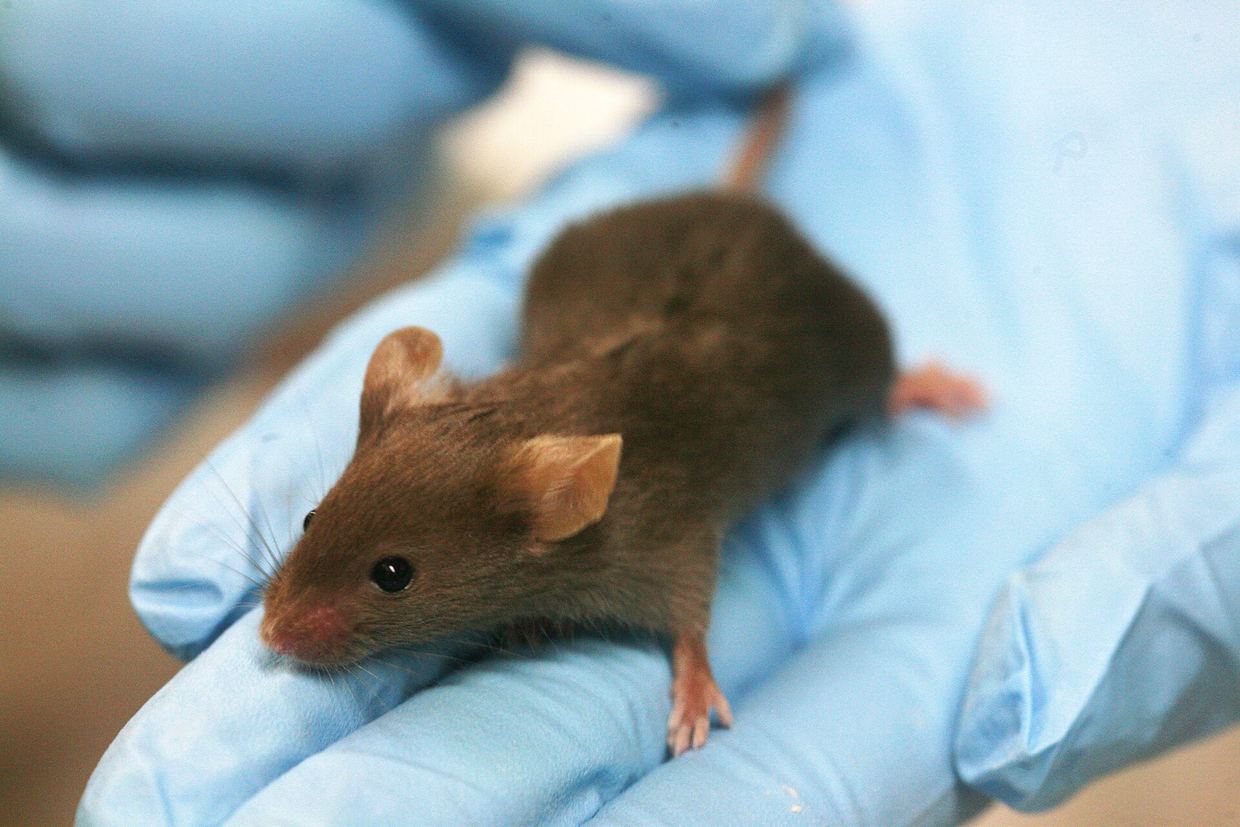
The blood-brain barrier restricts the entry of therapeutic proteins into the brain. To address this, the researchers attached a short peptide to the protein and obtained a brain-penetrant variant, ZF2–4–P9. In a transgenic mouse model of Alzheimer's disease, amyloid-beta deposits in the cerebral cortex and the hippocampus each decreased by about 53% compared with the control group doi.org
Advanced Sciencedoi.orgOpen source ↗.
Microglial activation, a marker of inflammatory response, decreased by about 29% in the cortex and about 50% in the hippocampus. In behavioral tests, treated mice showed improved recognition memory, the ability to distinguish a familiar object from a new one. No statistically significant improvements were observed in other memory and learning tests doi.org
Advanced Sciencedoi.orgOpen source ↗.
The results were obtained in animals. The authors state that further studies of therapeutic efficacy and long-term safety are needed before the approach can be applied to humans. In the words of Professor Lim, zinc finger proteins can bind disease-causing proteins directly and suppress their pathological aggregation.