Biochar amendments cut grain cadmium by up to 85.4% and raised selenium in field rice trials
In two-season field trials on karst paddy soils in Southwest China, biochar-based amendments lowered cadmium in rice grain and raised selenium, with iron-enriched biochar acting fastest.

A team including Pingfan Zhou, Yuanyuan Xu, Jing Guo, Caide Huang, Rong Su and Deyi Hou of Tsinghua University tested biochar-based soil amendments in rice paddies of a karst region in Southwest China. The results, published in the journal Biochar on 21 October 2026, cover two consecutive growing seasons. Across both seasons, grain cadmium bioaccumulation fell by 42.3–85.4%, while grain selenium bioaccumulation rose by 91.6–357.5% doi.org
Biochardoi.orgOpen source ↗.
Field design and amendments
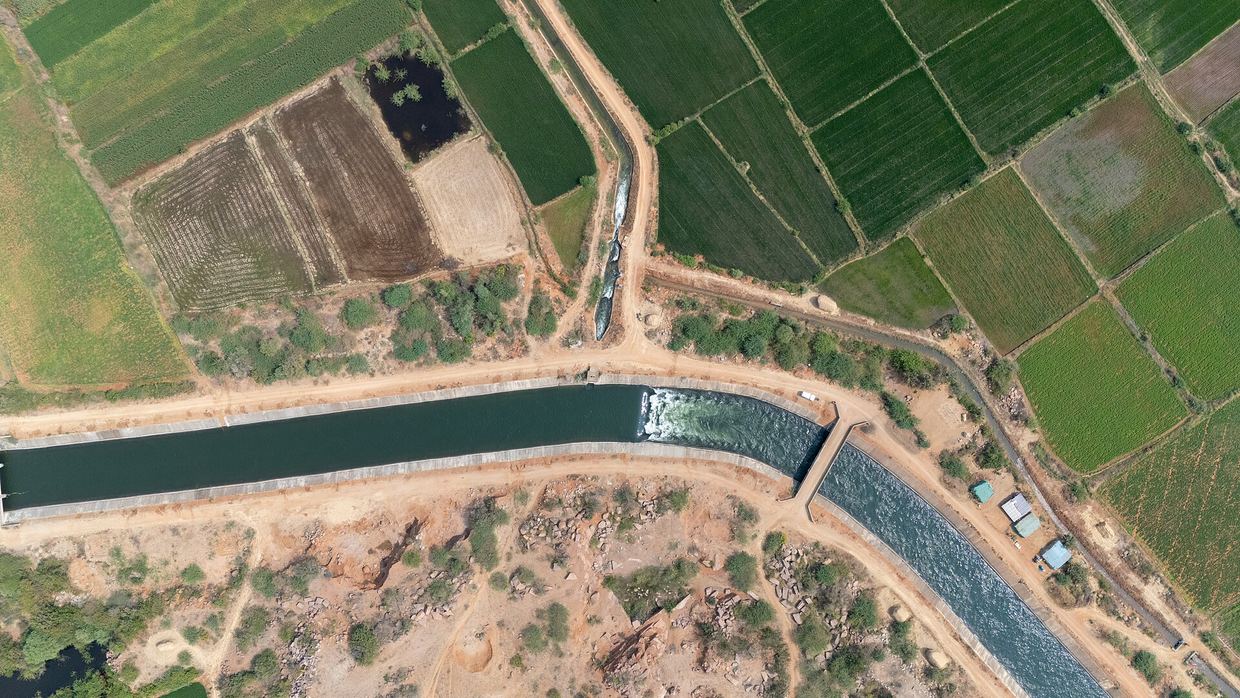
The soils in the study are derived from limestone and naturally contain elevated cadmium and selenium. Unlike industrial pollution, this geogenic enrichment cannot be reduced by controlling external sources, according to the release. Selenium in such soils has low bioavailability, so crops take up little of it despite its presence doi.org
Biochardoi.orgOpen source ↗.
The researchers prepared three biochar-based variants: clay-enriched (BC-Clay), manure-enriched (BC-Manure, made with cow manure) and zero-valent-iron-enriched (BC-ZVI). Biochar is a carbon-rich material produced by heating biomass under limited oxygen. The amendments were applied at 5–20 tonnes per hectare in controlled field experiments doi.org
Biochardoi.orgOpen source ↗.
Results and mechanism
BC-ZVI at 10–20 t per hectare gave the fastest and most consistent cadmium immobilization. It brought grain cadmium below China's national safety threshold of 0.2 mg/kg in both seasons, while grain selenium increased by 91.6–357.5% doi.org
Biochardoi.orgOpen source ↗. BC-Clay and BC-Manure needed the second season to reach comparable cadmium results at all application rates
doi.org
Biochardoi.orgOpen source ↗.
The effects were stronger in the second season and coincided with higher yield. The release reports yield increases of 29.7–69.2%. The authors link this to longer-term soil conditioning and progressive weathering of the amendments doi.org
Biochardoi.orgOpen source ↗.
The authors suggest that higher soil pH, cation exchange capacity and available phosphorus may account for the immobilization of cadmium and the mobilization of selenium. Field and literature data also showed that total cadmium and selenium in soil do not track their mobile or plant-accumulated fractions doi.org
Biochardoi.orgOpen source ↗. The approach relies on selenium already present in the soil and does not use additional selenium fertilizer.
According to the release, iron-enriched biochar acts quickly but costs more, while the clay and manure variants may be cheaper for large-scale use. The authors note that long-term performance across other soil types still needs to be evaluated. Professor Hou said that by regulating soil chemistry it is possible to reduce contaminants and improve the nutritional value of crops at the same time.