MARUM model: ocean carbon burial can cool Earth below its starting temperature after warming
An Earth system model by Hülse and Ridgwell shows that after warming, the nutrient feedback in the ocean can cool the planet below its starting temperature.
Dominik Hülse (MARUM, University of Bremen) and Andy Ridgwell (University of California, Riverside) extended an Earth system model with additional ocean processes, according to marum.de. The study was published in Science in 2025. In the model, the climate after a warming does not always stabilize smoothly: it can overcorrect and cool the Earth far below its initial temperature marum.de
marum.demarum.deOpen source ↗. The process still takes hundreds of thousands of years.
Rock weathering and its limits
Until now, slow weathering of silicate rock was regarded as the main regulator of climate. Rain takes up CO2 from the air, reaches exposed rock on land and slowly dissolves it. When the carbon reaches the sea together with dissolved calcium, it becomes the raw material for shells and limestone reefs, which lock it in the ocean floor for hundreds of millions of years.
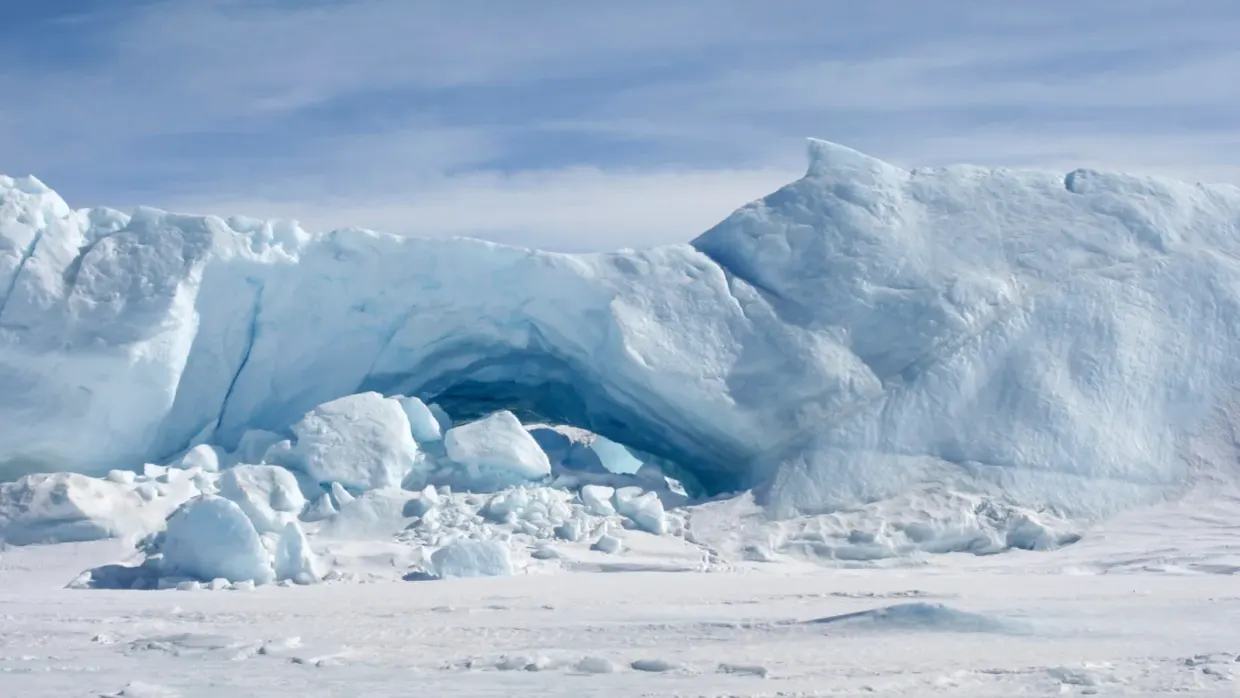
The authors state that weathering alone cannot explain the phases of early Earth history when the planet was entirely covered in snow and ice. Other processes must have contributed to the cooling.
Nutrient feedback in the ocean
When atmospheric CO2 rises and the planet warms, more nutrients such as phosphorus reach the sea. They fuel algae growth, which takes up CO2 during photosynthesis. Dead algae sink to the seabed and carry the carbon with them marum.de
marum.demarum.deOpen source ↗.
In a warmer world with stronger algae growth, the oceans also lose oxygen. As a result, phosphorus is recycled instead of being permanently stored in sediment. This creates a feedback loop: more nutrients produce more algae, their decomposition consumes more oxygen, and still more nutrients are recycled. At the same time, large amounts of carbon are buried in sediment, which cools the Earth.
In the model used in the study, this can trigger an ice age. With silicate weathering alone, the authors could not simulate such extreme values. The study shows that lower atmospheric oxygen concentrations, as occurred in the geological past, trigger stronger nutrient feedbacks and could therefore have caused the extreme ice ages of early Earth history.
According to the model, another overcooling reaction could occur in about one hundred thousand years as humans continue to add CO2 to the atmosphere. It would be weaker, because today's atmosphere contains more oxygen than in early Earth history, which dampens the nutrient feedback marum.de
marum.demarum.deOpen source ↗. Ridgwell said the focus must now be on limiting current warming, since the natural cooling will not come fast enough to help.
As a next step, Hülse wants to use the model to clarify why the Earth system in the past sometimes recovered surprisingly fast from climate perturbations, and what role interactions with sediment played.