Only 10.7% of ancient shallow-sea map cells hold fossils, a Science Advances study finds
Researchers mapped 148,960 fossil collections spanning 540 million years and found that records of shallow marine animals cover a small share of ancient seas.
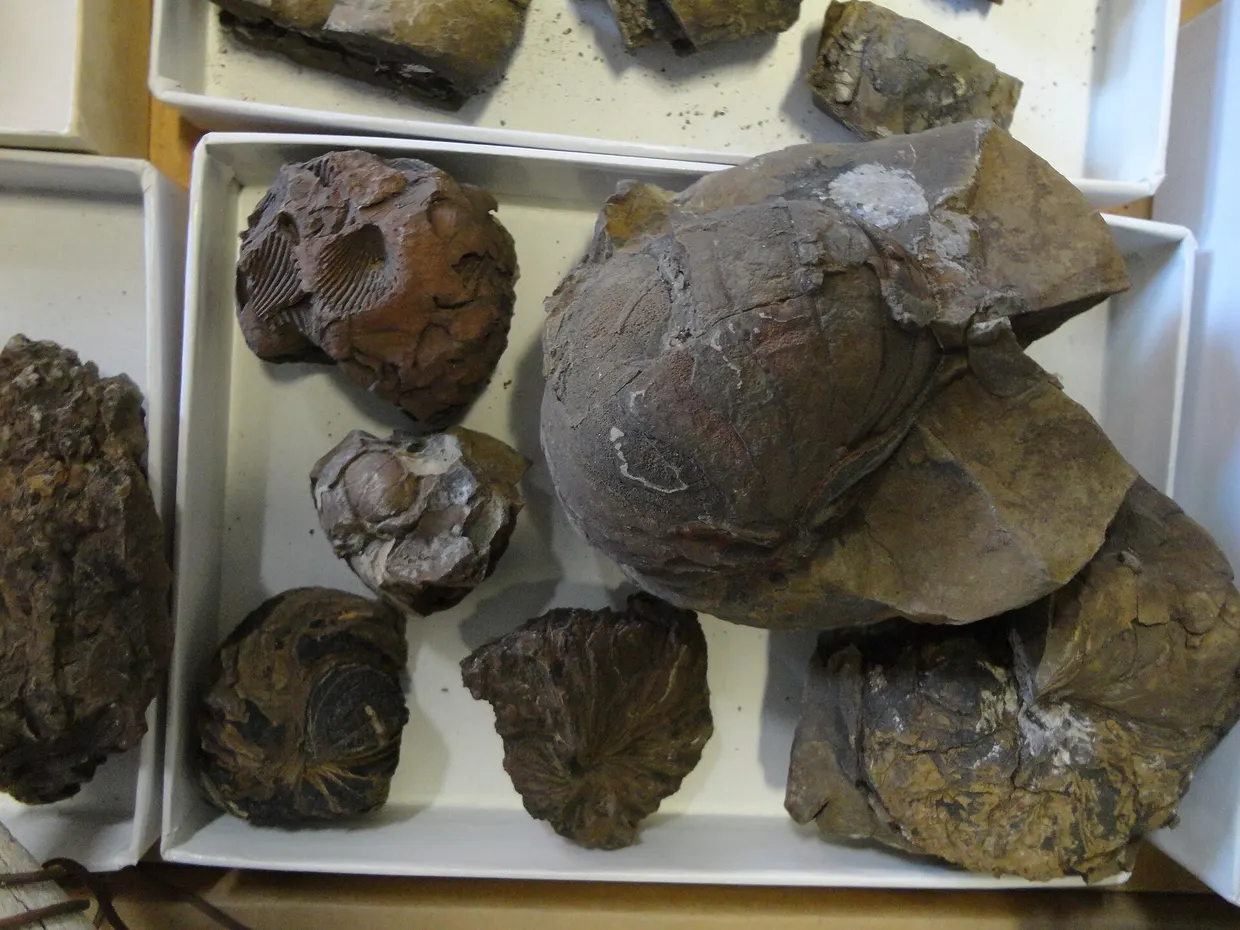
Muy Interesante reports on a study titled "Staking out the frontiers: The limits of the metazoan shallow marine fossil record", published in Science Advances. The authors assembled 148,960 georeferenced fossil collections from previously published records. They span about 540 million years, from the early Cambrian to the latest Pleistocene muyinteresante.okdiario.com
Muy Interesantemuyinteresante.okdiario.comOpen source ↗. On average, only 10.7% of map cells overlapping ancient shallow seas contain recorded fossil information.
What the study counted
The work covers shallow-water metazoans only. Plants, non-animal organisms and, in general, the most recent Holocene deposits are excluded. A fossil collection here is a sampling unit: a set of remains gathered at a specific point and time. It is not a species or a single specimen.
The authors projected the collections onto reconstructions of ancient seas and divided them into hexagonal cells of equal area. They tested different grid sizes and orientations to check that the patterns did not depend on a single way of dividing space.
The 10.7% figure measures the geographic coverage of the marine fossil record. It is not the share of known species or the number of fossils studied muyinteresante.okdiario.com
Muy Interesantemuyinteresante.okdiario.comOpen source ↗. An empty cell means the database holds no valid fossil information for that place and period. It does not show that no animals lived there.
The reasons for a gap vary: no one has searched there, suitable rocks are buried under younger sediments, eroded or inaccessible, the environment preserves remains poorly, or existing data are not yet published or digitized. The ancient ocean also differs from today's map. Continents that are now separate may have shared one marine shelf, and some present-day land was underwater. Paleogeography therefore has to be reconstructed before gaps can be located.
Uneven authorship and where to look next
According to the authors, about 97% of the occurrence data come from researchers in high-income or upper-middle-income countries. This may reflect differences in funding, scientific infrastructure, access to collections, institutional stability and the capacity to publish or digitize finds. Regions with a long paleontological tradition may therefore be overrepresented, and some evolutionary episodes may look better documented than they were.
The authors compared areas without records against geological maps. This separated areas that are simply empty from those that also appear to contain accessible shallow-water deposits. The latter are proposed as priorities for future campaigns muyinteresante.okdiario.com
Muy Interesantemuyinteresante.okdiario.comOpen source ↗. The map does not identify new sites, does not confirm unknown species and does not prove that fossils exist at any given coordinate. It shows where the available evidence is weakest.