UNSW prototype tests lithium-ion battery health in under three minutes per cell, 95.5% faster
UNSW researchers built a prototype pulse-based battery test that, they say, is 95.5% faster and over 80% cheaper than current methods. It could ease second-life use of EV batteries.
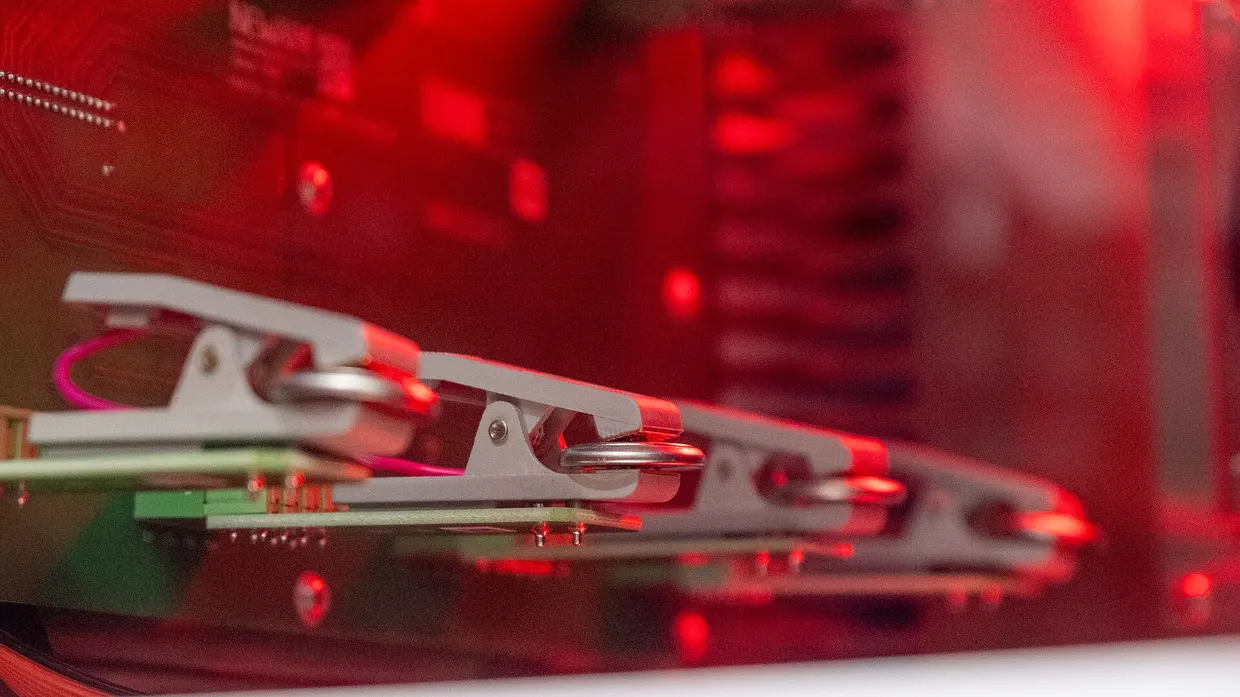
Researchers at UNSW in Sydney have developed a prototype battery health test that, they said, is 95.5% faster and more than 80% cheaper than existing methods, according to pv-magazine.com. pv-magazine.com
pv-magazine.compv-magazine.comOpen source ↗ The aim is to expand second-life battery use and keep battery waste out of landfill.
The platform is designed to work with the management systems already used by recyclers and energy storage operators. It is intended to assess the three main lithium-ion chemistries used in electric vehicles and energy storage: lithium iron phosphate (LFP), nickel cobalt aluminum (NCA) and nickel manganese cobalt (NMC).
How the test works
Current testing of used batteries relies on a full charge-discharge cycle of about 10 hours. According to the researchers, hours of high-stress cycling can lead to overheating and fire if a battery is damaged. The procedure costs about AUD 120 ($85) per EV battery pack.
The UNSW prototype instead sends short electrical pulses through each cell and measures its response. Statistical models then estimate battery health in under three minutes per cell. Lab tests showed more than 90% accuracy, the researchers said. They are targeting a cost of under AUD 25. pv-magazine.com
pv-magazine.compv-magazine.comOpen source ↗
Ziyang Lyu, research lead at UNSW's School of Mathematics and Statistics, said recyclers rarely receive neatly sorted batches, and that the models were designed to handle mixed chemistries from different manufacturers.
Pilot project with DY New Energy
The researchers have partnered with Malaysia-headquartered recycling and lifecycle management company DY New Energy on an AUD 1.3 million project. It will test the technology on more than 500 batteries in real-world conditions.
Before piloting in recycling facilities and second-life storage systems, the partners will develop and test a machine-learning decision engine that recommends whether retired batteries should be reused or recycled. A battery management system module, called iBMS, will then feed these insights into battery systems for real-time monitoring and decision support. pv-magazine.com
pv-magazine.compv-magazine.comOpen source ↗
Huadong Mo, associate professor at UNSW's School of Systems and Computing, said that up to 95% of a battery's components can be recovered, yet only a small fraction of lithium-ion batteries in Australia are collected for recycling today. He said Australia has an opportunity to build a local second-life battery industry, with retired batteries supporting grid and community storage.
The project is also supported by the Trailblazer for Recycling and Clean Energy (TRaCE) Lab to Market Fund. On Nov. 13, DY New Energy said it will partner with the Australian Research Council's FRIASA Hub to advance safe and scalable battery recycling.