CRISPR-Cpf1 vectors deliver up to ten guide RNAs and enable triple gene deletions in Aspergillus niger in two weeks
A toolbox for Aspergillus niger assembles plasmids carrying up to ten guide RNAs. Three genes were deleted at once in under two weeks, which may speed up fungal cell factory construction.
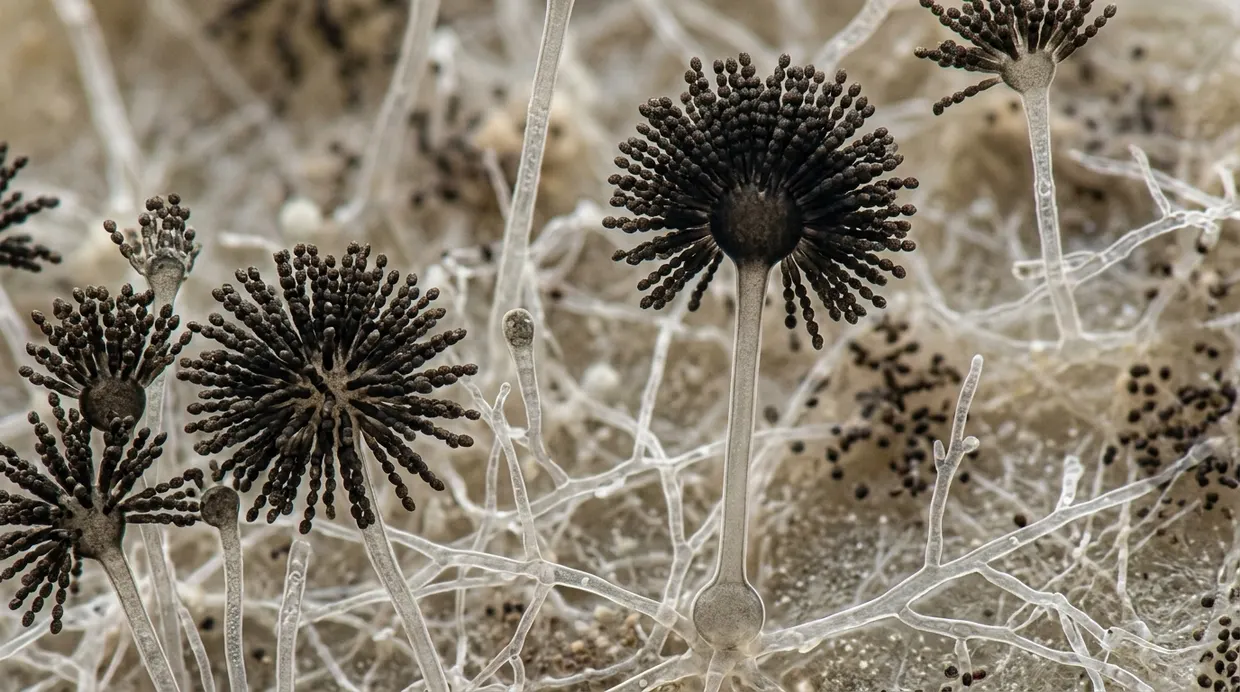
A research team has described a CRISPR-Cas12a (Cpf1) toolbox for multiplex genome editing in the filamentous fungus Aspergillus niger. According to the journal Fungal Biology and Biotechnology, the plasmids can deliver up to ten guide RNAs (gRNAs), and three genes were deleted simultaneously without prior gRNA validation or genomically integrated selection markers biomedcentral.com
Fungal Biology and Biotechnologybiomedcentral.comOpen source ↗. The authors report that the multiple modifications take less than two weeks.
Aspergillus species have been used in industry for more than a century for food fermentations, citric acid and enzymes such as amylases. Building efficient fungal cell factories requires many strain-specific modifications, and traditional pipelines rely on consecutive rounds of transformation and marker recycling, which can stretch projects over several years.
Why Cpf1 simplifies guide delivery
Unlike Cas9, Cpf1 releases several gRNAs from a single precursor RNA through its own RNase activity. It recognizes and cleaves a conserved 14- to 16-nucleotide stem-loop within the 19- to 20-nucleotide repeat of the crRNA. This removes the need for ribozymes or tRNA processing elements, whose repeated sequences in fungal hosts complicate plasmid construction and can cause instability through direct repeat recombination. It also allows each locus to be targeted by several gRNAs to raise the chance of a DNA break.
The plasmids use an AMA1 sequence for extrachromosomal replication and four selection markers: pyrG, argB, hph and ble. Cpf1 is encoded by a codon-optimized Lachnospiraceae bacterium gene with a nuclear localization signal. The guide cassette is expressed from the Aspergillus fumigatus U3 promoter and assembled by USER cloning from PCR fragments and synthetic double-stranded DNA oligonucleotides called bio-blocks. Cassettes with nine to ten guides were verified by colony PCR and Sanger sequencing after screening five to ten bacterial transformants.
Triple deletions in strain NIG159
Editing was tested in strain NIG159, which carries a kusA deletion and cannot repair double-strand breaks by non-homologous end-joining. Without donor templates, cells did not survive, confirming that the vectors released active nucleases. Donor substrates with 500-base-pair homology arms were used to excise about 300 base pairs around the start codon of three genes at once. Each gene was targeted by three uncharacterized gRNAs, relying on redundancy rather than prior validation.
In the first trial, Gene Set 1, three uncharacterized genes (A, B and C) were targeted with plasmid pCpf1.MEC1 carrying the pyrG marker. The authors conclude that the system is efficient for building CRISPR-Cpf1 vectors with many gRNAs and expect it to speed up cell factory construction significantly biomedcentral.com
Fungal Biology and Biotechnologybiomedcentral.comOpen source ↗.