Paludohadros proudlovii: new iguanodontian genus named from 2001 find at Ewhurst Works, Surrey
Natural History Museum researchers described a 5-metre iguanodontian from the Early Cretaceous, about 125 million years old, found 25 years ago and now a new genus and species.
Researchers at the Natural History Museum in London have named a new genus and species of dinosaur, Paludohadros proudlovii, more than 25 years after its discovery, according to nhm.ac.uk nhm.ac.uk
nhm.ac.uknhm.ac.ukOpen source ↗. The remains were found in 2001 at wienerberger's Ewhurst brick and roof tile works in Surrey and were later donated to the museum. The description was published in the Journal of Systematic Palaeontology.
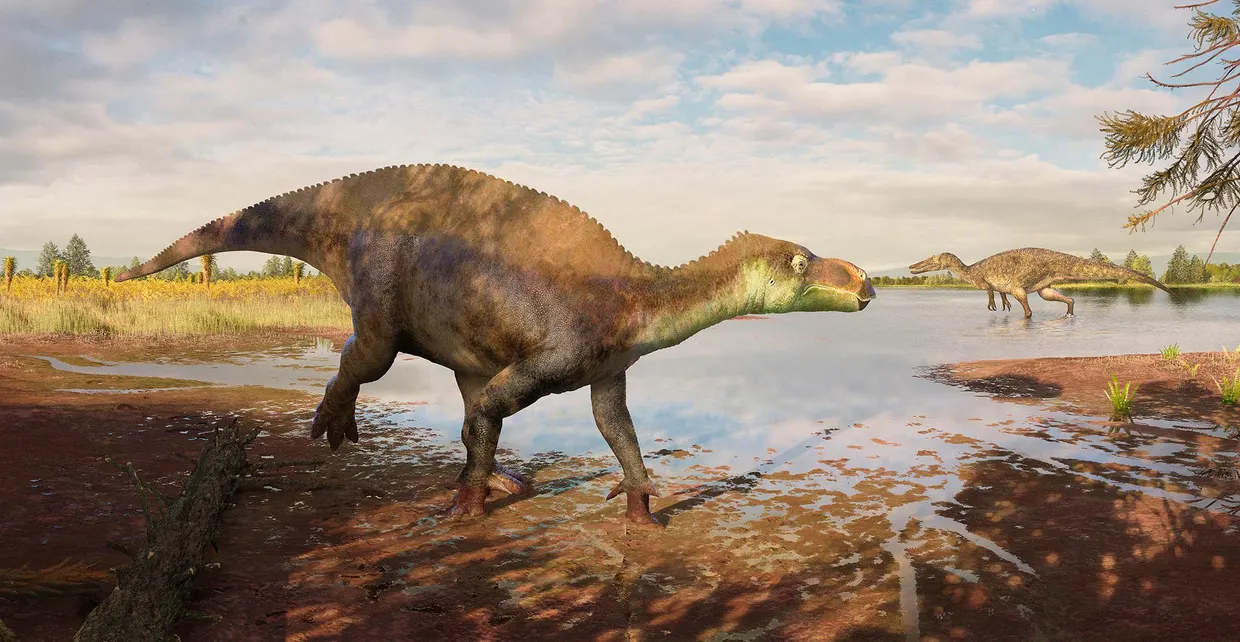
Paludohadros belongs to the iguanodontians, a group of dinosaurs known for their thumb spikes. It lived about 125 million years ago in the Early Cretaceous, when southern England was covered in muddy wetlands. The genus name comes from the Latin palus, "swamp".
Size and the species name
Paludohadros was a four-legged herbivore, about five metres long and 1.5 to 2 tonnes in weight, similar in size to a rhino. Its bones do not appear to have been fully developed, so the individual was probably a juvenile. As an adult it could potentially have grown twice as large, the authors said.
The species name honours Will Proudlove, a former employee of the Ewhurst Works who worked his way up to manager. He died at the age of 35, shortly before the dinosaur was excavated, and was survived by his wife Rachael and their children Ellie and Matt nhm.ac.uk
nhm.ac.uknhm.ac.ukOpen source ↗.
Reclassification of southern English iguanodontians
Historically, iguanodontians from southern England were assigned either to Iguanodon or to its smaller relative Mantellisaurus. A detailed redescription of Mantellisaurus by Natural History Museum scientists, published in 2023, made it possible to identify key differences. Since then several new iguanodontians have been named: Brighstoneus, Comptonatus, the sail-backed Istiorachis and now Paludohadros.
Paludohadros was found about 100 metres from Baryonyx walkeri, a two-legged carnivore discovered at the Ewhurst Works in 1983. The last meal of Baryonyx, best known for eating fish, also included a baby iguanodontian. Senior author Susannah Maidment of the Natural History Museum and the University of Birmingham said the species of that meal cannot be determined. She said Baryonyx could have scavenged young Paludohadros or hunted them.
Several other Paludohadros specimens have been identified among material first collected in the 1950s. The study was led by Ricardo Sacamoto, a PhD student at the Natural History Museum and the University of São Paulo. As part of his PhD he will go through the museum's iguanodontian collections, which could lead to further new species nhm.ac.uk
nhm.ac.uknhm.ac.ukOpen source ↗.