Neanderthal heel bones differ in shape from modern humans', a study of 71 calcanei finds
An international team compared seven Neanderthal and 64 Homo sapiens heel bones and found a distinct shape that may point to flatter feet. The hypothesis still needs biomechanical tests.
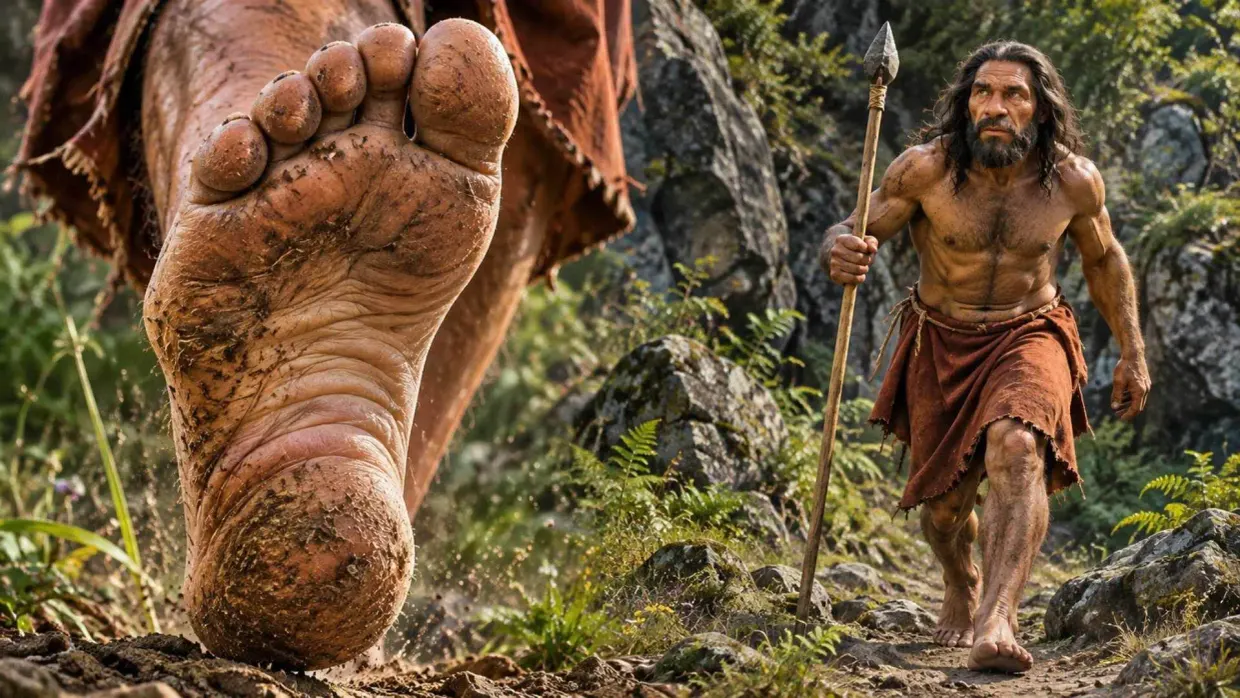
An international team led by Rita Sorrentino, affiliated with the University of Bologna and the National Museum of Natural Sciences of Spain, compared the heel bones of Neanderthals and Homo sapiens. The work was published in the Journal of Human Evolution, Muy Interesante reports. muyinteresante.okdiario.com
Muy Interesantemuyinteresante.okdiario.comOpen source ↗ The authors examined 71 calcanei: seven from Neanderthals and 64 from Homo sapiens of different periods.
Sample and method
The Neanderthal specimens came from La Ferrassie, La Chapelle-aux-Saints and Regourdou in France, Spy in Belgium, and El Sidrón in Asturias. The El Sidrón remains are about 49,000 years old.
The researchers used three-dimensional reconstructions obtained from scanners and computed tomography. They then analysed hundreds of anatomical points on each bone with geometric morphometrics, a technique that allows precise comparison of shapes.
The Homo sapiens group included individuals who lived 120,000 to 90,000 years ago in the Near East, Upper Paleolithic hunter-gatherers, Iron Age farmers, and residents of Bologna from the XIX and XX centuries. muyinteresante.okdiario.com
Muy Interesantemuyinteresante.okdiario.comOpen source ↗
Heel shape and foot posture
Neanderthal heels were proportionally shorter, wider and taller than those of Homo sapiens. Their overall size was not necessarily larger, so the difference lies mainly in the shape of the bone.
The articular surfaces suggest that Neanderthals habitually held the foot in a more pronated position, tilting inward during support. This may be related to a different longitudinal arch, especially on the outer side of the foot. A small bony projection on the lower lateral part of the heel was much less developed in Neanderthals. It takes part in load distribution and anchors tissues that help stabilise the plantar arch.
The authors note that the study does not directly show that all Neanderthals had flat feet. It is an anatomical hypothesis based on bone shape and still requires biomechanical analysis. muyinteresante.okdiario.com
Muy Interesantemuyinteresante.okdiario.comOpen source ↗
Prehistoric humans with physically demanding lifestyles had heel robustness traits that resembled those of Neanderthals, though less pronounced. The post-industrial population showed a different bone configuration, compatible with lower foot mobility. The researchers consider that habitual rigid footwear and changes in daily activity may have contributed, but the study cannot fully separate the effect of footwear from other factors.
The paper is Journal of Human Evolution 219: 103887, 2026.