Study of 1,758 butterfly species: 80% expanded their ranges, most shifts tied to climate change
A global dataset from 105 countries and territories shows most butterfly range shifts were associated with climate change or extreme weather, while 27% of species contracted their ranges.
A team led by biologist Shawan Chowdhury of Monash University in Australia compiled documented range shift records for 1,758 butterfly species from 105 countries and territories, about 10% of the known diversity of these insects. The 2026 assessment, published in Nature Ecology & Evolution, draws on more than 6,000 records of range shifts nature.com
Nature Ecology & Evolutionnature.comOpen source ↗. The authors note that range shift detection varies across regions and taxa, which makes comprehensive assessments difficult.
Range shifts: what the data show
Most species in the dataset (80%) experienced range expansions. Most range shifts (79%) were associated with climate change and extreme weather events. A substantial share of species contracted their ranges (27%) or shifted along elevational gradients (22%).
In tropical countries the authors report widespread horizontal expansions and contractions, with less evidence for elevational shifts. Chowdhury said warming temperatures allow some species to expand northwards in Europe; Finland, for example, is recording several butterfly species not previously seen there.
According to the authors, a clearer picture emerged only when different types of data were combined. Expert assessments and non-English studies reduced potential biases nature.com
Nature Ecology & Evolutionnature.comOpen source ↗. They call for concerted efforts to improve inclusive data monitoring and conservation, especially in tropical countries, where human-induced land-use change adds critical pressure.
Mass movement of butterflies in Sri Lanka
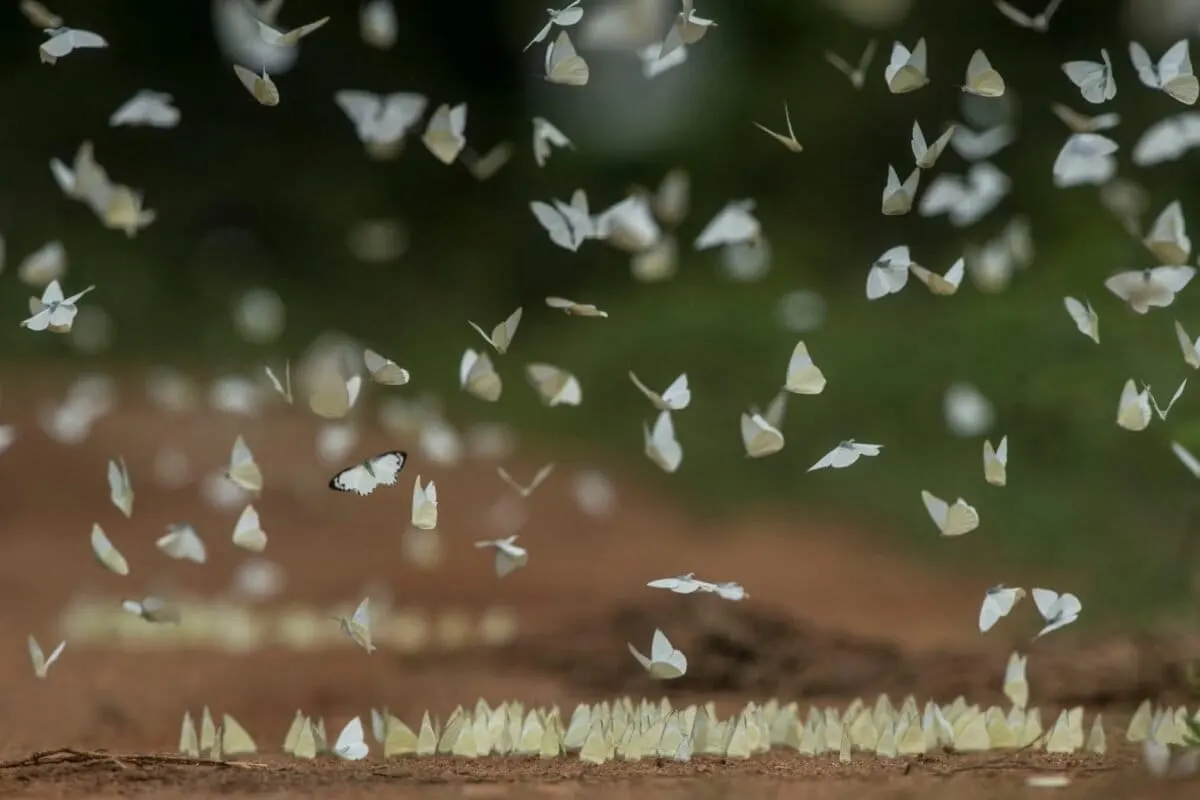
In the first week of November, clouds of yellow and white butterflies appeared in Colombo and several other parts of Sri Lanka. Lakshman Kumara, secretary of the Butterfly Conservation and Research Group of Sri Lanka, said numbers usually peak in October–November and February–March, and that the 2026 influx was particularly pronounced.
Kapila Dissanayake of Sabaragamuwa University said the current movement is dominated by the lemon emigrant (Catopsilia pomona), with smaller numbers of common albatross and Sri Lankan lesser albatross. He described it as a mass movement rather than a formal migration: its direction, continuity and geographical extent still require verification.
Himesh Dilruwan Jayasinghe of Sri Lanka's National Institute of Fundamental Studies named the northeast monsoon as the main driver of the seasonal increase. Rain triggers growth of host plants such as cassia and senna, giving caterpillars abundant food. He added that inter-monsoon rains in October may have contributed to this year's numbers. These local observations are separate from the global range shift assessment.