UFMG tests extracts of Greenland and Antarctic permafrost fungi on seeds as a lead for weed control
Brazilian researchers have isolated about 500 extremophile fungal strains from polar permafrost and test their extracts on lettuce and chive seeds. The work is still experimental.
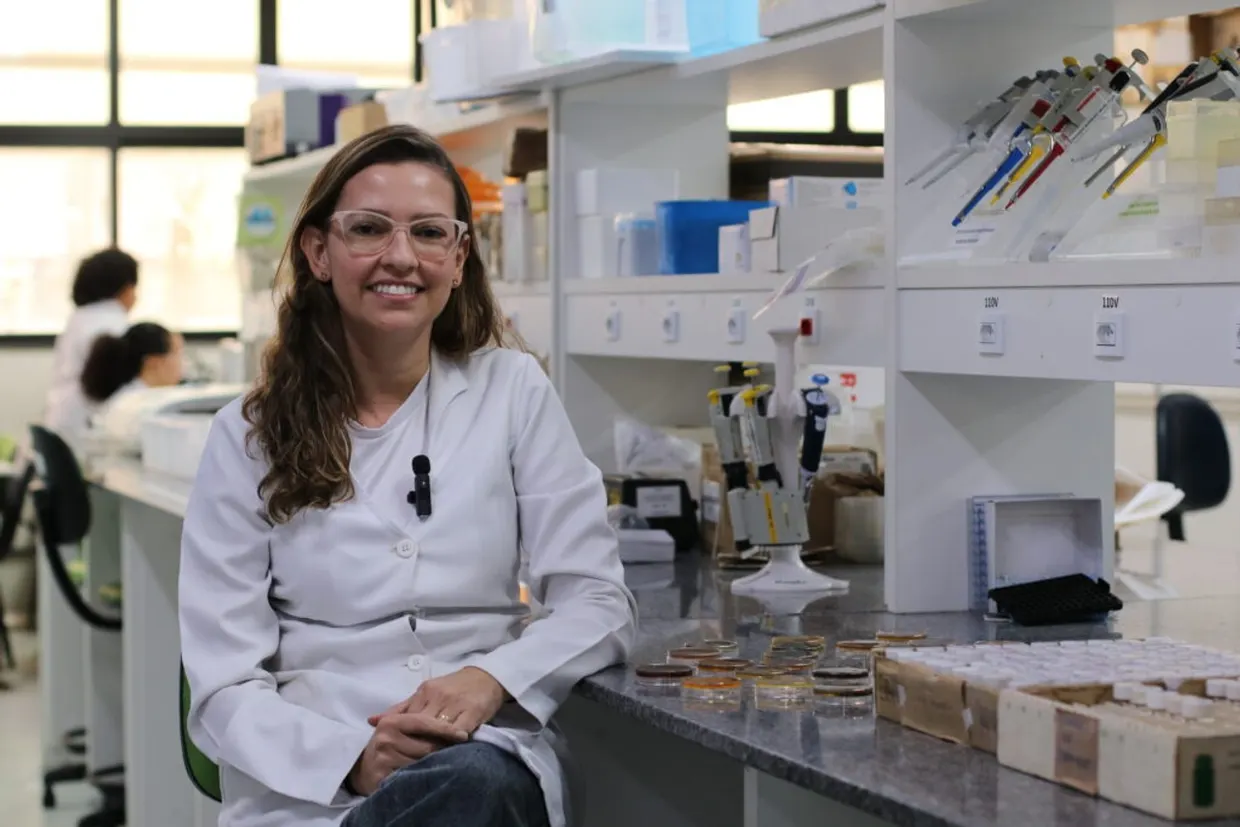
Researchers at the Federal University of Minas Gerais (UFMG) in Belo Horizonte are analysing fungi from permanently frozen soils of Greenland and Antarctica as a possible starting point for weed control, according to clickpetroleoegas.com.br. They expose seeds to extracts produced by the microorganisms and observe whether the material affects germination. The work is experimental, but it has already produced a collection of about 500 strains isolated from polar environments, according to a UFMG and Fundep release of November 2026. clickpetroleoegas.com.br
clickpetroleoegas.com.brclickpetroleoegas.com.brOpen source ↗
The study is run at the Polar Microbiology and Tropical Connections Laboratory (MicroPolar) in UFMG's Department of Microbiology, with support from the Minas Gerais State Research Foundation (Fapemig). Researcher Vívian Nicolau Gonçalves is looking for substances from these fungi that could serve as a basis for future research on controlling plants that compete with crops for water, light and nutrients.
Extremophile fungi from permafrost
Permafrost is soil that stays frozen for at least two consecutive years. The team works with extremophile fungi, which can survive intense cold, low water availability, scarce nutrients or high radiation. Professor Luiz Henrique Rosa, head of MicroPolar, says isolated environments may hold microorganisms with metabolic pathways different from those of common species in tropical and temperate regions.
The roughly 500 polar strains are part of a laboratory collection of more than 20 thousand extremophile fungal strains. Each isolate still has to go through identification, cultivation and compound analysis. Not every strain will yield a substance useful to agriculture, and the presence of a fungus in frozen soil does not mean it acts as a herbicide. clickpetroleoegas.com.br
clickpetroleoegas.com.brclickpetroleoegas.com.brOpen source ↗
How the extracts are tested
The researchers grow the fungi and study substances released during their metabolism, including secondary metabolites. The extracts are applied to lettuce and chive seeds, which serve as experimental models. Doses are standardised, incubation and light conditions are kept similar, and a control group of seeds receives no extract.
If an extract hinders germination, it becomes a candidate for further evaluation. The team must then identify the molecules involved and check that the result is reproducible. Gonçalves plans to scale up production of the compounds of interest and test them in greenhouses. A reaction in lettuce or chive seeds does not yet show selective action against weeds, nor that a compound would be safe for a commercial crop.
The team also studies biological safety, since some cold-adapted strains can grow at higher temperatures. The work is funded by a Fapemig postdoctoral fellowship tied to a 2025 call. It has not yet produced a commercial herbicide. clickpetroleoegas.com.br
clickpetroleoegas.com.brclickpetroleoegas.com.brOpen source ↗