University of Reading review: ozone and nitrogen oxides cut pollinator performance by 42–68%
A review of 22 experiments found that air pollutants degrade floral scent compounds and reduce pollinator performance; most of the data come from Europe.
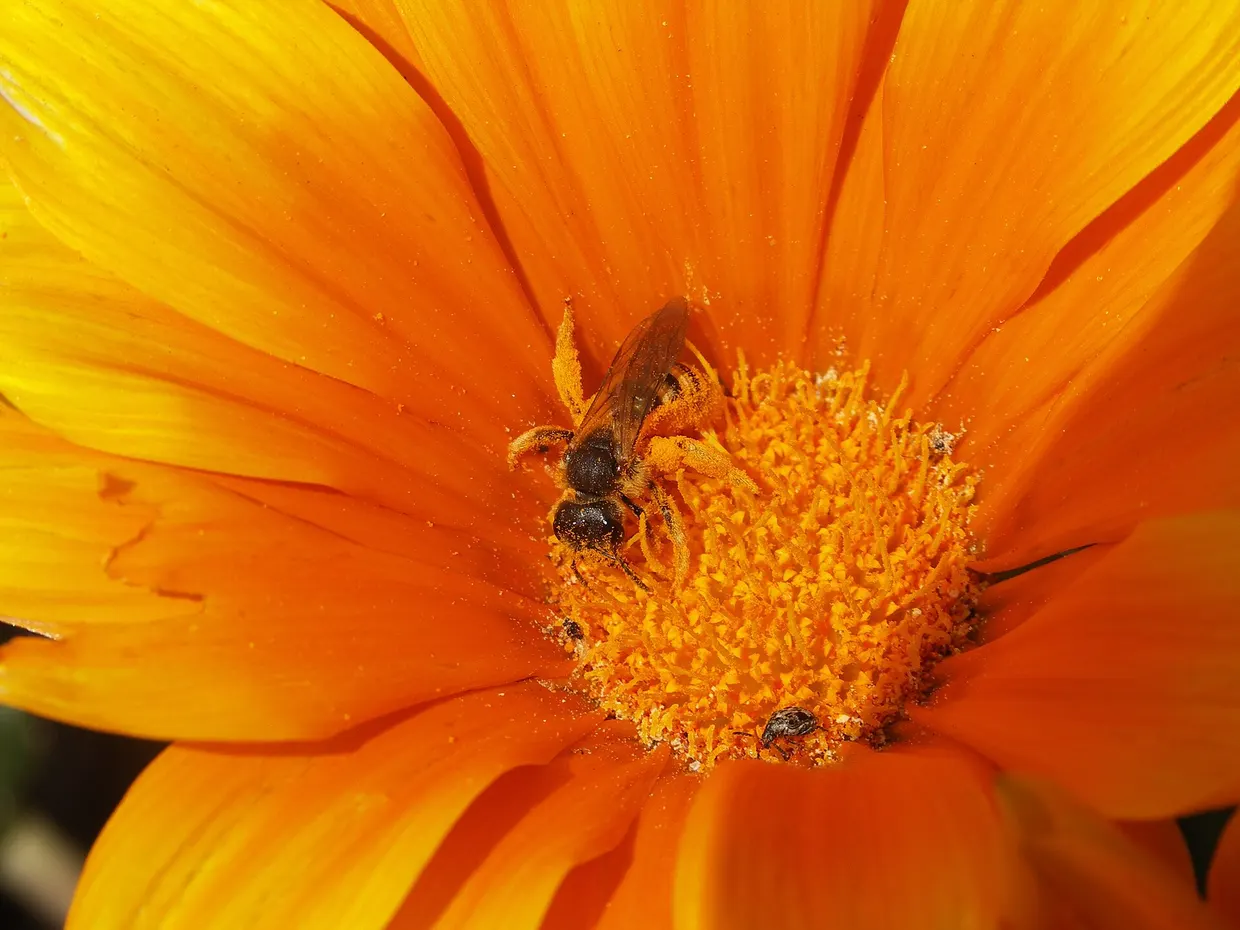
Researchers at the University of Reading report that air pollution alters the chemical signals bees and other insects use to find flowers, according to invdes.com.mx. The study, published in Frontiers in Ecology and the Environment, analysed 22 experimental studies on the effects of ozone and nitrogen oxides on pollination invdes.com.mx
invdes.com.mxinvdes.com.mxOpen source ↗. Bees rely not only on colour but also on smell: they detect plant aromas to locate nectar and pollen.
Drop in pollinator performance
Exposure to high ozone concentrations was associated with a mean 42% reduction in pollinator performance. For nitrogen oxides the decrease reached 46%, and the combination of both pollutants was associated with a mean 68% reduction.
The authors stress that these figures reflect different responses observed in the experiments. They do not mean that every bee loses exactly that share of its olfactory ability. Still, the results show that atmospheric pollution can substantially interfere with interactions between flowers and insects.
How polluted air changes floral scent
Plants release volatile organic compounds, the chemicals responsible for their characteristic aromas. Bees detect these molecules with their antennae and use them to recognise flowers even from some distance invdes.com.mx
invdes.com.mxinvdes.com.mxOpen source ↗.
The problem arises when pollutants react with these compounds. Ozone can break down some of the molecules responsible for floral odour, while nitrogen oxides can alter their chemical composition. As a result, the signals weaken or change, and flowers become harder to find. A plant may keep producing nectar and pollen yet receive fewer visits, because insects have difficulty locating it.
The study also found differences between pollinator species. Insects specialised in particular plants could be especially vulnerable, since they depend on specific chemical cues, whereas those that feed on many plant species have more alternatives. Timing matters too: bees and many butterflies may coincide with high ozone concentrations during daytime, while nocturnal moths may experience different pollution conditions.
Many crops depend on pollinating insects to reproduce and to produce fruit and seeds. If the insects find fewer flowers or need more time to locate them, pollination efficiency could decline. The researchers note, however, that it is not yet possible to attribute specific agricultural losses solely to these pollutants. They also point out that much of the available research comes from Europe, so studies in other regions are needed.