α-tACS over early visual cortex disrupted fear memory consolidation in humans, a Nature Communications study
In a human study, α-frequency stimulation of early visual cortex disrupted consolidation and retention of fear memory but left its initial acquisition intact, the authors report.
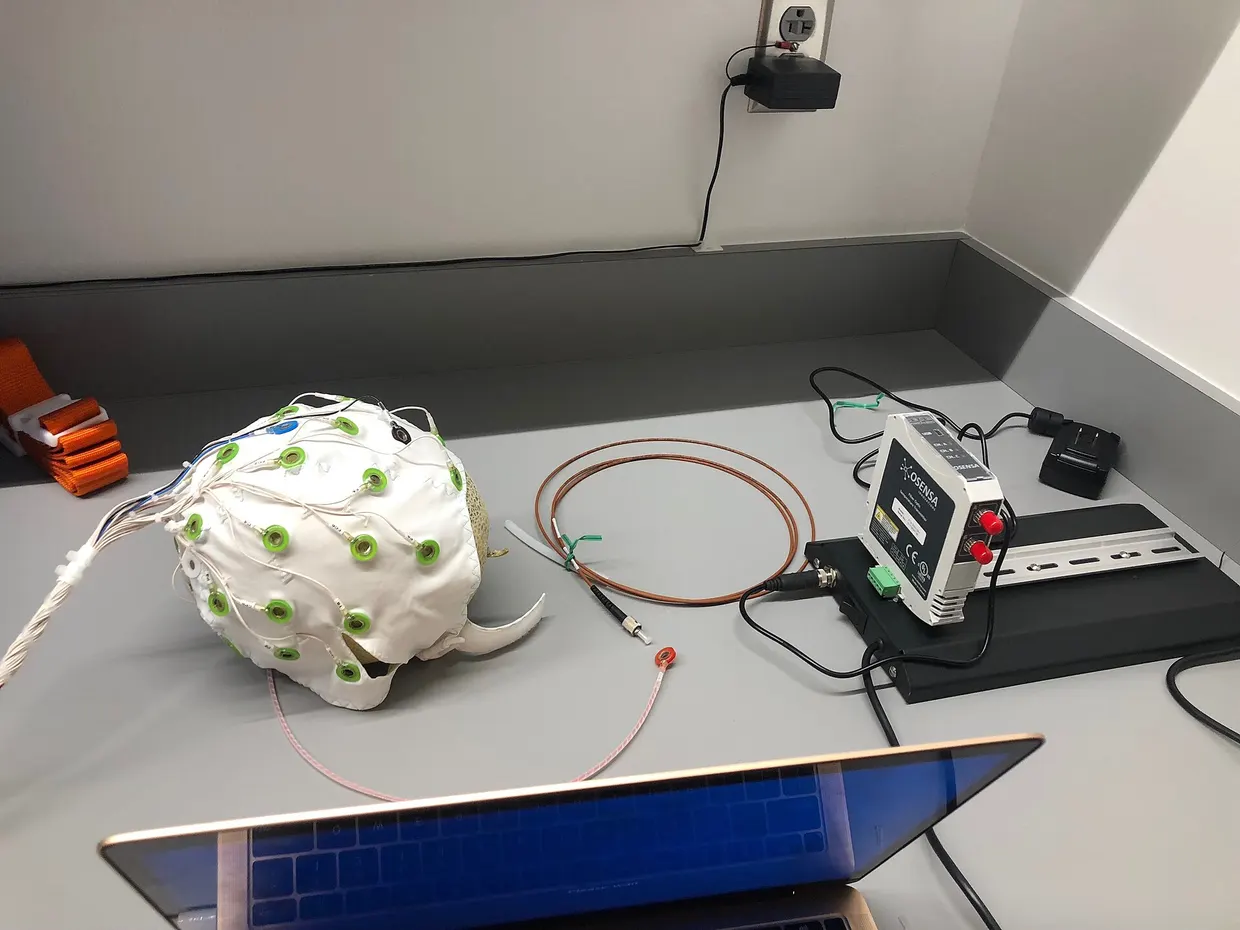
Researchers from the University of Texas Health Science Center at Houston, Stony Brook University, the University of Florida, Florida State University, University College London and South China Normal University published a study in Nature Communications on 14 November 2026. It addresses how a transient threat becomes a persistent, long-term fear memory in humans. The authors combined high-definition α-frequency transcranial alternating current stimulation (HD α-tACS) with simultaneous EEG-fMRI and decoding of the recorded neural signals nature.com
Nature Communicationsnature.comOpen source ↗.
Early sensory cortex has traditionally been viewed as a passive feature analyzer, but it is increasingly seen as an active participant in fear processing. According to the authors, the mechanisms by which short-lived threats turn into lasting memories remain unclear.
Tracking fear memory from formation to retention
The team followed fear memory through formation, consolidation and long-term retention, assessed 15 min, 24 h and 7 days after fear conditioning. Spatiotemporal memory traces were identified at all three assessments. They began at an early sensory stage, 40–60 ms after the stimulus, and were distributed across visual cortex and limbic regions.
Conditioning potentiated desynchronization of occipital α-oscillations, which the authors describe as a marker of visual cortical disinhibition. This desynchronization subsequently predicted the strength of long-term memory traces nature.com
Nature Communicationsnature.comOpen source ↗.
Effect of targeted α-tACS
Targeted α-tACS over early visual cortex induced inhibition in V1/V2. It abolished the α desynchronization potentiated by conditioning. Fear-memory consolidation and retention were selectively disrupted, while initial acquisition remained intact.
Based on these results, the authors conclude that sensory cortical disinhibition is a necessary mechanism for long-term fear memory in humans. They identify early sensory cortex as a crucial node for intervention in persistent maladaptive fear. The report describes the mechanism of memory formation; it does not describe a treatment.