Genome comparison of 38 cats identifies Leopardus tilcayo, a new wild cat species from the Bolivian Yungas
Researchers led by Paola Nogales Ascarrunz described Leopardus tilcayo from a single known animal in a Bolivian sanctuary; the species has no IUCN Red List status yet.
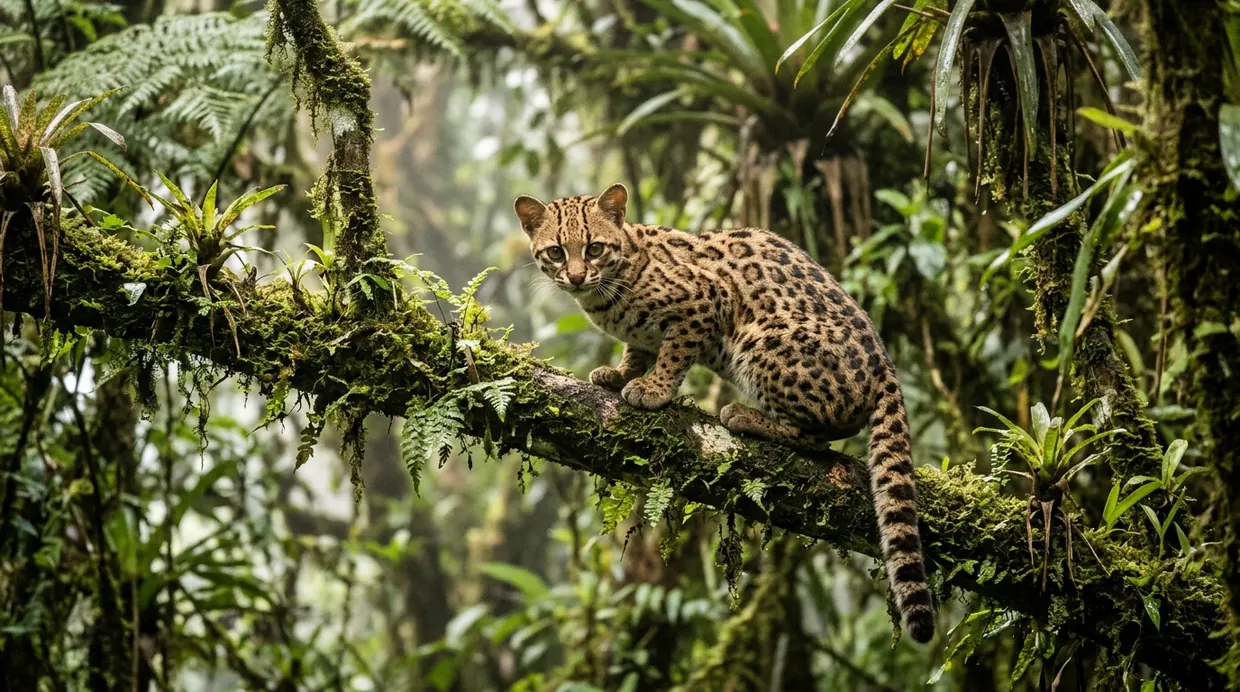
A Bolivian family found what they took to be a stray kitten and handed it to the Senda Verde sanctuary in the Yungas cloud forest on the eastern slope of the Andes, onegreenplanet.org reports. onegreenplanet.org
onegreenplanet.orgonegreenplanet.orgOpen source ↗ Staff assumed it was an oncilla, a small spotted cat known from Brazil. The animal is now about ten years old, weighs three pounds and measures eighteen inches from nose to tail base.
Genome comparison and the new name
Researchers led by National Geographic Explorer Paola Nogales Ascarrunz compared complete genomes of 38 cats of the genus Leopardus and found that the animal did not match any of them. The paper, published in Current Biology on 17 September, names it Leopardus tilcayo, keeping the word Bolivian communities have used for the animal for generations. According to the article, it is the first living cat species to be formally named and described in more than a hundred years. The animal at the sanctuary is the only known individual of the species.
Unknown status and the tiger cat group
The tilcayo has no conservation status: its IUCN Red List entry reads "unknown", because a species cannot be assessed until it has been described. The same genetic work is revising the tiger cat group. Brazilian biologist Tadeu Gomes de Oliveira, who will lead the Red List assessments, expects the number of recognised tiger cat species to rise from three to six or seven. Splitting a species does not change the number of animals, but each of the new species has a smaller range and fewer individuals than the former single species, and none of them has been reassessed yet.
The tilcayo lives in the Yungas, a band of cloud forest on the Andean slope that is under pressure from agricultural clearance, road building and fire. Its known range is small. The size and trend of the population are not known. onegreenplanet.org
onegreenplanet.orgonegreenplanet.orgOpen source ↗
The article names what is needed: survey funding, a Red List assessment and habitat protection in the Yungas. Researchers are also pushing for a global monitoring programme for small wild cats, which have historically received a small share of the attention and funding that goes to big cats.