Sharks account for up to 33.9% of reef fish biomass on Marshall Islands atolls Bikar and Bokak
Surveys in 2023 of two remote atolls in the northern Marshall Islands found predator-rich reefs. The authors present the sites as ecological baselines for future comparison.
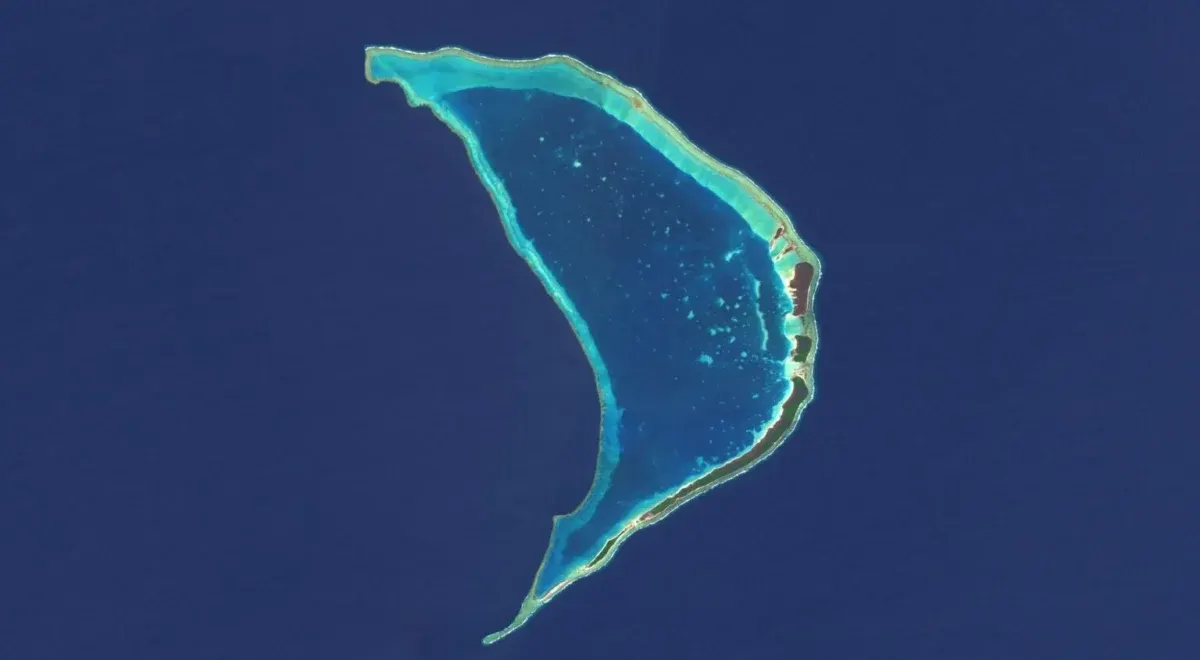
A team led by marine biologist Alan Friedlander of the University of Hawaii surveyed the remote atolls of Bikar and Bokak in the northern Republic of the Marshall Islands in 2023. The results were published in Frontiers in Marine Science. According to the authors, sharks account for up to 33.9% of reef fish biomass at the two sites frontiersin.org
Frontiers in Marine Sciencefrontiersin.orgOpen source ↗. The work covered land, seabirds, coral reefs, open water, mesophotic reefs and the deep sea within the recently established National Marine Sanctuaries of Bikar and Bokak.
Reef fish and deep-sea findings
The team combined benthic and reef fish assessments, baited remote underwater video, submersible observations of mesophotic reefs, deep-sea cameras, vegetation surveys, and seabird and sea turtle counts. Reef fish assemblages were dominated by herbivores, sharks and other upper trophic-level predators. Divers recorded 266 reef fish species from 38 families, with richer fish life at Bokak, where the seabed is dominated by living coral.
A small submersible recorded 138 species down to 275 meters. The mesophotic and deep-sea surveys documented multiple apparent new regional records and several provisionally identified taxa. The authors note that this shows how little the deeper habitats of the northern Marshall Islands have been explored.
Differences between the atolls
Despite their proximity, the atolls differ. Bokak has higher reef-fish biomass and more coral-dominated benthic communities frontiersin.org
Frontiers in Marine Sciencefrontiersin.orgOpen source ↗. Bikar has greater macroalgal cover, a more extensive Pisonia grandis forest, higher Polynesian rat encounter rates and concentrated sea turtle nesting. Both atolls support extensive seabird colonies, with 17 species in total, and mature native vegetation.
The remoteness of the sites is a main reason for their condition. Bikar lies more than 100 kilometers from the nearest inhabited atoll, and Bokak nearly 400. Polynesian rats, introduced by people, are already present on both atolls. Warming water, coral bleaching and ocean acidification also reach remote reefs, so the researchers describe the sites as relatively intact rather than pristine.
In 2025 the Marshall Islands established their first national marine protected area. As relatively intact tropical marine ecosystems become less common, the authors describe Bikar and Bokak as complementary ecological baselines for evaluating future change from land to the deep sea.