UTEP team traces game-farm ancestry in North American wild mallards back to the 1910s–1920s
Genetic data from over 400 historical and 600 modern mallards show that game-farm ancestry entered wild populations in waves and is concentrated in eastern North America.
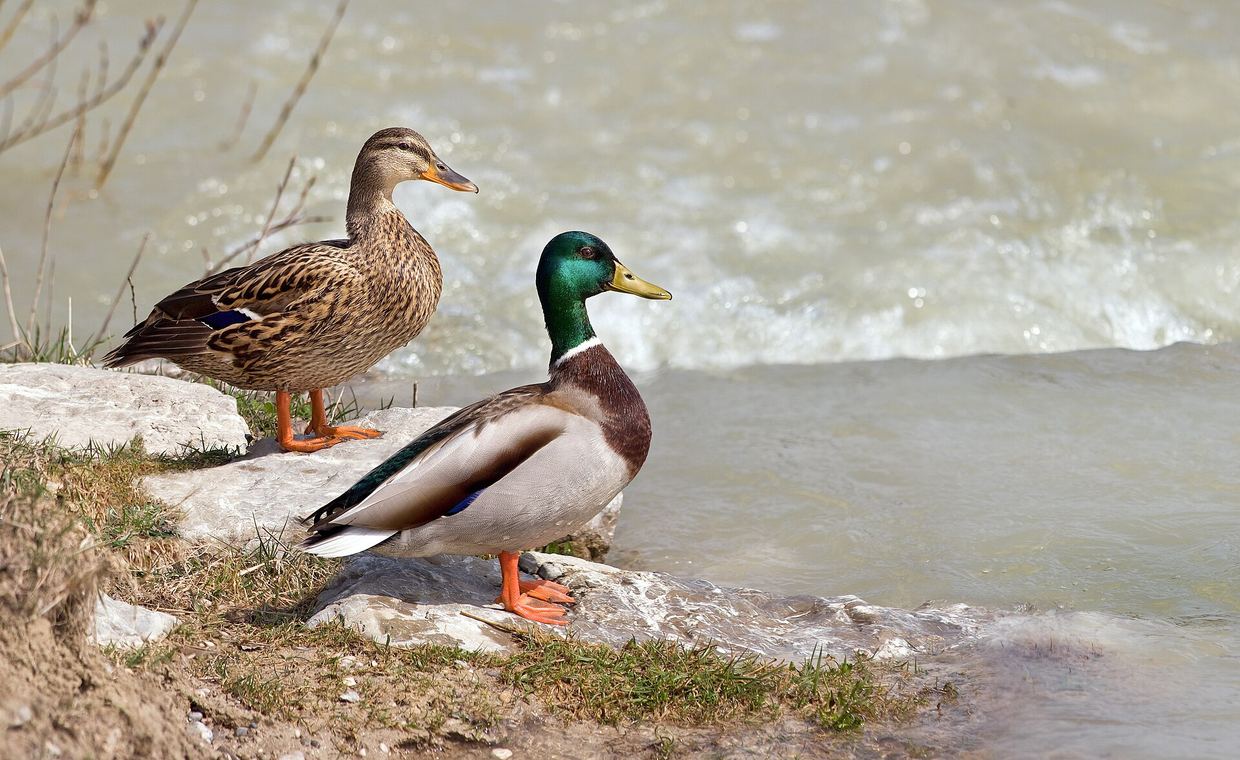
A team led by Lauren McFarland, a doctoral student at the University of Texas at El Paso (UTEP), has reconstructed the genetic history of North American mallards (Anas platyrhynchos) from 1800 to 2020, according to a study in Current Biology. The authors examined genetic data from more than 400 historical museum specimens and over 600 contemporary birds. They compared wild-origin birds with captive-bred game-farm mallards, which have been stocked since the early 20th century doi.org
Current Biologydoi.orgOpen source ↗. The work involved scientists from UTEP, the Smithsonian Institution, West Texas A&M University and the State University of New York College of Environmental Science and Forestry.
Timing and mode of admixture
Game-farm ancestry first appeared in wild populations in the 1910s–1920s, coinciding with the first reported releases in North America doi.org
Current Biologydoi.orgOpen source ↗. Its spread occurred through multiple bouts of introgression, not a single event or a steady, additive accumulation
doi.org
Current Biologydoi.orgOpen source ↗. According to the authors, these waves reflected regional stocking practices.
The samples covered all four major migratory flyways, which allowed the team to compare regions with different histories of releasing captive-bred ducks.
Regional differences and genetic diversity
The admixture is markedly uneven. Mallards in the Pacific and Central Flyways remained largely genetically wild doi.org
Current Biologydoi.orgOpen source ↗. In the Atlantic and Mississippi Flyways, particularly the Great Lakes region and the northeastern Atlantic coast, annual releases have long supplemented declining mallard populations. There the authors found sustained, increasing game-farm ancestry, consistent with a hybrid swarm scenario in eastern North America
doi.org
Current Biologydoi.orgOpen source ↗. Since the 1980s, mallards sampled in the Atlantic Flyway have averaged about 20% game-farm ancestry, according to the university.
Genetic diversity is lower in more admixed ancestry groups, and inbreeding coefficients based on FHBD rise with the proportion of game-farm ancestry doi.org
Current Biologydoi.orgOpen source ↗. The university reports that captive game-farm mallards carry about 35% less genetic diversity than wild mallards and more than twice their level of inbreeding.
The authors note that interbreeding with domestic stocks can erode local adaptations and increase the burden of harmful genetic variants in wild populations. They also raise the possibility that the low diversity of game-farm birds weakens their immune defenses, a concern while avian influenza circulates among wild and domestic birds.
The authors conclude that the genetic integrity, or "wildness," of North American mallards is being eroded and artificially sustained by continued game-farm releases, with implications for the management of captive-breeding and stocking programs doi.org
Current Biologydoi.orgOpen source ↗. The paper is titled "The dilution effect of stocking and the loss of wildness among North American mallards."