Amber fossils from Myanmar show Southeast Asian flora rafted from Australia on a microplate
More than 3,000 plant fossils in Cretaceous amber from Kachin point to the West Burma Block, which split from Australia, as the carrier of lineages later found in Southeast Asian forests.
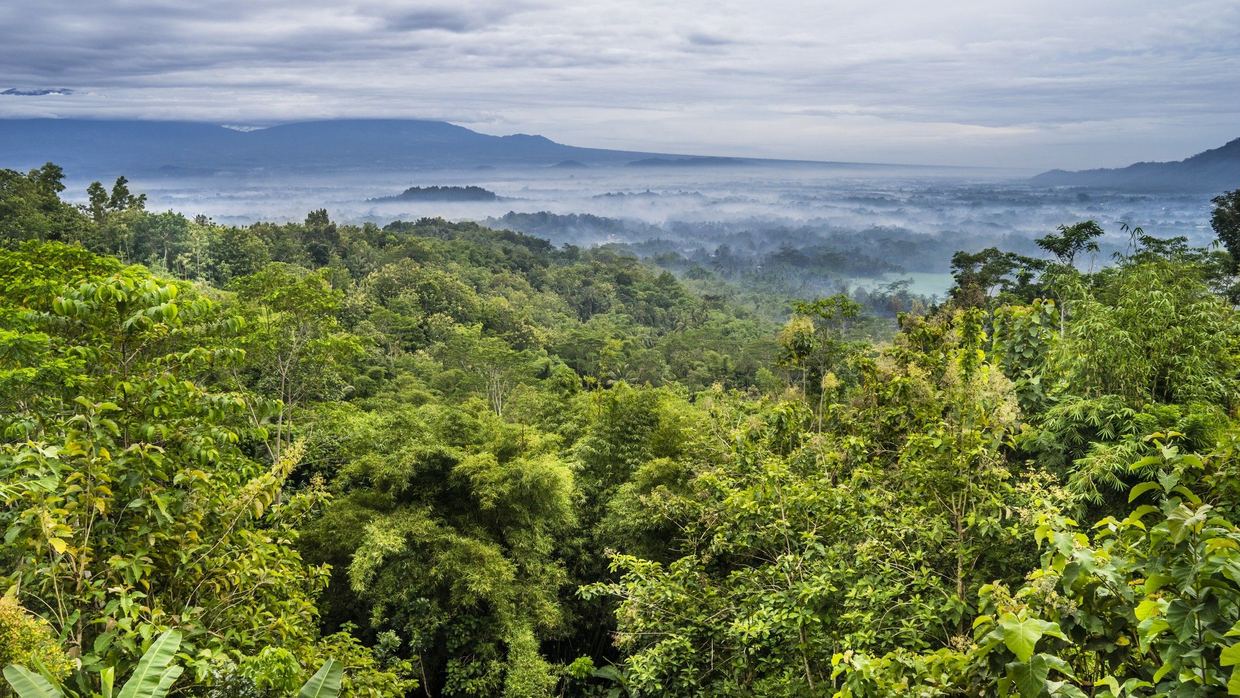
Researchers examined more than 3,000 plant fossils preserved in mid-Cretaceous amber from Kachin, Myanmar, dated to around 100 million years ago. In a paper published on 27 October in Nature Ecology & Evolution, they report that this flora reached Southeast Asia on the West Burma Block, a microplate that separated from northwestern Australia doi.org
Nature Ecology & Evolutiondoi.orgOpen source ↗. The authors conclude that the origins of Southeast Asian angiosperm-dominated tropical forests date back over 100 million years
doi.org
Nature Ecology & Evolutiondoi.orgOpen source ↗.
Fossil assemblage from Kachin amber
The specimens include flowers, leaves, fruits and seeds, preserved in three dimensions. They belong to at least 392 types of flowering plants, together with conifers, ferns, mosses, cycads and liverworts doi.org
Nature Ecology & Evolutiondoi.orgOpen source ↗. According to the authors, the morphospecies richness and clade diversity of this assemblage are among the highest recorded for any single Early to mid-Cretaceous plant megafossil assemblage
doi.org
Nature Ecology & Evolutiondoi.orgOpen source ↗.
Amber has been mined at the north end of the West Burma Block valley for at least a century, said co-author Byron Lamont of Curtin University. Some of the co-authors acquired pieces from traders at least a decade ago and have studied them since.
Route of the West Burma Block
The block, an arc-shaped microplate, separated from the northwestern corner of the Australian Plate during the Jurassic and drifted north across the Tethys Ocean. It finally collided with Sundaland by the Eocene doi.org
Nature Ecology & Evolutiondoi.orgOpen source ↗. At the time of the split, Australia was part of the supercontinent Gondwana, together with Antarctica and India.
For 100 to 50 million years the block stayed low-lying and at low latitudes. The authors describe it as a sanctuary for clade preservation, a cradle for modern clade diversification and a conduit that carried Gondwanan angiosperm lineages to Asia doi.org
Nature Ecology & Evolutiondoi.orgOpen source ↗. According to Lamont, about 80 million years ago the Indian Plate struck the block and changed its orientation.
The results contradict earlier proposals that the fragment originated closer to Southeast Asia and that the region's tropical forests evolved after the dinosaur extinction about 66 million years ago. Lamont noted that descendants of many amber plants still live in hot, humid northeastern Australia, so the block did not strip the continent of its flora.
The fauna of the assemblage is limited to small amber-trapped insects such as ants and mosquitoes. Which larger animals travelled on the block cannot be determined from this material.