Black hole RBH-1, over 10 million times larger than the Sun, moves at 954 km/s, researchers report
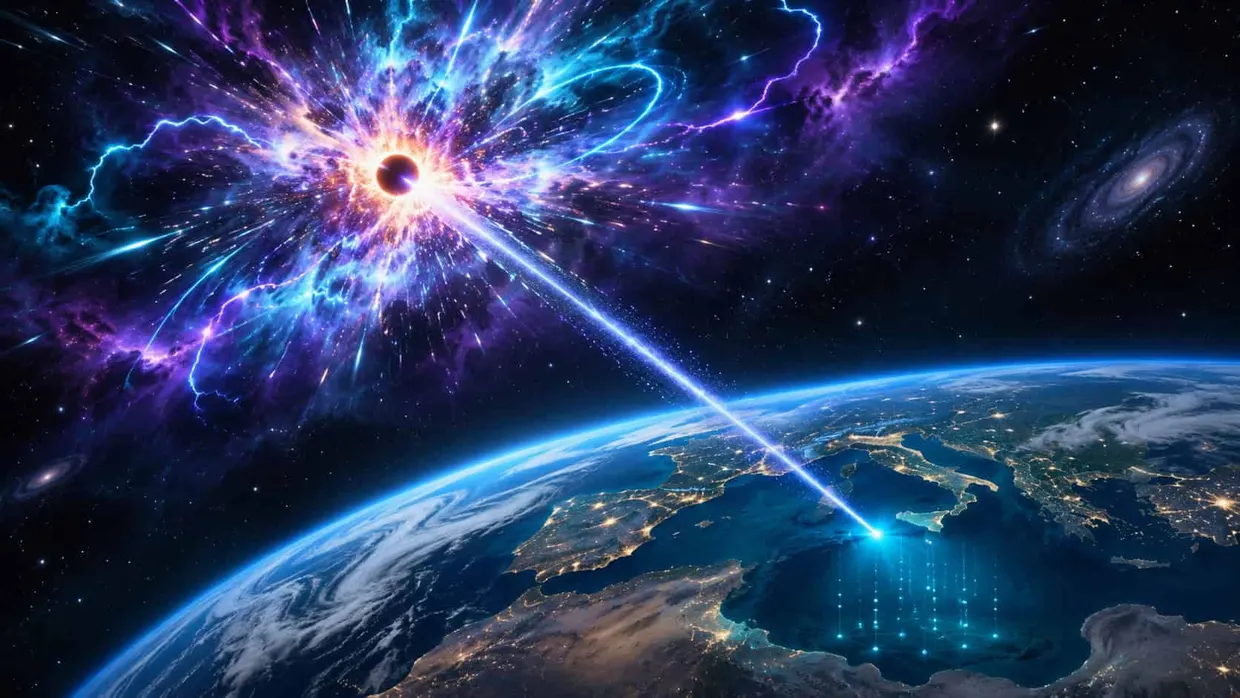
Researchers from the Kavli Institute and two US universities describe RBH-1, a black hole that may have been ejected from its galaxy after a merger of two supermassive black holes.
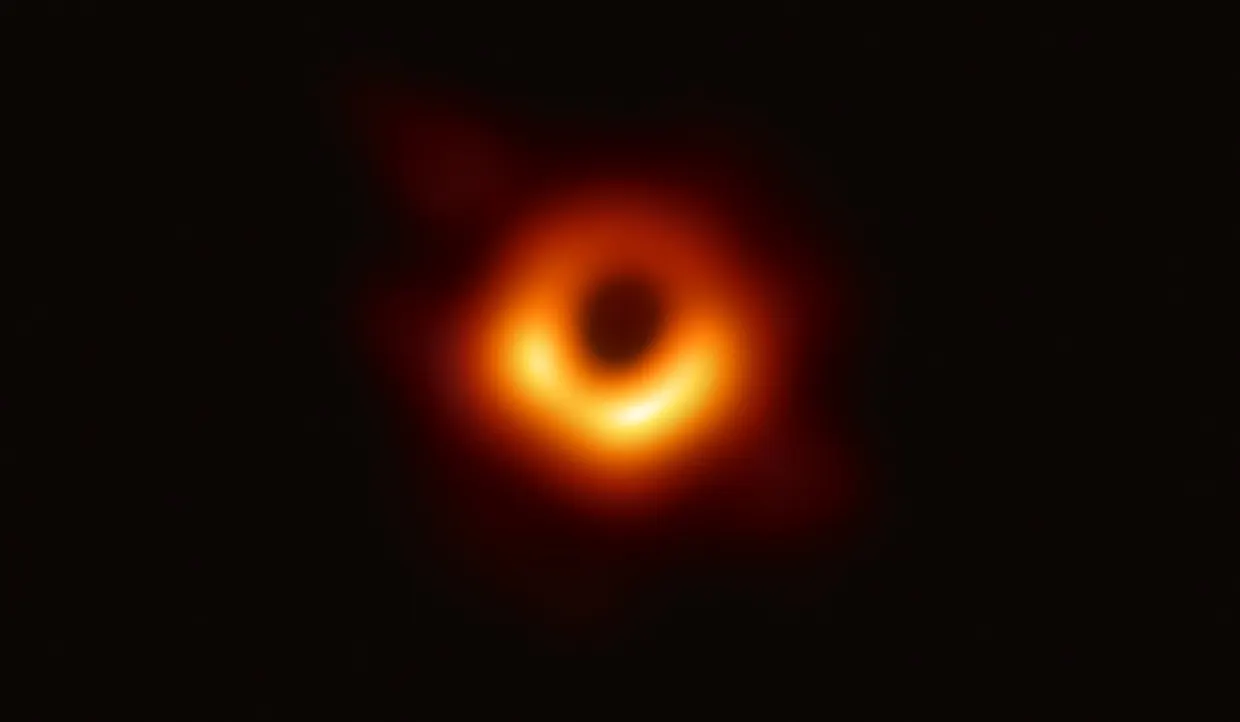
The black hole RBH-1 travels through space at 954 kilometers per second, according to cnnbrasil.com.br. The object is more than 10 million times larger than the Sun and leaves behind a trail of stars stretching 200 thousand light-years cnnbrasil.com.br
cnnbrasil.com.brcnnbrasil.com.brOpen source ↗. It was first spotted in 2023, and new details have since been added to the picture.
What is known about RBH-1
RBH-1 is described as a traveling, or runaway, black hole. A paper on it was published in August in Physical Review Letters by researchers from the Kavli Institute for Theoretical Physics and the Universities of California-Santa Barbara and Texas-Austin. In the paper, astronomers consider how such a large object could have formed and reached this speed.
The existence of the object was confirmed in December 2025, when a second telescope, the James Webb, detected it independently of Hubble. Using the data from both, the scientists reconstructed in simulations the black hole merger process that may have produced the trajectory of RBH-1.
Origin in a merger
One of the authors told Phys.org that RBH-1 is the first convincing example of a supermassive black hole that may have been ejected from the center of its host galaxy. According to him, the likely cause is a powerful recoil from gravitational waves after the merger of two other supermassive black holes cnnbrasil.com.br
cnnbrasil.com.brcnnbrasil.com.brOpen source ↗.
The study estimates that the black hole formed about 70 million years ago, in a galactic merger that can no longer be observed. Author Tousif Islam said that, as specialists in gravitational-wave astronomy, they approached the problem as a forensic investigation.
Using theoretical models of mergers between different pairs of black holes, the team proposed that one of them had a mass six times greater than the other and spun rapidly. The binary system probably showed precession before the merger. The author says the work shows how astronomical observations and models based on Einstein's general relativity can be combined to go back in time and reveal the history of extraordinary cosmic events.