Curiosity's CO₂ isotope data from Gale crater point to possible traces of water on Mars
A PNAS study of SAM measurements in Gale crater, 2012–2025, found seasonal oxygen-18 enrichment in atmospheric CO₂ that may reflect exchange with microscopic water.
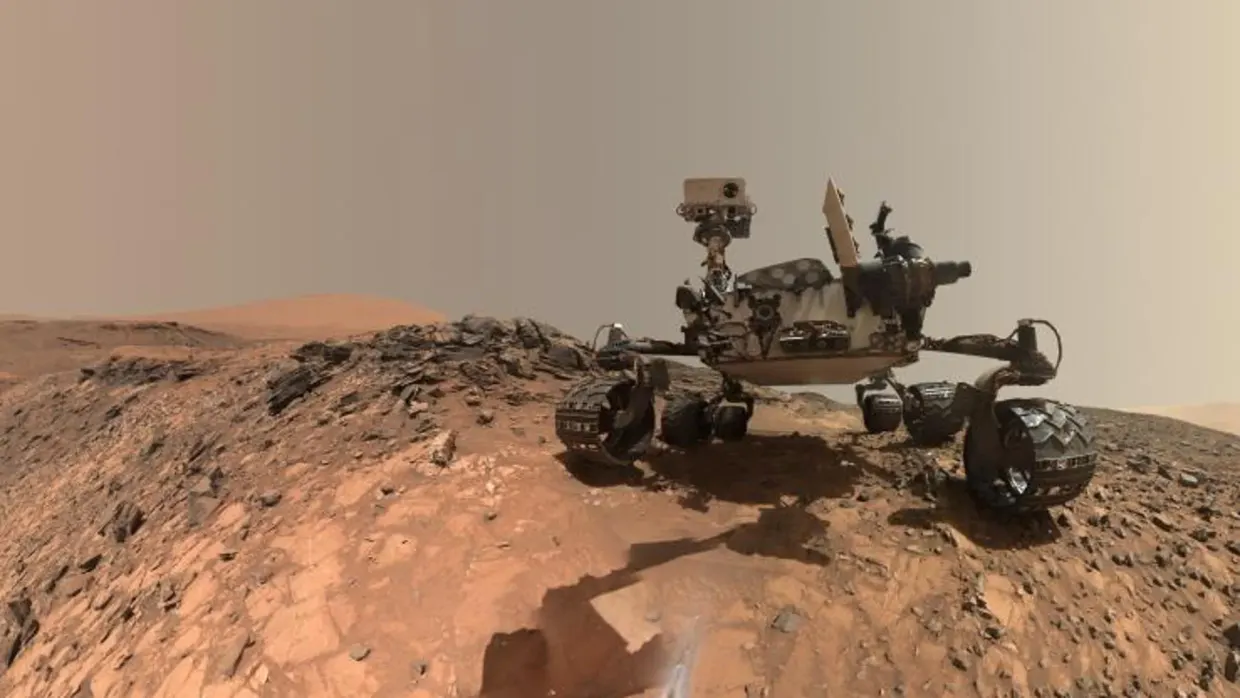
The Curiosity rover has been working in Gale crater on Mars for more than fourteen years. A study in Proceedings of the National Academy of Sciences (PNAS) now uses its measurements from 2012 to 2025 to look for a trace of water that the rover has not observed directly, according to larazon.es larazon.es
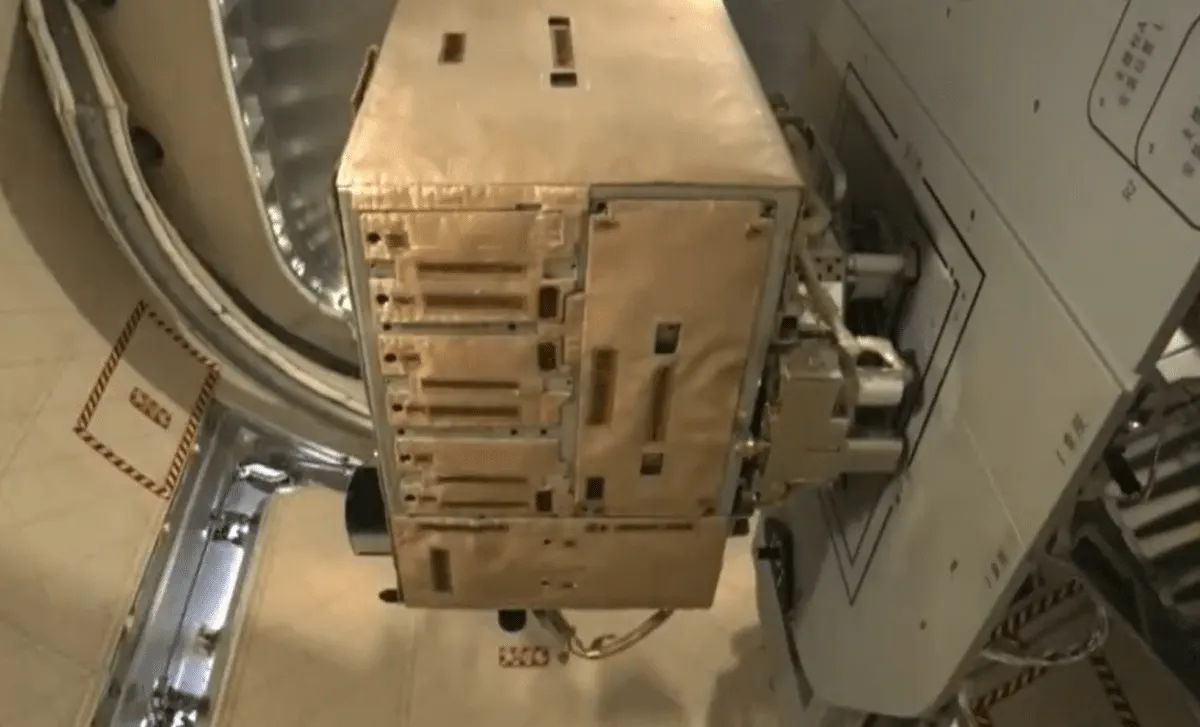
larazon.eslarazon.esOpen source ↗. The team led by Heather B. Franz analysed atmospheric carbon dioxide with the SAM instrument (Sample Analysis at Mars), which determines the chemical composition of samples and gases.
What the oxygen isotopes show
Isotopes are versions of one element with different numbers of neutrons. Oxygen has eight protons; oxygen-16 has eight neutrons and oxygen-18 has ten, so the second is slightly heavier. Evaporation and condensation do not change the neutrons of an atom, but because of the mass difference they slightly shift how isotopes are distributed between liquid and vapour. This effect is called isotopic fractionation and can serve as a chemical trace of processes that leave no visible signs.
Curiosity's data show that Martian carbon dioxide is enriched in oxygen-18 in spring and summer in both hemispheres. The effect is stronger in the warm seasons of the southern hemisphere, and the signal reaches its highest values before the austral summer solstice. Seasonal variations in carbon isotopes are much less pronounced.
Candidate explanations and limits
The team tested several mechanisms: the seasonal CO₂ cycle, in which part of the gas freezes at the poles in winter and returns to the atmosphere by sublimation; adsorption and desorption of CO₂ on soil; and photolysis, in which solar radiation breaks molecules apart. According to the models, none of them alone explains the observed oxygen-18 enrichment larazon.es
larazon.eslarazon.esOpen source ↗.
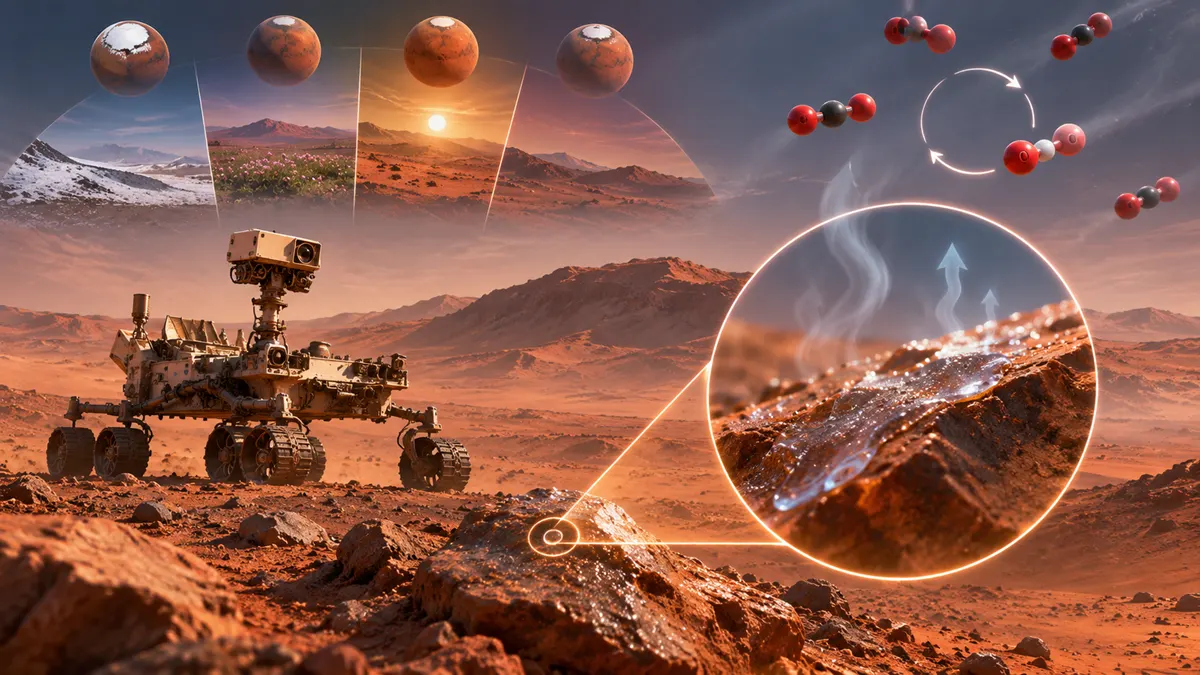
The explanation that best reproduces the data adds an exchange of oxygen atoms between CO₂ and water enriched in oxygen-18. That water would be present in extremely thin films on the surface or bound to soil minerals. The authors suggest such layers could behave as microscopic liquid films even in extreme cold. They would not be pools or streams but tiny amounts of water held at interfaces of ice, minerals or regolith. Salts and hydrated minerals could favour these interactions.
The limits are significant. All measurements come from one place, Gale crater near the Martian equator, so the data cannot show whether the process occurs only around Curiosity, over a wider region or across the planet. They also do not demonstrate stable liquid water on the present surface. The amount of water involved, its composition and the conditions that allow the reaction remain unknown.