Taklamakan Desert margins take up CO2 after tree planting, satellite and ground data show
Satellite and ground data show net CO2 uptake strengthening at the margins of China's Taklamakan Desert, where planting under the Three-North Shelterbelt Program has expanded.
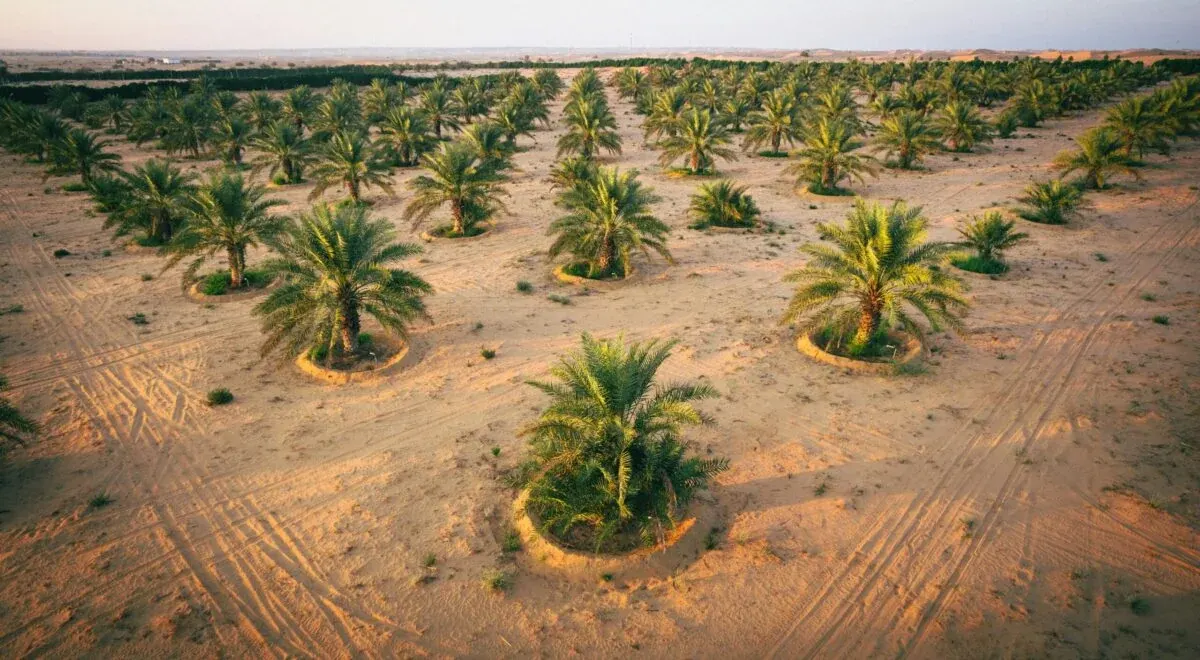
A team led by Yuk Yung at NASA's Jet Propulsion Laboratory reported in January 2026, in the journal Proceedings of the National Academy of Sciences, that the Taklamakan Desert in Xinjiang has begun to act as a carbon sink. The desert, which covers 337,000 km², was long considered a biological void. The authors analyzed satellite and ground-based data pnas.org
Proceedings of the National Academy of Sciencespnas.orgOpen source ↗.
Seasonal signal and long-term trends
During the wet season, July to September, precipitation rises to 16.3 mm per month. Vegetation coverage and photosynthetic activity increase, and atmospheric CO2 drops by about 3 ppm relative to dry-season levels. According to the publication's summary, the local concentration fell from about 416 to 413 ppm.
Long-term trends point the same way. Vegetation cover grows by 6.8 × 10⁻⁴ per year, and photosynthetic activity by 6.1 × 10⁻³ W/m²/sr/µm per year. Net CO2 uptake is strengthening, with a net ecosystem exchange (NEE) trend of −5.2 × 10⁻¹² kg/m²/s per year.
The authors note that the Taklamakan lies at the foot of the Tien Shan, which helps moisture accumulate in the wettest months. The local change is modest on a global scale.
Shelterbelt planting along the margins
The changes are concentrated along the desert margins, and their timing matches the implementation of China's Three-North Shelterbelt Program pnas.org
Proceedings of the National Academy of Sciencespnas.orgOpen source ↗. The program began in 1978. China reports 66 billion trees planted, and in November 2024 the authorities announced completion of a 3,046 km vegetation belt around the Tarim Basin.
The plantings favor drought-tolerant species such as Euphrates poplar and saxaul, a shrub that draws water from several meters down. Young plants are supported by an irrigation network. Seeding is also done with drones and with vehicles that inject seeds deep into the soil.
The authors describe the result as direct evidence that human-led intervention can enhance carbon sequestration even in extremely arid landscapes. They present the Taklamakan as a model for nature-based climate solutions and ecological engineering.
The publication's summary also records concerns. Several hydrogeologists point to the high water use of poplars and young shrubs in a region with scarce precipitation and rivers already used for agriculture. They also worry about the depletion of fossil groundwater that feeds the Xinjiang oases. Habitat change for insects, reptiles and migratory birds is another reported concern.