Bering Sea snow × Tanner crab hybrid grew 13.4-fold seven years after a marine heatwave
The formerly rare hybrid became far more abundant after the snow crab collapse that followed the heatwave. Hybrids are not covered by current Bering Sea fishery management rules.
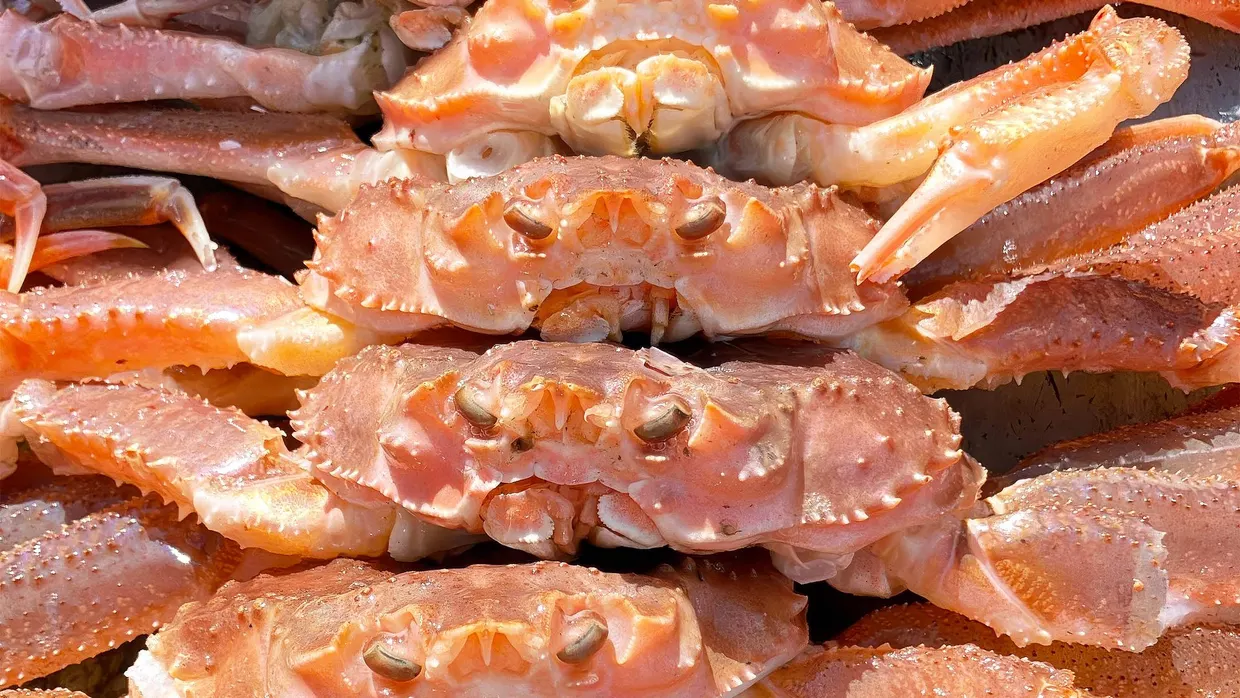
Seven years after a marine heatwave in the Bering Sea, the abundance of a formerly rare hybrid of snow crab (Chionoecetes opilio) and Tanner crab (C. bairdi) increased 13.4-fold relative to the historical average, according to a study in Proceedings of the National Academy of Sciences pnas.org
Proceedings of the National Academy of Sciencespnas.orgOpen source ↗. The proportion of commercial-sized hybrid males rose 13.1-fold. The work was led by Erin Fedewa of the NOAA Fisheries Alaska Fisheries Science Center in Kodiak, with eight colleagues from the center.
In NOAA's annual trawl survey, which has counted hybrids since 1988, they never made up more than 10 percent of catchable males before 2025. In 2025 the share was 41.7 percent, and the total hybrid count was nearly triple the previous survey record.
Heatwave and snow crab collapse
The Bering Sea warmed sharply in 2018 and 2019. Soon afterwards, the snow crab populations behind one of Alaska's largest fisheries collapsed, in one of the largest die-offs recorded in the ocean. Tanner crabs, which do better in warmer water, also reached a record high in 2025. Snow crabs have since rebounded quickly, though the large males targeted by the fishery have returned more slowly.
Causal pathway
The authors tested two explanations: greater spatial overlap between mature snow and Tanner crabs, and a direct effect of warm water on hybrid survival. Spring sea ice served as a stand-in for heatwave conditions, since the heatwave years had less than 15 percent ice cover in March and April. Neither explanation held up pnas.org
Proceedings of the National Academy of Sciencespnas.orgOpen source ↗.
Causal modeling instead showed a chain: less sea ice, fewer snow crabs, more hybrids. This single pathway accounted for 76 percent of the heatwave's effect on hybrid numbers, and the same chain explained the growth in Tanner crabs. The authors suggest that snow crabs normally suppress both competitors by competing with them or preying on them. Because these crabs cannot be aged, the delay is unknown, but models rerun with delays of up to six years gave the same result.
Fishery management
Under current rules, a legal-sized male hybrid can be landed as a snow crab. Hybrids were historically so rare that the federal plan behind crab catch limits does not treat them as a separate category, so hybrid numbers play no part in setting quotas. The Alaska Department of Fish and Game sets the annual limits for Bering Sea snow and Tanner crab.
Fedewa said the ecological role of the hybrids remains highly uncertain, as does their effect on snow crabs and on the communities that depend on the fishery. It is also unclear whether the surge marks a lasting shift in the seafloor community. According to the authors, the case shows how inflexible management systems are vulnerable to unanticipated ecosystem responses pnas.org
Proceedings of the National Academy of Sciencespnas.orgOpen source ↗.