Australian Museum team describes Australyichthys, a new fish genus earlier mistaken for seahorses
Researchers led by Graham Short described the genus Australyichthys from five specimens collected since 1927. The last wild record dates to 2006, and the authors call the genus lost.
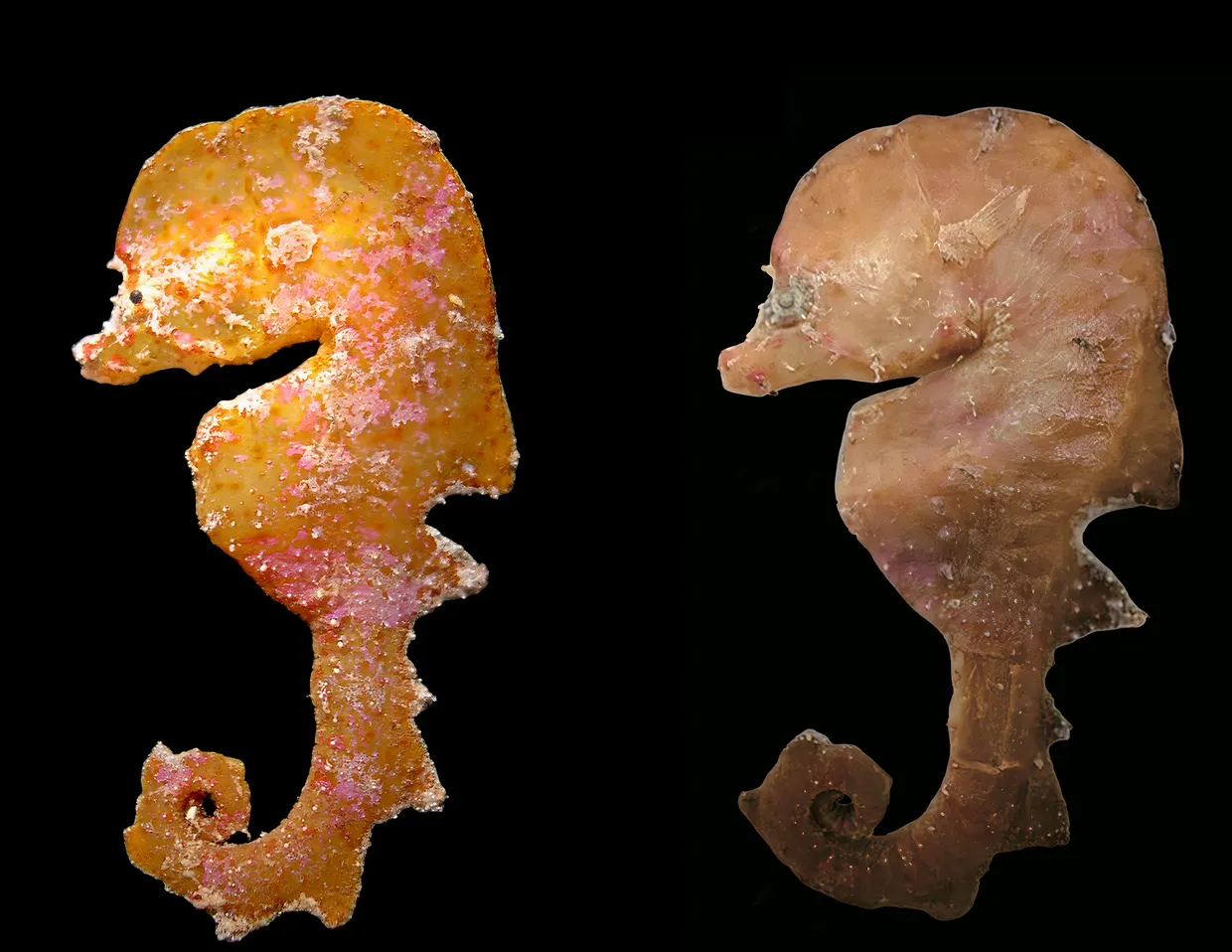
Researchers led by Graham Short of the Australian Museum have described a new genus of marine fish, Australyichthys, based on specimens collected over almost 80 years off southern Australia, according to a paper in the Journal of Lost Species (journaloflostspecies.org) journaloflostspecies.org
journaloflostspecies.orgjournaloflostspecies.orgOpen source ↗. The authors describe the new species Australyichthys aegis and reclassify two species previously considered seahorses. The only known specimen of A. aegis was dredged in February 2006 from about 50 meters near the Gambier Islands, at the entrance to Spencer Gulf. It was taken during brachiopod sampling on a Waterhouse Club expedition run with the South Australian Museum.
Specimens and anatomy
The oldest specimen was collected in 1927 about 13 km east of Eden, New South Wales. Two more came from the same area in October 1941 and December 1960, the latter by Danish seine net at 64–73 meters. The records are spread over more than 2,500 km of Australian coast. In 1997 Martin Gomon of Museums Victoria described the 1960 specimen as the seahorse Hippocampus minotaur; the new work moves it to Australyichthys. A fourth specimen was collected in December 1996 east of Disaster Bay at 124 meters. The fifth, a female, was found in July 1995 southwest of Esperance, Western Australia, at 102 meters, and was described in 2010 by Ralph Foster and Gomon as Hippocampus paradoxus.
The specimens are irreplaceable, so the team did not dissect them. Short instead scanned three by computed tomography at the Karel F. Liem Bioimaging Center, Friday Harbor Laboratories, University of Washington. Each fish was scanned in a 15 ml plastic tube with ethanol, at 2,048 by 2,048 pixels. The scans showed that the genus has no coronet and none of the rigid plates that form the tubular belly of seahorses. Its abdomen rests on three groups of small bones at the front, middle and rear, an arrangement with no equivalent in other Syngnathidae. The Disaster Bay male carried about nine embryos in its brood pouch. The Esperance female had dense fragments in the gut, possibly small crustaceans, the only indication of diet so far.
Genetics and status
Only the 2006 specimen, preserved in ethanol, could be analyzed genetically; the others were fixed in formalin, which hampers DNA recovery. The team compared 271 gene segments from 23 species journaloflostspecies.org
journaloflostspecies.orgjournaloflostspecies.orgOpen source ↗. Australyichthys fell outside the seahorse group and within a group of Indo-Pacific pipefishes and pygmy seahorses, the sister group of seahorses. According to the authors, the curved head, prehensile tail and closed male pouch evolved independently at least twice within the family.
Using a 2022 criterion by Long and Rodríguez, under which a species with no confirmed wild record in ten years is "lost", the authors classify the whole genus as lost. They stated that this does not imply imminent extinction and attributed the absence of records to limited exploration of southern Australian reefs. The study lists bottom trawling, ocean warming, reduced dissolved oxygen and coastal sediment input as risk factors. The team proposed dives near Eden, the Great Australian Bight and the Gambier Islands, plus environmental DNA tests based on the new genome.