Gastrotheca sanmartin: new marsupial frog species described in Peru's Alto Mayo Protection Forest
Peruvian and US researchers described a new marsupial frog from the highlands of Alto Mayo, San Martín. Females carry their young in a dorsal pouch, and the young develop directly, without a free-living tadpole stage.
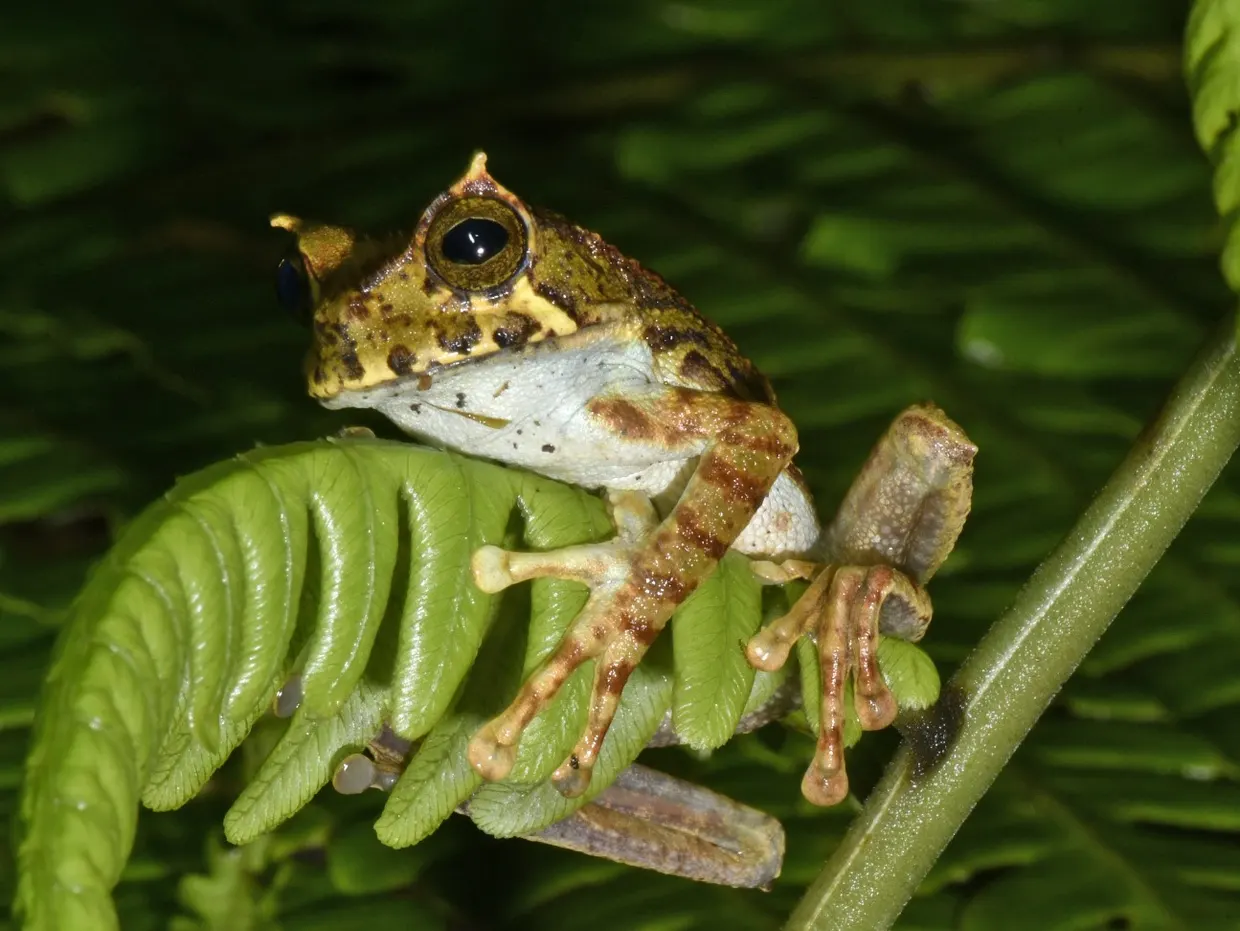
A new species of marsupial frog, Gastrotheca sanmartin, has been described from the Alto Mayo Protection Forest in the San Martín region of Peru, according to portalamazonia.com, which republished a report from the Andina agency. The identification was confirmed by morphological and genetic studies carried out by Peruvian and American researchers 
The finding was announced by the National Service of Protected Natural Areas (Sernanp). The work was led by Daniel Rodríguez and Juan Carlos Cusi of the National University of San Marcos and Rudolf von May of the University of California. It was published on 30 October in the journal Salamandra.
Specimen and habitat
The frog was first recorded in 2014 during a scientific expedition, but its identity was confirmed only recently. The specimen studied is an adult female found at an altitude of 3,245 meters in a wet pasture in the highlands of the protected area.
Reaching the site required crossing remote, hard-to-access areas with the help of forest rangers and local residents. After the initial record, the researchers gathered and analyzed the evidence needed to establish that the animal belongs to a species distinct from those already known
Reproduction
The female carried developed embryos in her dorsal pouch. In this species the young undergo direct development: they complete their transformation into small frogs without passing through a free-living tadpole stage. The name honors San Martín and the biodiversity of the region.
Juan Cusi said the Alto Mayo Protection Forest (BPAM) is a refuge for species not yet described, and that the discovery shows there is still much to learn. Ivonne Paico, head of the Alto Mayo Protection Forest, said the finding confirms the importance of protecting mountain ecosystems that shelter unique species still unknown to science.