Sediment cores show West Antarctic ice retreated in past warm periods, Nature Communications study
Researchers studying clay from sediments beneath the West Antarctic Ice Sheet found kaolinite fell to near zero in each interglacial of the last 800,000 years.
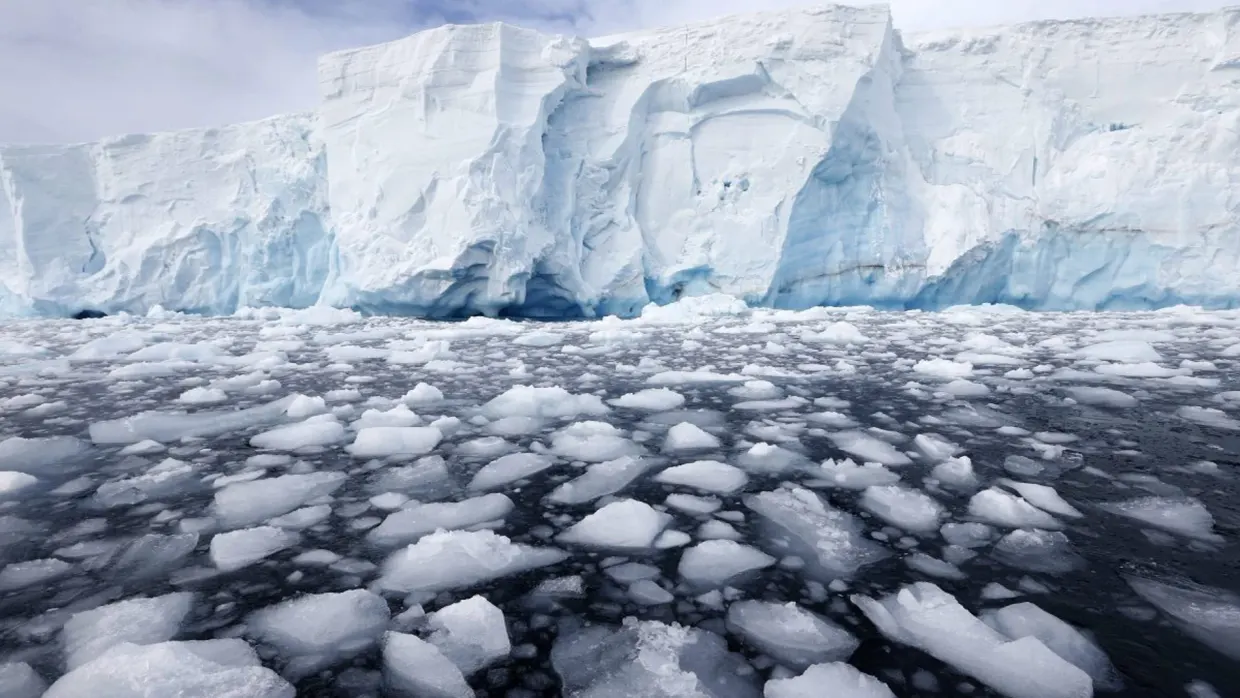
In a study published in Nature Communications, researchers examined the West Antarctic Ice Sheet (WAIS), which holds Thwaites Glacier, also known as the "Doomsday Glacier". Their aim was to understand how the ice sheet responded in earlier warm periods, larazon.es reports. larazon.es
larazon.eslarazon.esOpen source ↗ To do so, they extracted clay from old mud and sediment cores found beneath the ice sheet.
Kaolinite and smectite in the sediments
In samples taken at 4,000 metres below sea level, kaolinite levels dropped to approximately zero during each interglacial warm period of the last 800,000 years. Claus-Dieter Hillenbrand, a marine geologist at the British Antarctic Survey (BAS) and lead author of the study, explained that a sudden collapse of the kaolinite signal at the drilling sites indicates that the ice in the Amundsen Sea sector of West Antarctica must have melted and retreated inland.
To understand why the ice retreated, the team found a second mineral, smectite, located much further north in the Pacific Ocean. The authors conclude that deep currents of warm water were responsible for the melting. According to Hillenbrand, at least a partial collapse of the WAIS occurred even under natural conditions, which surprised him. He added that what is being done now is making the situation much worse. The scientists also warn that global warming is taking the planet towards a tipping point faster than at any other time in history.
Sea-level estimates
According to BAS calculations, a collapse of Thwaites Glacier would raise sea level by 65 centimetres, and by another 51 centimetres if the neighbouring Pine Island Glacier melted at the same time. Together they form the most closely monitored and critical glacier system in Antarctica. larazon.es
larazon.eslarazon.esOpen source ↗ The article says this would lead to storm surges and coastal erosion. If the entire WAIS disappeared, sea level could rise by between three and five metres.
For Spain, the article lists a risk of flooding and erosion in vulnerable areas such as the Ebro Delta, the Albufera de Valencia and Doñana National Park. It also cites a permanent retreat of the coastline on many beaches and exposure of ports to recurrent flooding.
Rob Larter, a marine geophysicist at BAS and co-author of the study, said he is convinced that future generations will witness a substantial rise in sea level, but that it is hard to predict how fast. In his words, the study shows large ice loss even in natural warm periods of the past, while the current period is an extremely intense interglacial.