Lorraine well in France finds hydrogen at 49.6% of dissolved gases at almost 3.7 km depth
Geologists near Pontpierre, France, measured a high hydrogen share in groundwater gases; the Lorraine basin may hold about 34 million tonnes of it.
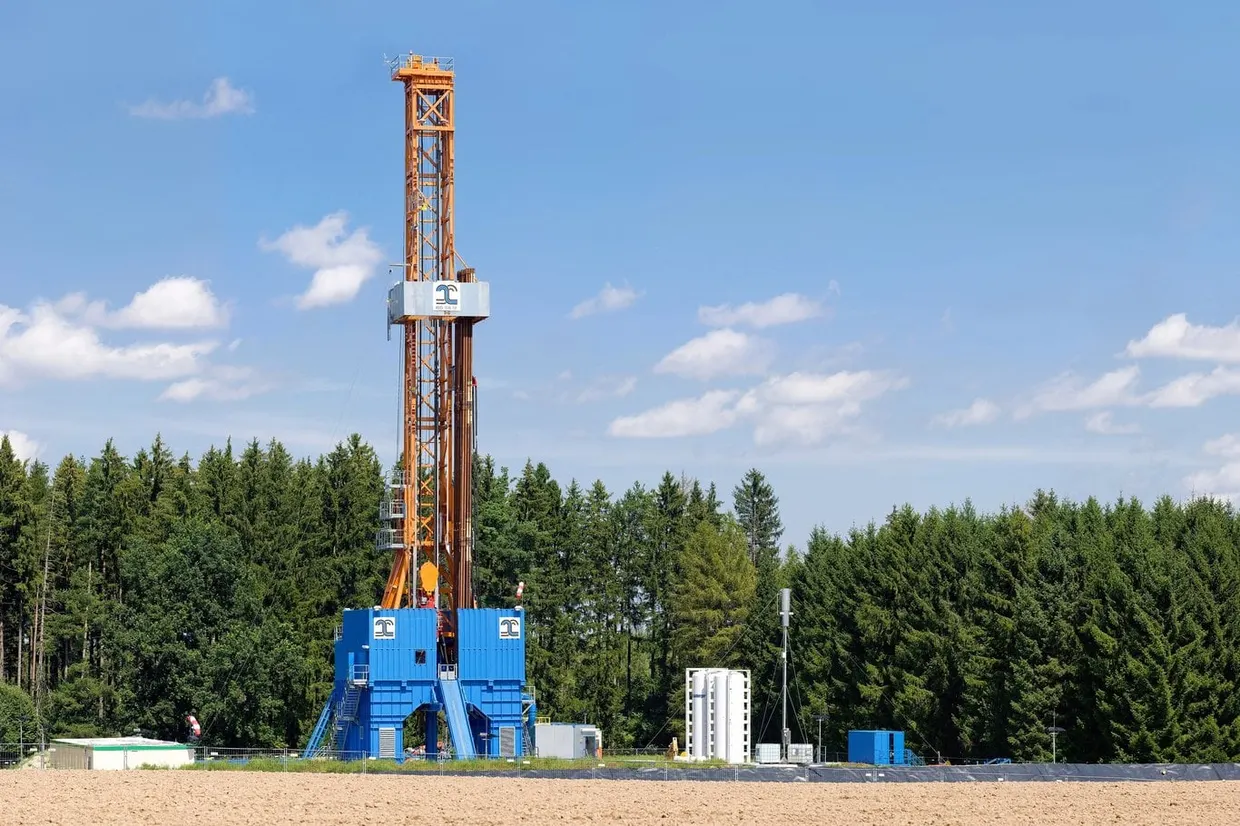
Geologists near the village of Pontpierre in Lorraine, France, drilled almost 3.7 km deep and measured an unusually high share of hydrogen among the gases dissolved in groundwater, denik.cz reports, citing materials from the H-NAT conference held in Paris in November. denik.cz
denik.czdenik.czOpen source ↗ The exploration well was completed in March 2026. Researchers now plan to check how much gas the well could deliver.
The work began at Folschviller, where researchers were studying coal-seam methane and found natural hydrogen, called white hydrogen because of its origin, in an older well. There the hydrogen share exceeded 15 percent at a depth of 1 100 metres. The deeper Pontpierre well supported an estimate that the whole Lorraine basin may hold about 34 million tonnes of hydrogen.
Measurements at Pontpierre
The hydrogen is dissolved in water that fills pores and fractures in the rock, much like carbon dioxide in sparkling mineral water. From the measured values and the volume of the mapped aquifer, geologists derived the estimate for the entire basin.
At a depth of 2 242 metres, hydrogen made up about 36 percent of the gas mixture dissolved in the water. Somewhat deeper its share reached 49.6 percent. The scientists also detected a small amount of helium. denik.cz
denik.czdenik.czOpen source ↗
The authors of the conference paper describe a "rapid restoration of conditions with a high hydrogen share" after drilling disturbed the aquifer. In their view this suggests that gas is continuously replenished in the layer. Further tests are to show how it behaves under longer extraction. The origin of the hydrogen is still being studied; one hypothesis involves water reacting with iron-bearing minerals, as at hydrothermal vents on the Atlantic seabed.
FDE plans and the scale of the estimate
France granted La Française de l'Énergie (FDE) a five-year exploration permit for an area of about 2 254 square kilometres. With Saint-Gobain Recherche, FDE is preparing tests of a device meant to separate hydrogen from water already in the well. By design, the hydrogen passes through a membrane and rises to the surface owing to underground pressure. The tests are to show how much gas can be extracted this way and how long the well keeps a stable flow.
In an October investor presentation the company named 2027 as the target for certifying resources. Earlier it considered starting production around the turn of 2028 and 2029. It has begun reviewing the schedule of its projects and intends to present an adjusted strategy on 10 December. denik.cz
denik.czdenik.czOpen source ↗ FDE put the investment in the exploration well at 18 million euros and is seeking financing for the next phase.
According to the International Energy Agency overview, the world consumed over 100 million tonnes of hydrogen in 2025. The whole estimated Lorraine volume therefore corresponds to roughly four months of that consumption. How much can actually be recovered is to be determined by further exploration.