Myanmar earthquake of 2025: Tsukuba team finds 400 km of the Sagaing fault ruptured in 80 seconds
Researchers at the University of Tsukuba reconstructed the rupture of the 28 March 2025 earthquake: it ran south, then back north faster than shear waves.
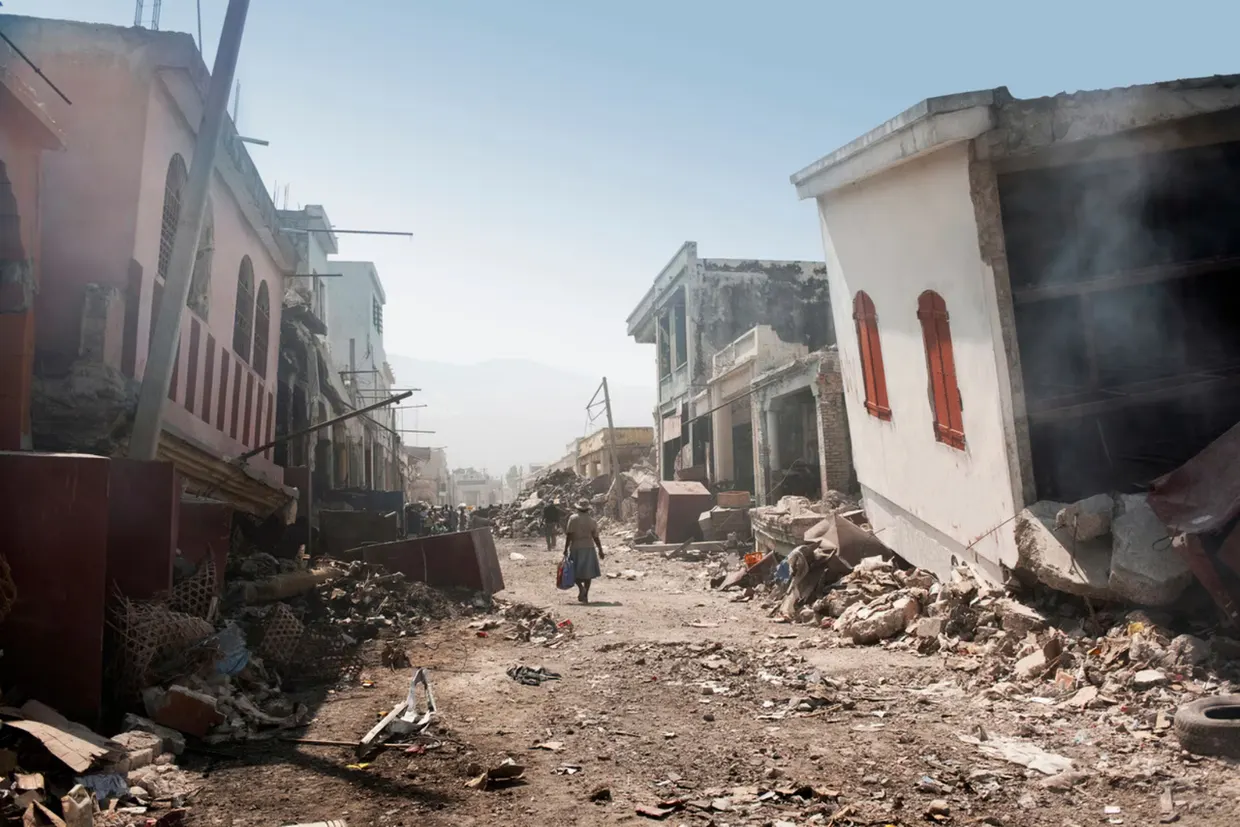
On 28 March 2025 an earthquake of estimated magnitude 7.7–7.9 struck Myanmar near Mandalay. According to Futura Sciences, a team from the University of Tsukuba (Japan) analysed seismic data and concluded that about 400 km of the fault ruptured in 80 seconds, in an unusual "boomerang" pattern futura-sciences.com
Futura Sciencesfutura-sciences.comOpen source ↗.
The earthquake and the Sagaing fault
The shock was felt as far as Thailand, where a building under construction collapsed. In Myanmar many buildings fell and infrastructure was damaged. Official figures give 3,770 dead and more than 5,000 injured; many experts, citing satellite imagery of the damage, consider the toll likely underestimated.
Geophysical data and field observations suggest that the earthquake occurred on the central part of the Sagaing fault. This fault crosses Myanmar from north to south for about 1,200 km, up to the Andaman Sea. It is a strike-slip fault that marks the boundary between the Indian and Eurasian plates.
The Indian plate moves north at about 50 mm per year and collides with Eurasia at the Himalayan front, so the zone is under very high stress. The Sagaing fault is therefore very active and regularly produces strong earthquakes, often above magnitude 7 futura-sciences.com
Futura Sciencesfutura-sciences.comOpen source ↗.
A rupture that went south and came back
Many aftershocks were recorded soon after the main shock, mainly south of the epicentre. At first this suggested that the rupture had propagated southward. However, several seismic stations north of the epicentre recorded large-amplitude waves only about 20 seconds after the first P waves, which did not fit a one-direction pattern.
The Tsukuba team's results, published in the journal Seismica, show that the rupture occurred in several phases. It appears to have propagated first to the south and then rebounded to the north. This is the "boomerang effect", and it occurred at a speed above that of S (shear) waves, a behaviour specialists call a supershear rupture.
Supershear ruptures are rare and still poorly understood. According to the article, they concentrate seismic energy in areas far from the epicentre, which amplifies destructive effects. The 2025 event gives researchers an opportunity to study these mechanisms and to refine models used to anticipate major seismic risks, in Myanmar and elsewhere futura-sciences.com
Futura Sciencesfutura-sciences.comOpen source ↗.