Mercury found in lake sediments near Maya cities Coba and Xcach, Yucatán, linked to cinnabar
Sediment cores from lakes near Coba and Xcach show mercury levels that exceeded modern toxicological standards for centuries, with some samples among the highest known for the Maya era.
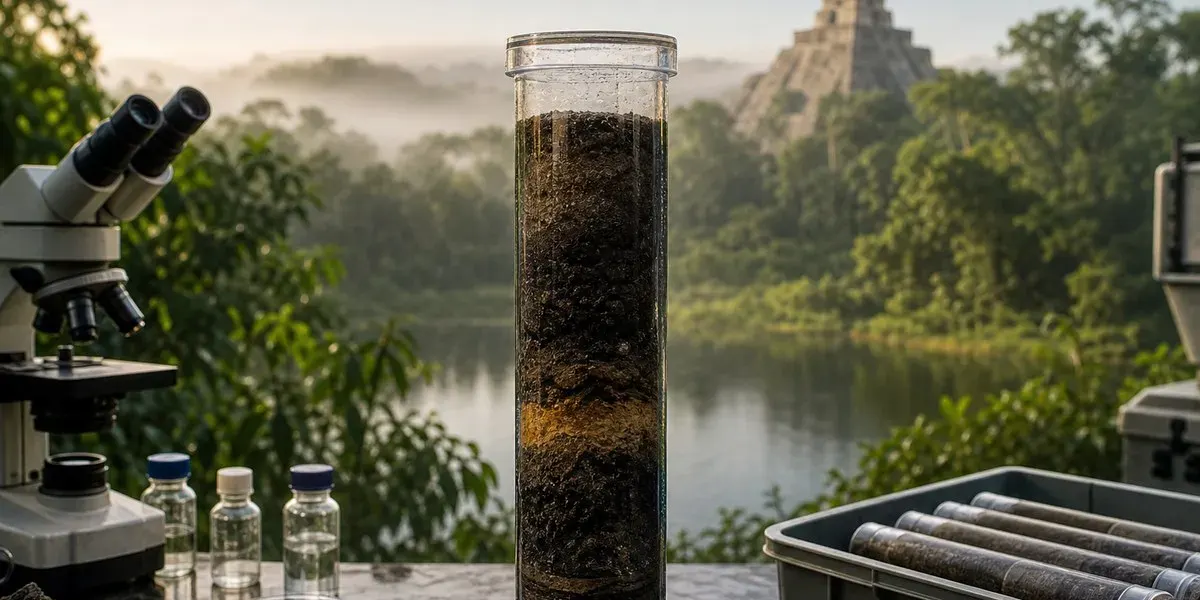
Researchers have found high levels of mercury in lake-bottom sediments near the ancient Maya cities of Coba and Xcach on Mexico's Yucatán Peninsula, ua.news reports, citing Cyprus Mail. The contamination is linked to the widespread use of cinnabar, a bright-red mineral composed mainly of mercury sulfide ua.news
ua.newsua.newsOpen source ↗. Some samples recorded among the highest known mercury concentrations for the Maya era.
Cinnabar in Maya culture
For the Maya, cinnabar symbolized blood, life and the soul. It was used as a pigment for temples and wall paintings, as well as in ceremonies and burial rituals. Persistent mercury contamination linked to cinnabar had previously been recorded in some Maya cities, including Tikal in Guatemala.
The new study adds to evidence of mercury contamination in the northern Maya lowlands, where such evidence had previously been scarce.
Sediment cores and contamination periods
The authors collected sediment cores from beneath lakes near Coba and Xcach. In Coba, mercury concentrations rose sharply around 250 CE and remained elevated for about 150 years, at the beginning of the Classic period of Maya civilization ua.news
ua.newsua.newsOpen source ↗.
In Xcach, scientists recorded three periods of increased contamination: approximately between 125 and 200 CE, another at roughly the same time as in Coba, and from around 535 to 820 CE. The last period lasted almost until the end of the Maya Classic era.
The study's lead author, Auburn University professor of environmental sciences Matt Waters, said that during the most toxic periods pollution levels near Coba and Xcach significantly exceeded modern toxicological standards for centuries. Scientists also traced reductions or the disappearance in the sediments of biological markers of bacteria, algae, cyanobacteria, shelled organisms and chironomid larvae.
According to co-author Savannah Wooten, mercury's movement through the food chain means that residents of Maya cities may have been exposed to the toxin through water or fish consumption. The study does not establish a direct link between mercury and the decline of Maya cities at the end of the Classic period, but mercury poisoning may have been one additional factor of environmental pressure ua.news
ua.newsua.newsOpen source ↗.
Sources · 1
Found a mistake?Read also